 how-to
How to Prevent Mold Growth Under Bathroom Tile Grout
Last Updated: November 7, 2026
Quick Summary
To learn how to prevent mold growth under bathroom tile grout, keep the grout dry and sealed and fix any water that gets behind the tile. Squeegee and wipe the grout after every shower, seal the grout, and recaulk or regrout cracks so moisture cannot soak in.
- Squeegee walls and wipe grout lines with a microfiber cloth after every shower, about two minutes total.
- Test grout by dripping about a half-cup of water on a joint and watching for 10 minutes.
- Let grout dry 24 to 48 hours after cleaning before applying sealer, then cure 24 to 72 hours.
- Without a fan, keep air moving 20 to 30 minutes after showers and aim for humidity near 50 percent or lower.
- Call a pro when mold returns within days, grout is soft or crumbling, or a musty odor persists.
Table of Contents
- Why Mold Grows in Bathroom Grout and How to Stop It
- How to Prevent Mold in Shower Grout with a Daily Drying Routine
- How to Clean Mold from Shower Grout Safely
- Choosing the Right Grout Sealer to Prevent Mold
- How to Prevent Mold in a Bathroom Without a Fan
- Waterproofing, Caulk, and Leaks Behind the Tile
- When to Stop Cleaning and Call EcoClean for Tile and Grout Service
- Frequently Asked Questions
Why Mold Grows in Bathroom Grout and How to Stop It
Mold grows in bathroom grout because cement grout is porous, and a shower sends water and humidity into those pores every day, which is why knowing how to prevent mold growth under bathroom tile grout matters.
Grout is basically a sponge. Cement grout absorbs water through tiny pores, called porosity. Once moisture sits in those pores, mold spores land and start to grow. Warm, damp bathrooms speed this up.
So the fix has two parts:
- Stop new water from soaking in with drying and sealing.
- Find old water that has already gotten behind the tile.
Miss the second part, and you will clean the same grout forever.
Surface Mold vs. Moisture Trapped Behind Tile
Surface mold is the black or pink film on the grout lines. You can scrub it off, and it stays gone for a while. Trapped moisture is different. Water has soaked behind the tile, often through cracked grout or failed caulk, and the mold keeps coming back no matter what you do.
Here is how to tell them apart:
- Surface mold: wipes off, returns slowly, grout looks and feels solid.
- Trapped moisture: returns within days, grout feels soft or crumbly, and there is a musty odor that never clears.
If you clean a shower and the mold is back in a week, stop scrubbing. That is a moisture problem, not a cleaning problem.
How to Prevent Mold in Shower Grout with a Daily Drying Routine
The single best way to prevent mold in shower grout is to remove standing water after every shower. Mold needs moisture to grow. Take that away, and spores cannot get a foothold. A two-minute routine beats an hour of scrubbing later.
Squeegee, Microfiber Cloth, and Air Circulation
Build this into your post-shower habit:
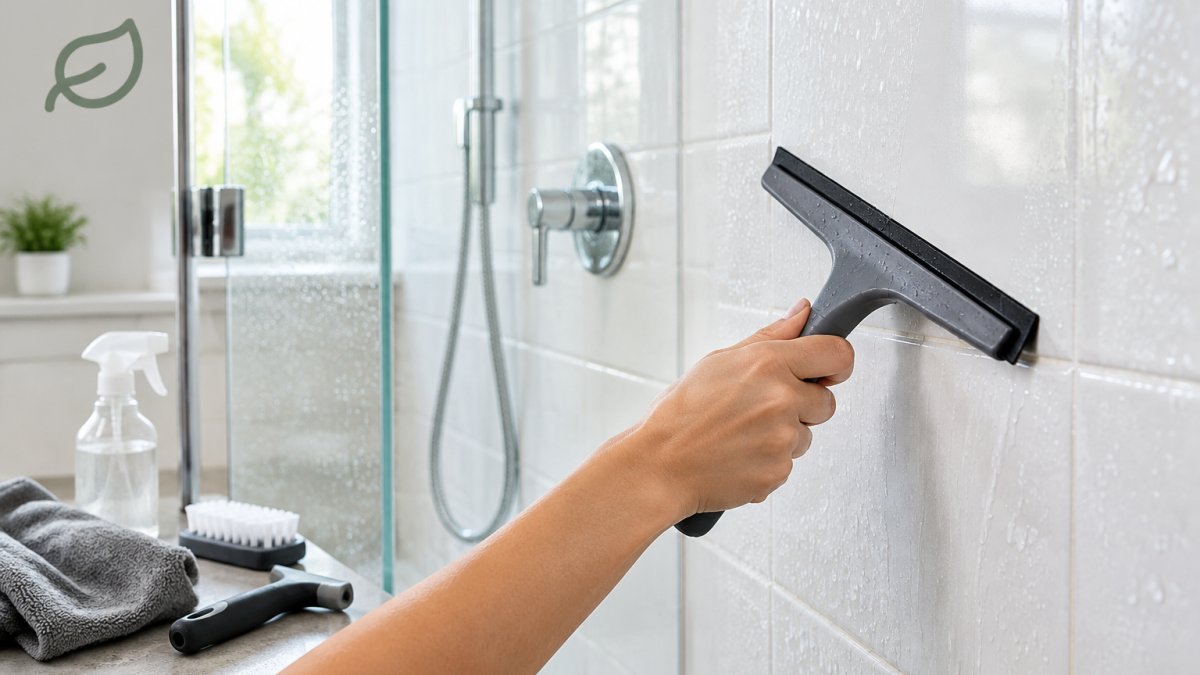
- Squeegee the walls. Pull a rubber squeegee down the shower tile in overlapping strokes. Start at the top and work down.
- Wipe the grout lines. Run a microfiber cloth along the grout joints and shower corners, where water pools.
- Dry the floor and corners. A quick pass with the cloth soaks up water that would otherwise sit in the grout.
- Open the door or curtain. Leave the shower door or curtain open so air circulation can finish the job.
The woman is American.
This takes about two minutes. A common mistake is skipping the corners, which is exactly where mold starts.
A short post-shower routine is the best defense against mold in shower grout.
| Step | What to do |
|---|---|
| 1 | Squeegee the walls in overlapping strokes, top to bottom |
| 2 | Wipe the grout lines and shower corners with a microfiber cloth |
| 3 | Dry the floor and corners with a quick cloth pass |
| 4 | Leave the shower door or curtain open for air circulation |
How to Clean Mold from Shower Grout Safely
Cement grout is porous.
Epoxy grout is non-porous and tough. Mild dish soap and warm water usually handle surface mold.
Natural stone tile needs the gentlest care. Avoid acidic cleaners like vinegar, which can etch stone.
Watch out: never mix bleach with vinegar or ammonia. The fumes are dangerous.
After cleaning, rinse and dry thoroughly. Leftover moisture just feeds the next round.
Choosing the Right Grout Sealer to Prevent Mold
A grout sealer to prevent mold works by blocking water from soaking into the grout. It does not kill mold or make grout waterproof, but it slows water absorption and buys your drying routine time. Because sealer only slows water absorption, pairing it with habits that prevent mould throughout the shower helps keep moisture from lingering on tile and grout.
Choose by grout type:
- Penetrating sealers soak into cement grout and protect from inside. Best for most showers.
- Membrane or epoxy-based sealers sit on the surface. Good for heavy-use areas.
- Stone-safe sealers are a must around natural stone tile.
Test Whether Your Grout Needs Sealing
Before you buy a sealer, find out whether the grout still has protection. Drip about a half-cup of water onto a grout joint in an out-of-the-way spot and watch for 10 minutes.
- Water beads and rolls off: the sealer is still working. Recheck in a few months.
- Water darkens the grout and soaks in: the sealer has worn through. Time to reseal.
- Water sits on the surface but the grout looks patchy: the sealer is partially worn. Clean and reseal the whole shower rather than spot-treating.
A common pattern is that shower floors and the lower 12 inches of walls wear out first, because that is where water and foot traffic concentrate. Test those areas separately from the upper walls.
Application Steps and Reapplication Schedule
- Clean first. Sealer will not bond to dirty or moldy grout. Deep clean and let it dry fully, most manufacturers call for 24 to 48 hours of dry time after cleaning, and longer if the grout was recently regrouted.
- Test a small spot. Check that the sealer does not darken or cloud the grout. Penetrating sealers on light grout can leave a wet look if over-applied.
- Apply thin coats. Use an applicator or small brush along the grout joints. Wipe excess off the tile face before it dries, dried sealer on tile is hard to remove without a solvent.
- Let it cure. Follow the label. Keep the shower dry during curing, which is typically 24 to 72 hours depending on the product. Do not shower during that window.
- Reapply on schedule. Resealing frequency depends on the product and how the bathroom is used. Check the manufacturer's guidance.
Reapplication intervals depend on more than traffic. Epoxy grout is non-porous and often needs no sealer at all; check the manufacturer's guidance before sealing it.
Inspect grout before each reseal. If you are weighing the cost against the benefit, this breakdown of whether grout sealing is worth the cost walks through the factors to consider.
Watch out: sealing over mold or mildew traps the growth under the sealer and feeds it. Treat and remove any visible growth, then let the grout dry completely before sealing.
How to Prevent Mold in a Bathroom Without a Fan
If you are figuring out how to prevent mold in a bathroom without a fan, your answer is airflow and timing. Without an exhaust fan, moisture has nowhere to go, so you have to move it yourself. Many older bathrooms simply were not built with ventilation, and mold is the predictable result.
Try these steps:
- Open a bathroom window during and after every shower, even in cold weather.
- Open the bathroom door and run a box fan or portable fan to push humid air out.
- Wipe down surfaces right after showering, before moisture settles.
Ventilation Targets and How to Measure Them
Generic advice to ventilate does not tell you when to stop. Use these targets instead:
- Run time: keep air moving for at least 20 to 30 minutes after the shower ends. A fan on a timer switch is the easiest way to hit that window without thinking about it.
- Airflow direction: position a box fan so it blows into the bathroom and out through the doorway, not toward the shower wall. Pushing air across the room and out the door carries moisture with it.
- Humidity target: aim to bring bathroom humidity down to roughly 50 percent or lower after showers and keep it there between them. A small digital humidity gauge costs little and takes the guesswork out of it.
A common pattern in windowless bathrooms is that humidity climbs during the shower and stays high for hours because nothing moves the air.
Watch out: running a fan without a path for air to leave the room just stirs humid air around. Give the moisture somewhere to go, an open window, an open door, or a dehumidifier.
If the room stays damp no matter what, poor air circulation is the likely cause.
Waterproofing, Caulk, and Leaks Behind the Tile
Recurring mold often points to a problem behind the tile, not on it. Waterproofing is the layer beneath the tile that stops water from reaching the wall and framing.
Check these spots:
- Caulk lines at the shower corners, floor, and tub edge. Recaulk when it pulls away or turns black underneath.
- Cracked grout on walls and floors. Regrout damaged sections before sealing.
- Loose or hollow-sounding tile, which can signal water damage behind it.
This is the part most guides skip. If mold keeps returning after good cleaning and sealing, the moisture is coming from behind the tile. That needs a professional look, not another bottle of cleaner.
When to Stop Cleaning and Call EcoClean for Tile and Grout Service
Stop cleaning and call a pro when mold returns within days, grout is soft or crumbling, or you smell a musty odor that will not quit. If you have tried everything and want to know whether professional tile grout cleaning actually works, it is worth reading up on what professional cleaning can and cannot address.
Professional tile and grout cleaning can remove embedded soil and residue that hold moisture and feed mold. Professional tile and grout cleaning uses deep cleaning techniques to lift embedded soil from grout. Here is why professional tile cleaning lasts longer.
If you are ready to hire, this guide to finding a residential tile cleaning service near me covers what to ask. EcoClean offers tile and grout cleaning for homes and businesses in Las Vegas, North Las Vegas, and Henderson, and you can contact our team for current pricing or a quote.
Mold keeps coming back no matter how hard you scrub? That is your cue to bring in help. EcoClean offers professional tile and grout cleaning with hot water extraction and deep cleaning techniques, plus convenient online booking, so you can get grout that stays cleaner longer.
Frequently Asked Questions
How can I prevent mold from growing on my bathroom grout?
Keep the grout dry between showers. Squeegee or towel-dry the walls after each use, run the exhaust fan during and for 20 to 30 minutes after showering, and leave the shower door or curtain open so air can move through. Seal cement grout with a penetrating sealer and reapply it every 6 to 12 months. Fix any cracked caulk or loose grout right away, because standing water in those gaps is where mold under tile grout starts.
Does grout sealer prevent mold?
A sealer does not kill mold, but it slows water absorption into porous cement grout, which removes the damp environment spores need. Penetrating sealers work best on cement grout, while epoxy grout is already non-porous and usually needs no sealer. Reapply sealer when water stops beading on the surface, typically every 6 to 12 months in a busy shower. Sealer is one layer of a routine that also includes drying and ventilation.
Can mold grow behind or under bathroom tile?
Yes. If water gets past grout joints, cracked caulk, or failed waterproofing, it can soak the substrate behind the tile and feed mold out of sight. Signs include a musty odor that returns quickly after cleaning, grout that stays dark after drying, loose or hollow-sounding tiles, and mold that reappears in the same spot within days. Surface cleaning will not fix that. A moisture check and likely regrouting or repair are needed.
How do I prevent mold in a bathroom without a fan?
Use the building's airflow instead. Open a window during and after showers, keep the door open when the bathroom is empty, and wipe walls and grout with a microfiber cloth or squeegee after every use. A small plug-in dehumidifier or a portable fan aimed at the shower wall helps in closed interior bathrooms. Wipe down the shower curtain or glass too, since those surfaces hold water that keeps humidity high.