 how-to
Why Professional Tile Cleaning Lasts Longer
Table of Contents
- Why Tile Floors Look Dirty After Mopping (And What Actually Removes the Grime)
- Tile and Grout Cleaning Methods: What Works on Ceramic, Porcelain, and Natural Stone
- Why Professional Tile Cleaning Lasts Longer Than DIY Results
- How Long Professional Tile Cleaning Lasts: Realistic Expectations by Room and Traffic
- How to Keep Tile Floors Clean Between Professional Visits
- Sealing Grout: What It Does, What It Doesn't, and Why It Changes Your Timeline
- Conclusion: Setting Up Your Tile for Longer-Lasting Results
- Frequently Asked Questions
Last Updated: October 7, 2026
Why Tile Floors Look Dirty After Mopping (And What Actually Removes the Grime)
You mop, the floor dries, and the grout still looks gray. That is not your imagination, and it is not a cleaning failure on your part. Tile cleaning fails after mopping because a mop only lifts loose surface dust.
Grout is cement-based and porous. It absorbs whatever lands on it: grease from cooking, soap scum, body oils, pet accidents, and mop water. Over time that trapped dirt hardens and darkens the grout lines from the inside out.
Homeowners assume the floor is ruined. Usually it is not. It just needs a method that reaches embedded dirt instead of smearing it around.
So what actually works? Agitation plus heat plus the right cleaner. Here is the short version:
- Sweep or vacuum first to remove loose grit before it scratches the tile.
- Use an alkaline cleaner on grease and organic soil, not vinegar or all-purpose spray.
- Agitate the grout lines with a stiff brush so the cleaner can penetrate.
- Rinse and extract the dirty water instead of letting it dry back into the grout.
That last step is the one most people skip. The EPA guide to safe and effective cleaning products makes the same point about cleaning versus disinfecting: soil has to be removed, not just wetted.
Tile and Grout Cleaning Methods: What Works on Ceramic, Porcelain, and Natural Stone
Not every tile wants the same treatment. Ceramic and porcelain are glazed and tough, so they handle alkaline cleaners and moderate scrubbing well. Natural stone is different. Marble, travertine, and limestone are softer and acid-sensitive.
Here is how the main methods compare, with the trade-offs that actually matter:
| Method | Best For | Limitation |
|---|---|---|
| Damp mop and mild cleaner | Weekly upkeep on sealed tile | Cannot reach embedded grout soil |
| Alkaline cleaner plus brush | Grease, soap scum, kitchen grout | Needs rinsing to avoid residue |
| Steam cleaning | Sealed ceramic and porcelain | Can damage some natural stone |
| Hot water extraction | Deep soil in tile and grout | Professional equipment required |
| pH-neutral stone cleaner | Marble, travertine, limestone | Will not cut heavy grease alone |
For natural stone, check the manufacturer's guidance and stick to pH-neutral products. For everything else, alkaline cleaners are the workhorse. The Tile Council of North America care and maintenance guidance covers which cleaners suit which tile types, and it is worth reading before you buy anything.
A common mistake is reaching for the strongest product on the shelf. Strength is not the issue. Contact time and agitation are.
The Professional Process, Step by Step
Most DIY guides stop at "scrub and mop." A professional deep clean follows a sequence that each step depends on:
- Inspection. Identify tile type, grout condition, cracks, missing grout, and any prior sealer. This determines cleaner choice and whether the job is cleaning or restoration.
- Dry soil removal. Vacuum or sweep loose grit before any liquid touches the floor. Skipping this scratches glazed tile and turns grit into mud that packs into grout.
- Pre-treatment. Apply an alkaline cleaner matched to the soil (grease, soap scum, or organic) and let it dwell. Dwell time is what breaks the bond between soil and grout.
- Agitation. Work the cleaner into grout lines with a stiff brush or a counter-rotating brush machine. This is the step that reaches embedded soil a mop glides over.
- Extraction. Hot water extraction flushes the loosened soil and pulls the dirty water into a recovery tank. Nothing dries back into the grout.
- Drying. Allow the grout to dry fully. Sealer applied over damp grout traps moisture and cures unevenly.
- Sealing (if needed). Apply a penetrating sealer only after the grout is clean and dry. Sealing over trapped dirt locks the stain in place.
That sequence is why professional results hold. Each step removes a layer of soil the previous step could not reach, and the final extraction means no residue is left for new dirt to cling to.
Why Professional Tile Cleaning Lasts Longer Than DIY Results
Professional tile cleaning lasts longer because it removes the soil a mop cannot reach, then extracts it instead of spreading it. That single difference explains almost everything.
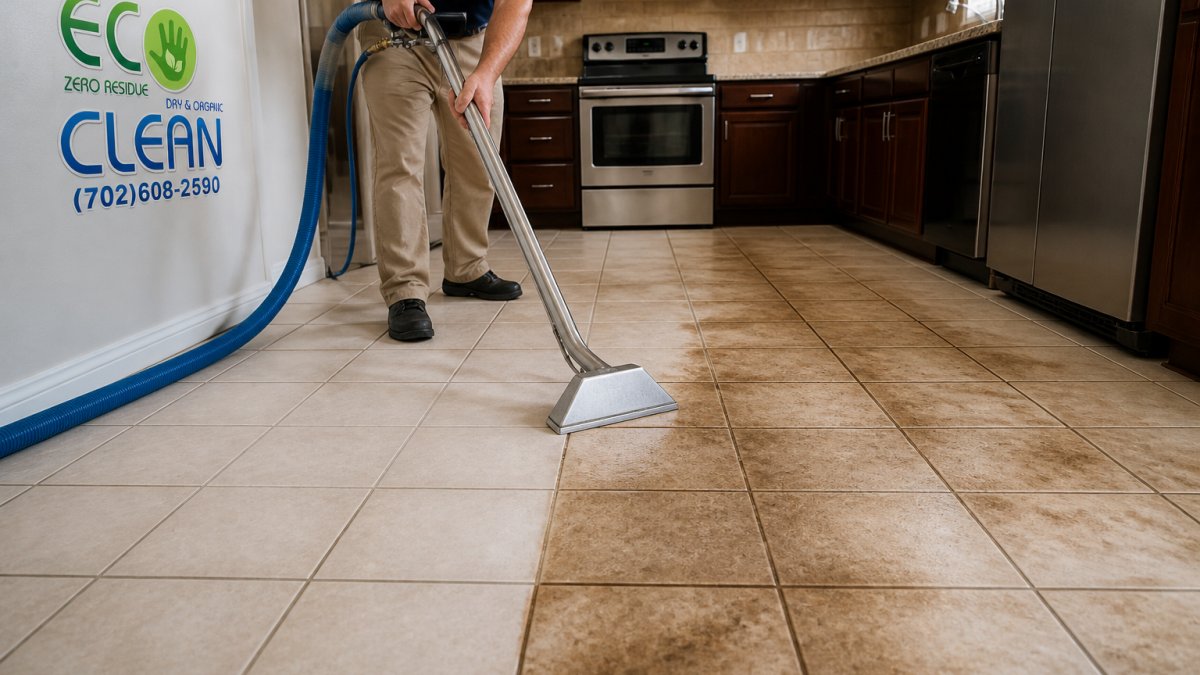
DIY cleaning works from the top down. Professional cleaning works from the bottom up. We use hot water extraction, which pushes heated water into the grout at pressure, lifts the trapped soil, and pulls the dirty water straight into a recovery tank.
Three things make the result hold:
- Soil removal is complete. No residue left behind means nothing for new dirt to cling to.
- The rinse water leaves the floor. A mop bucket recycles dirty water across the whole room.
- The surface is prepped for sealing. Clean, dry grout absorbs sealer evenly, which is what actually slows re-soiling.
That explains why the stains come back within weeks after a cheap cleaning. The grout was never fully cleared, so the first spill re-darkens it fast.
How Long Professional Tile Cleaning Lasts: Realistic Expectations by Room and Traffic
How long professional tile cleaning lasts depends on traffic, moisture, and whether the grout is sealed. There is no single number, and anyone who promises one is guessing. What separates a result that holds for months from one that fades in weeks is not the cleaner alone. It is how completely the soil was removed, how much residue was left behind, and whether the grout was sealed at the right time.
Why Professional Results Stay Clean Longer
Three mechanisms explain the difference:
- Complete soil removal. Hot water extraction lifts embedded soil from inside the grout pores and pulls it into a recovery tank. A mop lifts only surface dust and redeposits the rest.
- Residue control. Soap, mop water, and cleaner left on the floor become a sticky film that grabs new dirt. Extraction removes that film, so there is nothing for soil to cling to.
- Sealing at the right time. Clean, dry grout absorbs penetrating sealer evenly. Sealer slows how fast liquid and soil soak in, which directly extends the time between deep cleans.
That is why a cheap cleaning fades fast. The grout was never fully cleared, so the first spill re-darkens it quickly.
Realistic Ranges by Room and Traffic
These ranges assume the grout was sealed after cleaning and that basic maintenance is followed:
- Low-traffic bathrooms: six to twelve months before grout lines start dulling again.
- Kitchen floors: three to six months, because grease and foot traffic work fast.
- High-traffic commercial entries: one to three months without a maintenance schedule.
- Unsealed grout in any room: noticeably shorter, since soil reabsorbs quickly.
- Homes with pets or young children: expect the shorter end of each range, since accidents and spills happen more often.
The honest answer is that professional cleaning resets the floor. It does not make it self-cleaning. What you do afterward decides how long the result holds.
Maintenance Frequency That Protects the Result
For commercial property managers, scheduled maintenance beats one-off deep cleans every time. A quarterly visit keeps tile presentable for clients without the disruption of a full restoration. Residential customers usually do well with one deep clean a year plus good habits in between. If grout is sealed and the floor is swept daily, many homes can stretch to eighteen months between professional deep cleans. Even with diligent care, surfaces in high-moisture areas may eventually require professional tile restoration to address persistent finish degradation and restore the protective barrier of the glaze.
If your grout is cracked, crumbling, or missing in sections, cleaning will not fix it. That is a re-grouting job, and no amount of scrubbing will bring it back.
How to Keep Tile Floors Clean Between Professional Visits
Keeping tile floors clean between professional visits comes down to frequency and the right tools. Little and often beats a big scrub once a month.
Try this routine:
- Sweep or vacuum daily in kitchens and entryways. Grit is what scratches and dulls tile.
- Damp mop weekly with a pH-appropriate cleaner and change the water often.
- Spot clean spills immediately. Grout absorbs liquids fast, and a two-minute wipe saves a deep clean later.
- Use doormats at every entry to cut tracked-in soil.
- Skip vinegar on natural stone and skip wax-based shine products on grout.
- Dry the floor after mopping in humid rooms to prevent mildew in the grout.
For pet owners, clean accidents the same day with an enzyme cleaner. Urine soaks into grout and leaves both odor and stains that set within days.
Sealing Grout: What It Does, What It Doesn't, and Why It Changes Your Timeline
Sealing grout slows how fast soil and liquid absorb into the grout. It does not make grout waterproof, and it does not mean you can stop cleaning. That distinction matters, because a lot of homeowners seal once and assume the floor is protected for life.
What sealer actually does:
- Buys you time before spills soak in
- Makes routine mopping more effective
- Helps grout release soil during cleaning
What sealer does not do:
- Stop grease from sticking to the surface
- Replace cleaning
- Fix cracked or eroded grout
Sealers wear down with foot traffic and mopping. Most need reapplying every one to three years, depending on the room. The test is simple: drip a little water on the grout. If it beads up, the sealer is holding.
The right order matters. Seal only after a deep clean, never before. Sealing over trapped dirt locks the stain in place. That is why we clean and let the grout dry fully before any sealer goes down.
Conclusion: Setting Up Your Tile for Longer-Lasting Results
The gap between a floor that looks clean for a week and one that holds up for months is not luck. It is whether the soil was actually removed, the dirty water extracted, and the grout sealed at the right time. Get those three right and the results last.
If your grout is dark, your kitchen floor never feels truly clean, or you want a maintenance schedule you can count on, EcoClean can help. We use hot water extraction and eco-friendly, non-toxic products that are safe around kids and pets, and we offer convenient online booking across Las Vegas, North Las Vegas, and Henderson. Get started with EcoClean and set your tile up for results that actually last.
Frequently Asked Questions
Is it worth it to have tile professionally cleaned?
Yes, when grout has darkened from embedded soil that mopping can't reach. Professional tile cleaning uses hot water extraction and alkaline cleaners to pull trapped dirt from deep within grout pores, restoring the original color. The results typically last far longer than DIY scrubbing because the soil source is removed, not just the surface film. If your grout is still structurally sound, professional cleaning is far cheaper than regrouting.
Why does my tile floor still look dirty after cleaning?
Mopping spreads a thin film of dirty water across the surface and pushes soil into grout lines. Once that water evaporates, the residue stays behind, leaving a dull appearance. Grout is porous and absorbs soil over time, so surface cleaning only addresses what you can see. Professional tile cleaning agitates and extracts embedded dirt from grout absorption zones, which is why the floor looks genuinely different afterward.
How long do the results of professional tile cleaning last?
Results typically hold for six to twelve months in low-traffic areas like bathrooms, and three to six months in high-traffic kitchens or entryways. Longevity depends on foot traffic, whether grout is sealed, and how you maintain the floor between visits. Sealed grout slows re-soiling because it blocks liquid absorption. Regular dry mopping and prompt spill cleanup extend the window further.
How can I keep tile floors clean longer after professional cleaning?
Sweep or dry-mop daily to remove grit before it scratches or embeds. Use a pH-neutral cleaner rather than vinegar or bleach, which can degrade grout over time. Place mats at entryways to catch tracked-in soil. Wipe spills immediately so liquids don't soak into unsealed grout. Schedule professional deep cleaning every six to twelve months to prevent soil buildup from reaching the point where it stains permanently.