 how-to
7 Steps to Commercial Tile and Grout Cleaning for Retail Stores
Last Updated: October 30, 2026
Quick Summary
Commercial tile and grout cleaning for retail stores starts with mapping each zone by tile type, traffic and operating hours, then clearing debris, testing products on a small area, scrubbing grout, extracting thoroughly and drying fully before reopening. Heavy-traffic entrances and checkouts usually need daily spot cleaning and deep cleans every three to four months.
- Map zones, traffic levels, tile materials and sealers with the store manager before cleaning starts.
- Use pH-neutral products on natural stone, since acidic cleaners can dull or etch the surface.
- Test the cleaning solution on a small area and check for color change or residue first.
- Schedule heavy work after closing or before opening, cleaning one zone at a time to keep the store open.
- Keep wet-floor signs and barriers in place until the floor is confirmed dry before reopening.
Table of Contents
Retail floors take a beating that most other commercial spaces never see. Customers track in grit from the parking lot, carts roll across the same lanes thousands of times a week, and spills get walked through before anyone notices them. A floor that looks clean at closing can look dull and dirty by midweek. A commercial tile and grout cleaning for retail stores plan has to account for that daily wear, not just the occasional deep clean.
Retail tile and grout also needs careful handling because a store is a public space that must stay open. Cleaning crews have to work around opening hours, keep aisles passable, and manage slip risk while the floor dries. A plan built for a quiet office will not fit a busy sales floor. The approach needs to match the traffic, the tile type and the hours the store actually runs.
Most retail floors combine several surface types. Glazed porcelain at the entrance may handle moisture well, while natural stone near a fitting room may need gentler methods. Grout lines in high-traffic lanes collect soil faster than those along walls. Treating every zone the same way wastes time and can damage finishes. Sorting the store into zones before cleaning starts is the first step toward results that last.
Watch out: using a strong acid or heavy-duty degreaser on natural stone or unsealed grout can etch the surface and leave permanent marks. Confirm the tile material before choosing a product.
The Commercial Tile Cleaning Process, Step by Step
Start by walking the floor with the store manager to map zones, traffic levels and operating hours. Note the tile material in each area, any existing sealer and the spots where soil builds up fastest. That map drives every decision that follows.
Next, remove loose debris and dust with a dust mop or wet-dry vacuum. Grit left on the surface acts like sandpaper once the floor gets wet, so clearing it first protects both the tile and the grout.
Then apply the cleaning solution to a small test area and wait a few minutes. Check the tile and grout for color change or residue before treating the full zone. Scrub the grout with a stiff brush or a grout brush attachment, working the solution into the lines. Extract the dirty solution with a commercial extractor, then rinse and extract again until the water runs clear.
Finish by letting the floor dry completely before reopening the area. Drying time varies with humidity and airflow, so plan for it in the schedule.
Matching Chemicals and Equipment to Your Tile Type
The right product depends on the surface. Ceramic and glazed porcelain tile generally tolerate mild alkaline or neutral cleaners well. Natural stone such as marble, travertine or limestone needs pH-neutral products, because acidic cleaners can dull or etch the stone. Unsealed grout absorbs liquids quickly, so it needs a lighter solution and thorough extraction to avoid residue.
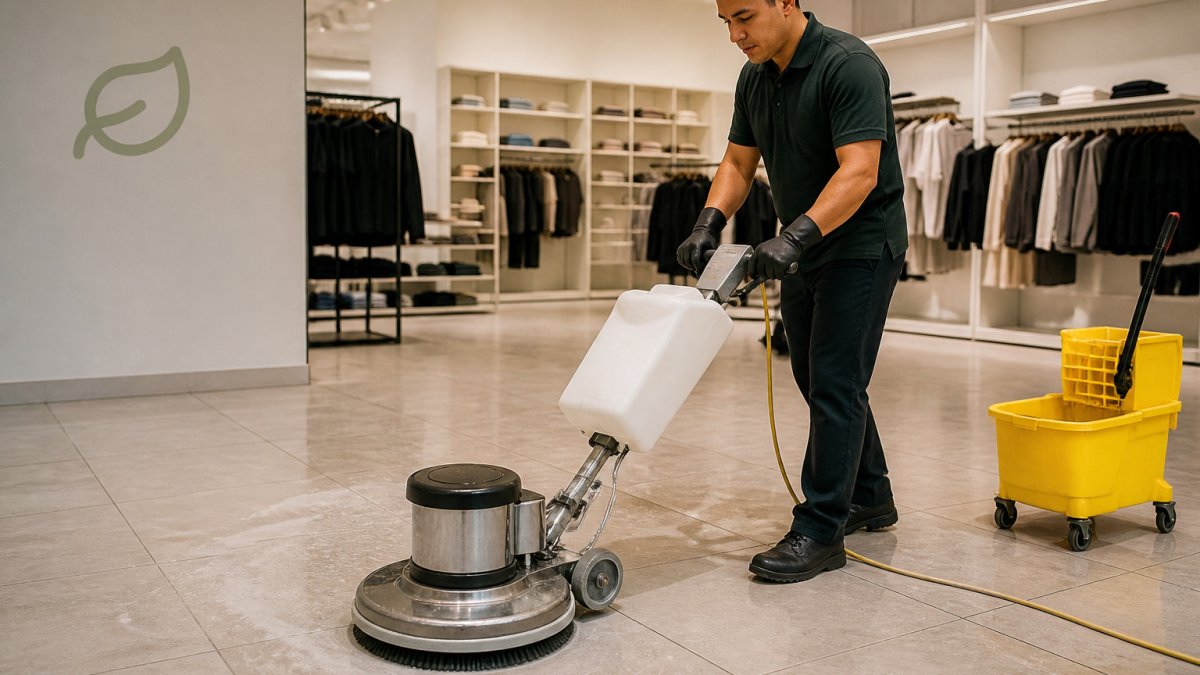
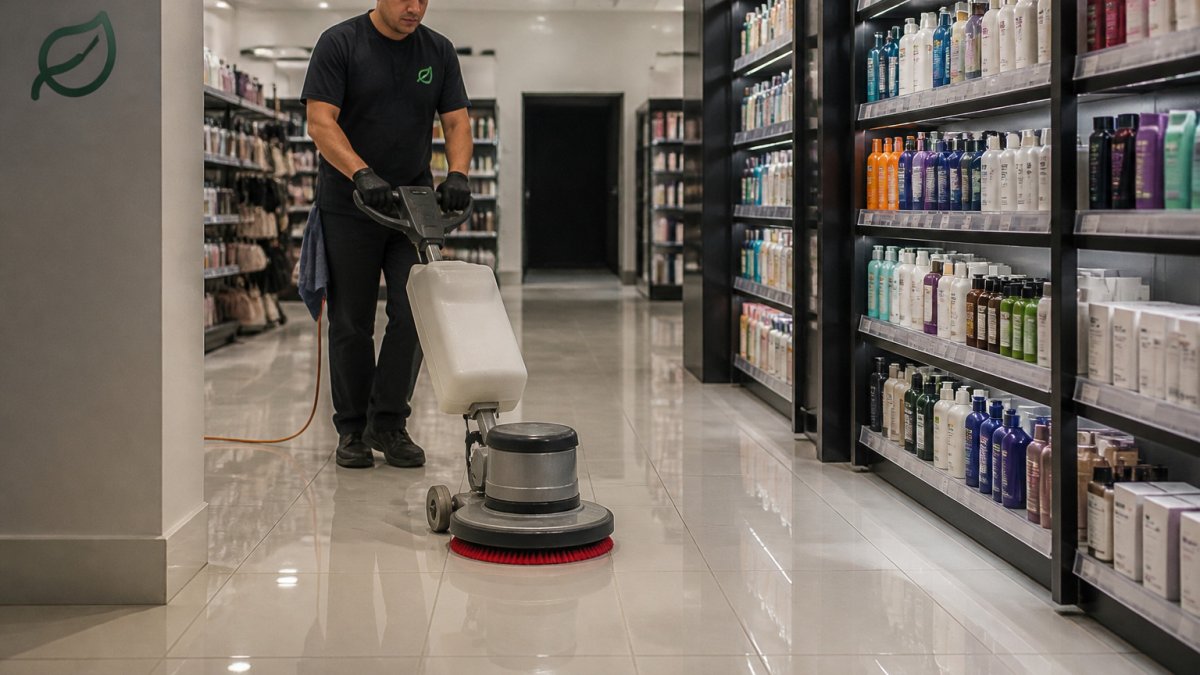
Equipment matters as much as chemistry. A low-moisture floor machine with a grout brush works well for large retail floors.
Slip-Risk Controls and Reopening the Floor
Wet tile is slippery, and a store with customers is a liability if the floor is not managed. Place clear wet-floor signs at every entry point to the cleaned zone, and use cones or barriers to keep people out until the floor is dry. Ask staff to confirm the surface is dry before removing barriers.
Reopening should follow a checklist. Confirm the floor is dry to the touch in several spots, check that grout lines are clear of standing water, and walk the area yourself before letting customers back in. Rushing this step is the most common cause of slip incidents after a cleaning.
Watch out: removing the barriers before the grout lines and corners are fully dry can leave slick spots that customers will not see until they step on them.
How Often to Clean Commercial Tile Floors in a Retail Store
Cleaning frequency should follow traffic and soil load, not a fixed calendar. A store near a busy intersection with heavy foot traffic and many entrances will need more frequent attention than a boutique in a quiet center. Entrances, checkout lanes and food-adjacent areas usually need the most attention.
A practical starting schedule for many stores looks like this:
| Zone | Typical Traffic | Suggested Cleaning Frequency |
|---|---|---|
| Entrance and vestibule | Very high | Daily spot cleaning, professional deep clean every 3 to 4 months |
| Main sales floor aisles | High | Weekly damp mopping, professional deep clean every 4 to 6 months |
| Checkout and service counters | High | Daily spot cleaning, professional deep clean every 3 to 4 months |
| Back-of-house and storage | Low to moderate | Monthly cleaning, professional deep clean once or twice a year |
Adjust these ranges after the first cleaning. Look at how quickly the grout darkens again, and shorten or lengthen the interval based on what you see.
Scheduling Cleaning Around Store Hours and Zones
Schedule the heaviest work after closing or before opening, when the sales floor is empty. Divide the store into zones so only one section is out of service at a time. Cleaning one aisle at a time lets the rest of the store stay open and keeps customers moving. Streamlining these logistical maneuvers allows staff to reduce weekly cleaning time while maintaining the pristine appearance of high-traffic retail environments.
Plan the sequence so the dirtiest zones are cleaned first, and clean-water rinses happen last. Build in drying time between zones and avoid cleaning the entrance during the busiest hours, when wet floors create the most risk.
For stores with limited after-hours access, a phased plan spread over several nights often works better than one long session. Ask the management team which hours are realistic before setting the schedule.
Tile Floor Maintenance for Businesses: What Store Staff Can Do Daily
Professional cleaning works best when staff keep the floor in good shape between visits. Simple daily habits slow soil buildup and extend the time between deep cleans.
- Sweep or dust mop entrances and high-traffic aisles at least once a day.
- Wipe spills immediately and place a wet-floor sign while the area dries.
- Place walk-off mats at every entrance to trap grit before it reaches the tile.
- Report stains or grout discoloration early, before they set.
- Avoid dragging heavy carts or furniture across tile without floor protectors.
- Use only the cleaning products the cleaning team has approved for the store's tile type.
Training staff on these steps takes a short session, and it pays off in fewer emergency cleanings and a sharper store appearance.
Booking Your First Retail Tile and Grout Cleaning with EcoClean
Your first professional visit sets the baseline for the whole maintenance plan. Pricing depends on quantity, dates, and delivery, so request a quote from EcoClean for current pricing.
Review our commercial cleaning services for businesses to see how we handle retail floors. When you are ready to schedule, contact EcoClean to request a quote or book the first visit. If you want to compare the full range of work we offer, the full service list covers carpet, upholstery and tile and grout cleaning.
For more background before you book, read why professional tile cleaning lasts longer and whether professional grout cleaning actually delivers results.
Frequently Asked Questions
How often should retail store tile and grout be professionally cleaned?
Most retail stores with steady foot traffic benefit from professional tile and grout cleaning every three to six months, with routine maintenance in between. Stores in high-traffic entrances, food-adjacent areas, or locations with heavy outdoor dirt may need cleaning more often. Traffic level and soil load matter more than the calendar, so a store that sees heavy daily use should plan for the shorter end of that range. Your cleaning provider can assess your floors and recommend a schedule that fits your operating hours.
How long does commercial tile and grout cleaning take?
Duration depends on the square footage, the number of zones, and how heavily the grout is soiled. A small boutique may be finished in a few hours, while a large sales floor can take a full overnight shift. Drying time also affects when the space can reopen, so plan for the floor to be fully dry before customers return. Pricing depends on quantity, scope, and scheduling. For a quote tailored to your store, visit EcoClean's website or request an estimate directly.
Can commercial tile and grout be cleaned after store hours?
After-hours and overnight cleaning is a common approach for retail stores because it avoids disrupting customers and reduces slip risk during service. Schedule the work to finish with enough time for the floors to dry completely before opening. Coordinating with store management on access, alarm codes, and zone priorities helps the crew work efficiently and keeps the schedule predictable.
How can retail stores keep grout from looking dirty between cleanings?
Daily sweeping or dust mopping removes grit that grinds into grout lines and dulls the surface. Mop with a pH-neutral, tile-safe cleaner rather than a heavy-duty product that can break down grout over time. Address spills right away, especially oils and colored liquids that stain grout. Placing mats at entrances reduces the dirt that reaches the floor, which slows grout discoloration considerably.