 blog
Is Grout Sealing Worth the Cost? 7 Factors to Weigh
Last Updated: November 2, 2026
Quick Summary
Grout sealing is worth the cost when your grout is cement-based, intact, and in a wet or spill-prone room where it absorbs water. It is usually not worth it for epoxy grout, dry rooms, or grout that is cracked or crumbling and needs repair first.
- Cement-based grout is porous and absorbs water, oil, and dirt unless sealed.
- Epoxy grout is non-porous and generally does not need sealing.
- Test by placing water on the grout; if it soaks in within minutes, reseal.
- Sealer wears off over time, so cement grout needs periodic resealing.
- Grout sealer and tile sealer are different products; match the one to your surface.
Table of Contents
- Does Grout Actually Need Sealing?
- What Grout Sealing Actually Costs
- What Sealer Protects Against and Where It Falls Short
- Grout Sealer vs Tile Sealer: Which One You Need
- How Often to Seal Grout and How to Tell When It's Due
- DIY Grout Sealing vs Hiring a Professional
- Deciding Whether Sealing Is Worth It for Your Floor
- Frequently Asked Questions
Does Grout Actually Need Sealing?
Is grout sealing worth the cost? For many homeowners, the answer depends on the grout type, the room, and how the floor gets used. Kitchens and bathrooms with dark, stained grout are a common concern for homeowners, and many people assume it is beyond saving. Sealing is often part of the answer, but not always the first step.
Grout is porous. Cement-based grout absorbs water, oil, and dirt unless a protective coating slows that absorption down. A sealer creates a barrier that helps keep liquids on the surface long enough to wipe them up.
Not every floor needs it, though. Epoxy grout is non-porous and generally does not need sealing. Some homeowners never need to seal at all. Others need to seal every year or two.
Grout is likely a good candidate for sealing if:
- It is cement-based (the most common type in older homes)
- It is in a high-moisture area, like a shower floor or kitchen backsplash
- Spills or pet accidents soak in quickly rather than beading up
- It has been cleaned and looks fine but still stains easily
Sealing is probably less important if:
- The grout is epoxy or urethane
- The area sees very little water or foot traffic
- The grout is already worn, cracked, or crumbling (repair or regrout first)
What Grout Sealing Actually Costs
Sealing cost depends on the size of the area, the sealer type, and who does the work. Pricing depends on the square footage, the number of rooms, and the condition of the grout. For current pricing or a quote for your floor, visit the EcoClean website.

That said, you can build a realistic budget before you call anyone. The table below is a general guide to the materials a DIY job requires. Check current prices at your local hardware store or online before buying.
| Item | Typical U.S. retail range | Notes |
|---|---|---|
| Penetrating grout sealer (pint) | $15-$30 | Covers roughly 50-150 sq ft per coat depending on porosity |
| Penetrating grout sealer (quart) | $25-$50 | Better value for floors over 200 sq ft |
| Penetrating grout sealer (gallon) | $60-$120 | For large floors or multiple rooms |
| Applicator bottle or brush | $5-$15 | A cheap squeeze bottle with a narrow tip works well |
| Foam brushes or applicator pads | $3-$10 | Disposable is fine |
| Rags, bucket, and cleaner | $10-$25 | You likely already own most of this |
Professional sealing usually costs more upfront because it includes labor, equipment, and surface preparation. Your quote will depend on square footage, number of rooms, grout condition, and access.
The break-even question. The real comparison is not "DIY cost versus professional cost" in isolation. It is total cost over the life of the floor, including the time you spend on each resealing cycle. If your time is worth more than the labor difference, or if poor prep would force a redo, professional sealing can come out ahead. If the area is small and the grout is in good shape, DIY is usually the better value.
Ways to keep costs down:
- Seal only the areas that stain
- Clean and dry the grout thoroughly before sealing so the first coat actually bonds
- Buy a sealer sized for your actual square footage, not a larger container you will not use
- Reseal on schedule rather than waiting for heavy staining
What Sealer Protects Against and Where It Falls Short
A good sealer helps grout resist water and stains. It does not make grout waterproof forever, and it does not stop grout from cracking or discoloring from wear.
What sealer helps with:
- Slowing water absorption into porous grout
- Making spills easier to wipe up before they stain
- Reducing the buildup of dirt and oils in the grout lines
Where sealer falls short:
- It wears off over time, especially on floors with heavy foot traffic
- It cannot fix grout that is already cracked or stained deep inside the joint
- Some sealers can leave a slight haze or change the grout's color
- It does not stop mold or mildew if moisture stays trapped under the surface
A common mistake is assuming the seal lasts forever. Many homeowners seal once and forget it. The protection fades, and the grout stains again while they think it is still covered.
Grout Sealer vs Tile Sealer: Which One You Need
These two products are not the same. Grout sealer is designed for the grout lines. Tile sealer is designed for the tile surface itself, and it is needed only for porous tiles like natural stone or unglazed ceramic.
Sealing the tile when you only need to seal the grout wastes money and can leave the grout exposed. Sealing both is sometimes necessary, especially with natural stone.
Quick guide:
- Grout sealer: Use on cement-based grout lines
- Tile sealer: Use on porous tile like natural stone or unglazed ceramic
- Glazed porcelain or ceramic tile: Usually needs no tile sealer Natural stone surfaces often require more specialized maintenance than standard grout lines, and homeowners should consider whether professional stone repair is necessary to preserve the integrity of their investment.
Check the product label. It should say whether it is for grout, tile, or both. When in doubt, ask a professional before applying anything to natural stone.
How Often to Seal Grout and How to Tell When It's Due
Cement grout often benefits from resealing periodically, though high-use areas may need it sooner. The exact interval depends on the product and the floor. Always follow the manufacturer's instructions on the label.
Signs it is time to reseal:
- Water no longer beads up on the grout surface
- Water soaks in and darkens the grout within a few minutes
- Stains appear after spills that used to wipe clean
- The grout looks dull or dry compared to the rest of the floor
Test it before you decide. Put a few drops of water on the grout. If the water soaks in within a few minutes, the seal is likely worn. Learn how to properly clean grout before judging whether it needs resealing.
Clean the grout before testing or resealing. Dirt and residue can make a healthy seal look like it has failed.
DIY Grout Sealing vs Hiring a Professional
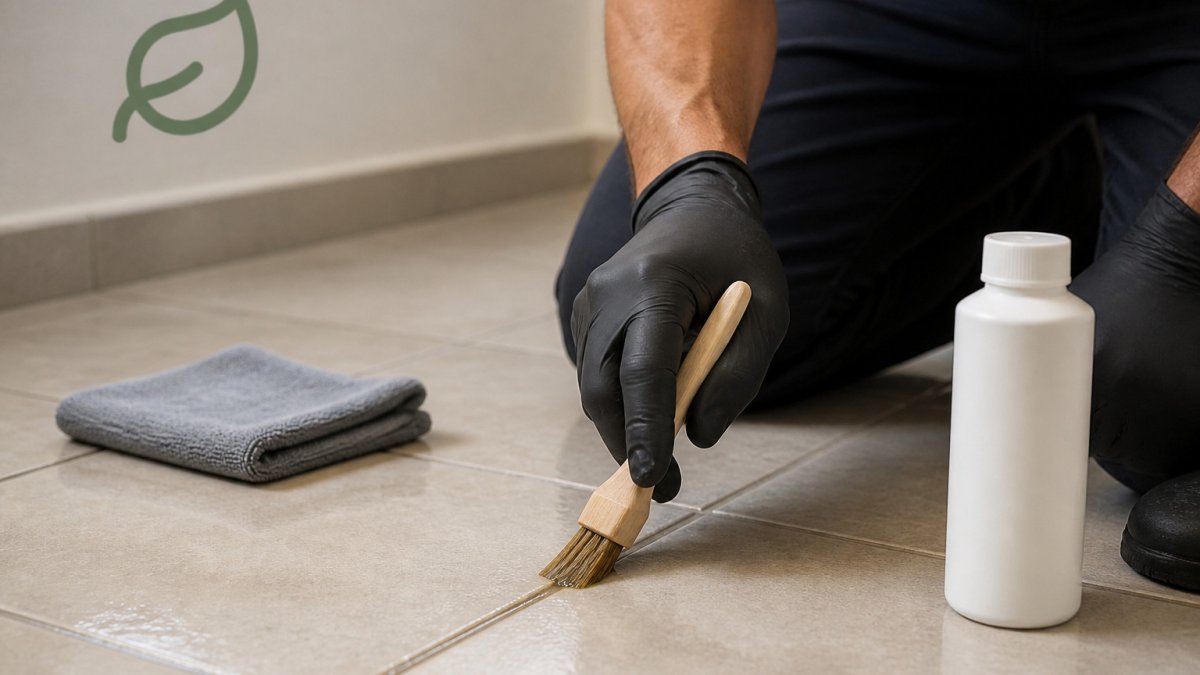
DIY sealing works well for small areas, like one shower floor or a kitchen backsplash. It takes a few hours, including cleaning and drying time. Most DIY projects fail because of poor prep, not the sealer itself.
Hiring a professional makes more sense for large floors, heavily stained grout, or natural stone where a wrong product could cause damage. A professional may also be faster and more consistent across a big area. Find a residential tile cleaning service near you and compare pricing and options.
DIY is usually a good fit when:
- The area is small
- The grout is in good shape
- You can give the project a full day to dry and cure
Hiring help is usually a better fit when:
- The floor is large or has many rooms
- The grout is heavily stained or needs cleaning first
- The tile is natural stone or another delicate material
EcoClean offers professional tile and grout cleaning services. For current service details or a quote, visit the EcoClean website.
Deciding Whether Sealing Is Worth It for Your Floor
Is grout sealing worth the cost? It is when your grout is porous, your floor sees regular moisture or spills, and the seal is still in good shape to protect it. It is less worth it when the grout is cracked, when the room stays dry, or when the grout is epoxy.
That is the short answer. The useful answer is a short framework you can run in a few minutes. Four factors typically decide the question: grout condition, room use, moisture exposure, and your tolerance for ongoing maintenance.
Step 1: Check grout condition. Run a finger along a grout line. If it crumbles or flakes, sealing will not fix it, repair or regrout first. If the grout is intact but dark or stained, deep cleaning comes before sealing. Sealing over dirty grout traps the stain under the sealer.
Step 2: Classify the room. Kitchens, bathrooms, showers, laundry rooms, and mudrooms see regular water and spills. Bedrooms, living rooms, and formal dining areas usually see little moisture. High-moisture rooms are the strongest candidates for sealing; dry rooms are the weakest.
Step 3: Test moisture absorption. Put a few drops of water on the grout. If the water beads up and sits on the surface, the existing seal is working. If it soaks in and darkens the grout within a few minutes, the grout is absorbing liquid and a fresh seal will help.
Step 4: Weigh your maintenance tolerance. Sealer is not permanent. Cement grout often needs periodic resealing, and high-traffic floors may need it sooner. If you are willing to reseal on schedule and clean spills promptly, sealing pays off.
A simple decision matrix:
| Situation | Likely verdict |
|---|---|
| Cement grout, shower or kitchen, intact, absorbs water | Seal, strong value |
| Cement grout, low-moisture room, water beads up | Skip for now; retest in a year |
| Epoxy or urethane grout | Skip, non-porous |
| Cracked or crumbling grout | Repair or regrout first, then seal |
| Heavily stained grout | Deep clean first, then seal |
| Natural stone tile with cement grout | Seal grout and consider tile sealer |
Where the cost-benefit tips. Sealing is usually most cost-effective when it prevents a problem rather than fixing one. Regular resealing is generally less costly than periodic deep cleaning and, eventually, regrouting. Regrouting a shower floor is a much larger project than sealing, and it becomes necessary when grout has degraded beyond what sealer can protect.
Before you commit to sealing, deep cleaning may solve the problem on its own. Find out whether a deep grout cleaning is worth doing first.
Frequently Asked Questions
Do I need to seal grout?
Cement-based grout is porous and absorbs water, oil and cleaning chemicals, so it stains more easily without a sealer. Epoxy grout and some newer urethane grouts are non-porous and generally do not need sealing. Check the product data sheet from the manufacturer to confirm which type you have. If you are unsure, a few drops of water on the grout will tell you: if it soaks in within a few minutes, the grout is porous and benefits from sealing.
How much does it cost to seal grout?
Pricing depends on the size of the floor, the sealer you choose and whether you hire someone. For current pricing or a quote based on your square footage and the condition of your grout, visit the EcoClean website. For a DIY approach, the main cost is the sealer itself and basic tools.
How often should grout be sealed?
Cement grout often benefits from periodic resealing, depending on traffic, exposure to water and the sealer used. Shower floors and kitchen backsplashes may need attention sooner. A simple check is to sprinkle water on the grout after cleaning: if it beads up, the sealer is still working, and if it soaks in, it is time to reseal.
Can grout sealer prevent stains and make cleaning easier?
A properly applied penetrating sealer reduces how much liquid soaks into grout, which makes spills like coffee, oil and cleaning products easier to wipe away before they set. It does not make grout stain-proof, and it will not hide existing discoloration. Regular cleaning with a pH-neutral, non-toxic cleaner keeps the sealer working longer and protects the grout surface.
Ready to get your grout looked at by a team that cares about a healthy home? EcoClean uses eco-friendly cleaning methods for tile and grout, and we can tell you honestly whether sealing makes sense for your space. Contact EcoClean for a quote and a clear recommendation.