 how-to
How to Clean High Traffic Commercial Carpets That Last
Last Updated: November 9, 2026
Quick Summary
To clean high traffic commercial carpets, identify the fiber first, vacuum daily with a commercial HEPA vacuum, and match the cleaning method to the space. Deep clean heavy traffic lanes every 3 to 6 months and extreme traffic areas quarterly with interim VLM plus annual extraction.
- Never wet a carpet until you identify its fiber, since heat and the wrong chemical can flatten olefin pile for good.
- Two slow passes with a commercial HEPA vacuum remove loose soil before it grinds into the pile.
- Hot water extraction dries in 6 to 12 hours, while VLM and encapsulation dry in 1 to 2 hours.
- Blot protein stains with cold water and an enzyme cleaner, and never use heat on them.
- Entryway mats are the cheapest carpet protection, so swap and clean loaded mats weekly.
Table of Contents
- Start With Fiber ID and a Daily Vacuum Routine
- Commercial Carpet Cleaning Methods Compared
- How Often to Deep Clean Commercial Carpet by Traffic Level
- Commercial Carpet Spot Cleaning: Protein, Oil, and Wicking
- Commercial Carpet Drying Time and Post-Cleaning Air Quality
- Entryway Mats, Traffic Lanes, and Preventative Maintenance
- Budgeting, Green Certification, and ROI of a Maintenance Plan
- Building Your EcoClean Cleaning Schedule
- Frequently Asked Questions
Start With Fiber ID and a Daily Vacuum Routine
Learning how to clean high traffic commercial carpets starts with two cheap steps: identify the fiber, then vacuum daily. Most facility teams skip both and pay for it later.
Grit acts like sandpaper under every footstep; once it reaches the backing, no vacuum will pull it out.
Identify the Fiber Before You Touch It
Never wet a carpet until you know what it is made of. Commercial floors are usually one of these:
- Nylon: tough, resilient, handles hot water extraction well
- Olefin (polypropylene): common in retail, sensitive to heat and oil-based soil
- Polyester: soft feel, prone to matting in heavy traffic
Check the manufacturer tag or test a hidden corner. A common mistake is treating olefin like nylon. Heat plus the wrong chemical can flatten the pile for good.
Daily Vacuuming That Actually Lifts Traffic Soil
Daily vacuuming is the highest-value task on any carpet maintenance schedule. Two passes with a commercial HEPA vacuum removes loose soil before it grinds into the pile.
A few rules we follow:
- Use a pile lifter on constant-footfall lanes
- Slow the passes down; speed lifts almost nothing
- Change bags often, since a full bag cuts suction
Vacuuming decides whether your deep clean works or just pushes dirt around.
Commercial Carpet Cleaning Methods Compared
Three commercial carpet cleaning methods cover most jobs: hot water extraction, very low moisture (VLM), and encapsulation. Each one solves a different problem, so match the method to the space.
| Method | Water Use | Drying Time | Best For |
|---|---|---|---|
| Hot water extraction | High | 6-12 hours | Deep soil, periodic restoration |
| Very low moisture | Minimal | 1-2 hours | Daily-maintained offices, quick turnaround |
| Encapsulation | Low | 1-2 hours | High-traffic lanes, interim cleaning |
Drying Time
Hot Water Extraction and Very Low Moisture
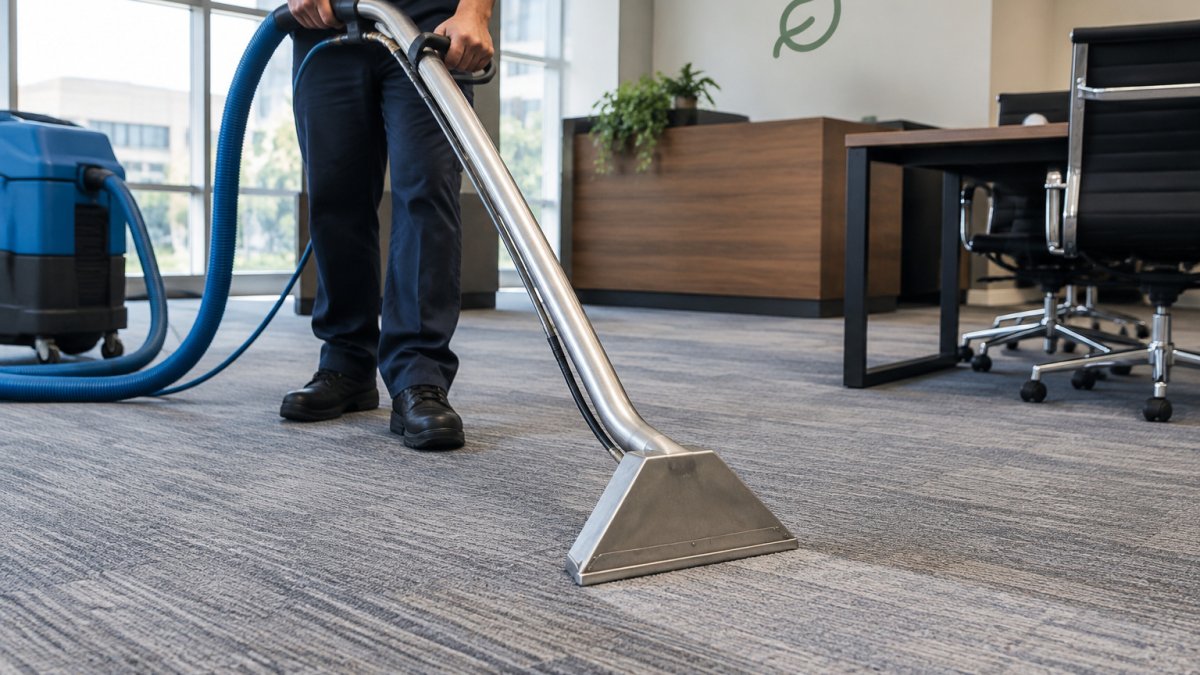
Hot water extraction, often called steam cleaning, injects heated water and detergent into the pile, then pulls soil out with strong suction.
Very low moisture cleaning uses a fraction of the water. Technicians agitate a pH-balanced cleaner into the fiber and extract with a high-powered wand.
Choosing between them comes down to traffic and timing. If you want the full picture on VLM before you decide, read our deeper breakdown of very low moisture carpet cleaning and how it fits a busy schedule.
Encapsulation and Crystallizing Solutions
Encapsulation cleaning applies a crystallizing solution that surrounds soil particles. As the solution dries, it forms crystals that release from the fiber under vacuum.
This method suits traffic lanes cleaned often but never deeply.
For facilities managers comparing methods and booking a service, our commercial carpet cleaning service covers both extraction and low-moisture options.
How Often to Deep Clean Commercial Carpet by Traffic Level
Deep clean frequency depends on soil load, fiber type, and facility use, not the calendar. Deep clean frequency depends on traffic, fiber, and soil load, so a written schedule tied to those factors works best. The framework below ties frequency to measurable signals so you can defend the schedule to a budget owner.
A Traffic-Level Baseline
Use this as a starting point, then adjust for fiber and soil type:
- Light traffic (private offices, conference rooms, executive suites): every 12 months
- Moderate traffic (general office floors, cubicle aisles): every 6 to 9 months
- Heavy traffic (lobbies, main hallways, retail aisles): every 3 to 6 months
Adjust the Interval for Fiber and Soil Type
Fiber chemistry changes how quickly a carpet shows and holds soil, so the same traffic level can justify different frequencies:
- Nylon is resilient and hides soil well, but its affinity for oil-based soil means it loads up in food service and break areas. Keep it on the baseline schedule and spot-treat oil immediately.
- Olefin (polypropylene) is solution-dyed and resists staining, but it is oleophilic, it attracts oil-based soil and can mat under heat. In retail and food service, olefin often needs the shorter end of its traffic band.
- Polyester is soft and prone to matting under heavy footfall; in heavy-traffic lanes it may need interim VLM between extractions to keep the pile from crushing.
Soil type matters as much as volume. Gritty soil (sand, road salt, parking-lot dust) abrades fiber and backing and calls for more frequent extraction in entry zones. Oily soil (kitchen grease, lotion, vehicle exhaust) binds to olefin and nylon and responds better to interim encapsulation than repeated wet cleaning.
Read the Carpet, Not the Calendar
The most reliable trigger is visual and tactile, not a date on a spreadsheet:
- Traffic lanes look dull or gray while open floor looks fine, the schedule is behind; move up a deep clean.
- Pile feels matted or crunchy underfoot in lanes, grit has reached the backing; vacuuming alone will not fix it.
- Spots reappear after cleaning, wicking is happening, which usually means extraction was incomplete or drying was too slow.
Facilities often clean on a fixed annual contract and ignore these signals until the carpet is visibly worn. By then, the cost is not a cleaning, it is replacement.
Interim vs. Restorative Cleaning
Frequency is really two schedules running in parallel:
- Interim cleaning (VLM or encapsulation) targets traffic lanes between deep cleans. It removes surface soil, lifts pile, and buys time before extraction.
- Restorative cleaning (hot water extraction) reaches the backing and resets the carpet, the annual or semi-annual event interim cleaning cannot replace.
Match the method to the interval: encapsulation for frequent interim passes on olefin and solution-dyed fibers, VLM for offices that need one-hour turnaround, and hot water extraction for the periodic reset. If lanes look worn but the open floor is clean, you are overdue on interim cleaning, not necessarily extraction.
Document the Schedule
A frequency recommendation only survives staff turnover and budget reviews if it is written down. Record the fiber type, traffic level, method used, dry time, and date for each zone, so a budget owner's question about why the lobby is quarterly and the offices annual gets answered with data instead of opinion.
Commercial Carpet Spot Cleaning: Protein, Oil, and Wicking
Spot cleaning works when you match the treatment to the stain type. Protein-based stains and oil-based stains need different chemistry, and using the wrong one sets the stain instead of lifting it.
- Protein stains (blood, milk, pet accidents): cold water and an enzyme cleaner, never heat
- Oil-based stains (grease, makeup, lotion): a solvent or degreaser, then blot
- Coffee and tea: a mild pH-balanced cleaner, blot from the edge inward
Watch out: scrubbing a spot spreads it and drives it into the backing. Blot, do not rub.
Wicking is the stain that comes back, when moisture pulls trapped soil up the fiber as the carpet dries.
Commercial Carpet Drying Time and Post-Cleaning Air Quality
Drying time is a health and scheduling issue, not just a convenience. A carpet that stays damp breeds odor and mold and traps soil faster.
Typical drying times:
- VLM and encapsulation: 1 to 2 hours
- Hot water extraction: 6 to 12 hours, depending on airflow
Speed drying with air movers, open the HVAC system up, and clean when the building is empty. Post-cleaning air quality improves with pH-balanced, low-residue cleaners and a HEPA vacuum first, fewer chemical residues mean fewer fumes, which matters in offices with staff who have allergies.
Entryway Mats, Traffic Lanes, and Preventative Maintenance
Entryway mats are the cheapest carpet protection you can buy. A proper matting system catches soil before it reaches the carpet and cuts the load on your vacuum and extraction schedule.
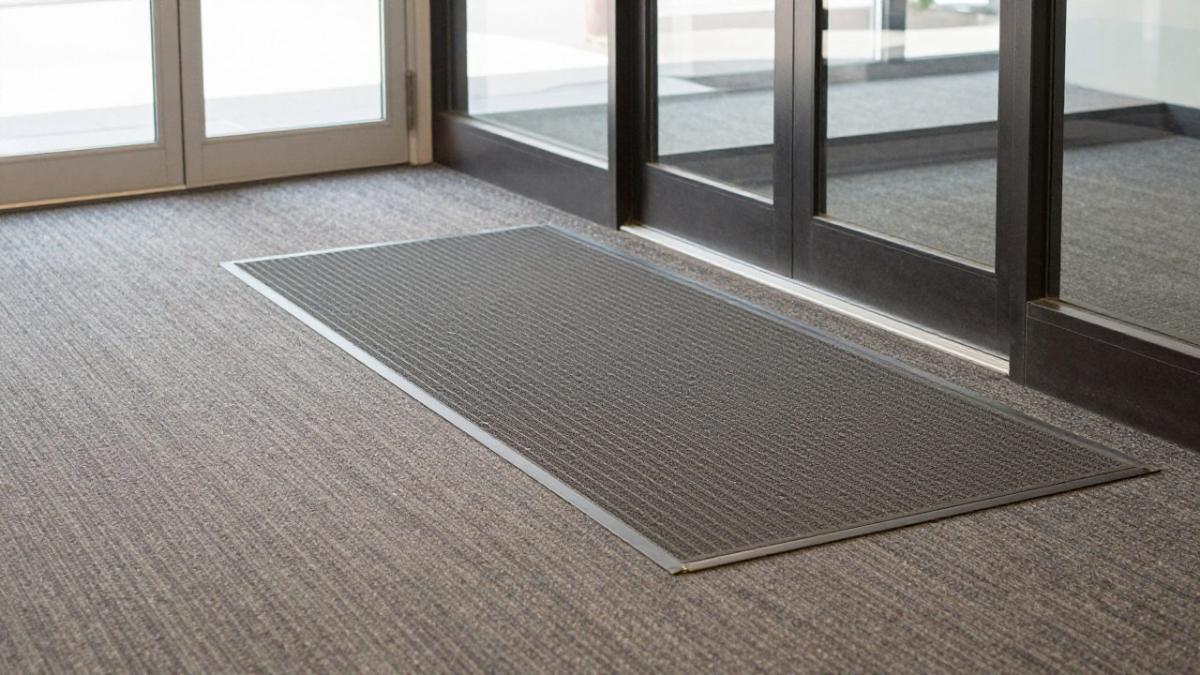
Build a mat system in layers:
- Outdoor scraper mats to knock off grit
- Interior walk-off mats long enough for several steps
- Swap and clean mats weekly, since a loaded mat stops working
Rotate furniture and traffic flow where you can. For a full routine, our carpet care guide covers ongoing maintenance between professional visits.
Budgeting, Green Certification, and ROI of a Maintenance Plan
Most commercial carpet guides stop at cleaning methods. Facility managers need a different answer: what does a maintenance plan cost, what does it return, and how do green certification requirements change the specification?
Build the Budget Around Three Cost Buckets
A defensible carpet maintenance budget has three line items, not one:
- Routine vacuuming and interim cleaning, the recurring labor and consumables cost. This is the largest line item over a multi-year horizon and the one most often cut first, even though it protects the asset.
- Periodic restorative extraction, the scheduled deep clean, priced per square foot and tied to traffic level. Budget it annually rather than treating it as an emergency expense.
- Spot and stain response, a small reserve for reactive work. Facilities that skip routine cleaning tend to see this bucket grow, because stains set and require more aggressive (and more expensive) treatment.
A common pattern is budgeting only for annual extraction and treating vacuuming as free labor. That understates the true cost of ownership and makes the maintenance plan look more expensive than replacement when the opposite is usually true.
The ROI Case: Maintenance vs. Replacement
Carpet replacement carries hard costs (material, adhesive, labor, disposal) plus soft costs (facility downtime, furniture moving, occupant disruption). A maintenance plan carries recurring costs but extends the service life of the existing asset.
Watch out: cutting interim cleaning to save budget often shifts cost into replacement sooner than the budget cycle anticipates, which is why maintenance plans should be reviewed against carpet condition, not just last year's line item.
Green Certification and Specification Language
The relevant frameworks for commercial facilities include:
- LEED (Leadership in Energy and Environmental Design), the U.S. Green Building Council's rating system includes credits related to green cleaning and indoor environmental quality. Carpet cleaning products and procedures can contribute to those credits.
- Green Seal, a third-party certification for cleaning products and services. Specifying Green Seal-certified chemicals is a common way to satisfy procurement requirements without writing custom language.
- EPA Safer Choice, the U.S. Environmental Protection Agency's label for products that meet its safer-chemistry criteria. It is a recognizable signal for low-toxicity formulations.
When you write a specification, ask vendors three questions: which products are certified and by whom, what the pH and residue profile is, and how they handle post-cleaning air quality and drying. A vendor that cannot answer those questions is not positioned to support a green certification requirement.
Track the Plan Like an Asset
Budgeting and certification both depend on records. Keep a simple log per zone: fiber type, traffic level, method used, product used, dry time, and date. That log justifies the budget at review time and gives you evidence for certification or tenant reporting.
When you formalize a recurring plan, know what belongs in the paperwork. Our guide on what to look for in a carpet cleaning contract covers scope, frequency, and product standards. To build realistic numbers into your budget, see average professional carpet cleaning costs before you commit.
Building Your EcoClean Cleaning Schedule
The hard part is not knowing the methods. It is keeping the schedule running when the building is busy and budgets are tight.
At EcoClean, we build that plan around your traffic and fiber type. Convenient online booking helps keep your visits on track.
Ready to plan your commercial carpet care? Visit the EcoClean website for current pricing or a quote.
Frequently Asked Questions
What is the best method for cleaning high traffic commercial carpets?
Hot water extraction is the standard for deep cleaning because it flushes embedded traffic soil out of the carpet backing, not just the surface. Fiber type decides which method is safe, so confirm the fiber before choosing.
How often should commercial carpets be deep cleaned?
Match the cycle to foot traffic. Entryways and main traffic lanes often need attention more frequently than private offices. A written commercial carpet maintenance schedule helps you plan cleaning around your own traffic levels.
How long does commercial carpet take to dry after cleaning?
Commercial carpet drying time depends on the method. Drying time depends on the method and conditions, such as humidity and airflow. For current service details, visit the EcoClean website.
Can you use a carpet extractor on commercial carpet?
Fiber type and condition determine which cleaning methods are appropriate. For guidance on your carpet, contact EcoClean through the website. The risks are oversaturation and slow drying, which can affect the carpet backing and adhesive. Use pH-balanced cleaners, keep dwell time to the label, and run enough dry passes. On older or glued-down installations, confirm the backing condition first, since excess water is where damage usually starts.