 how-to
How Can You Improve Bedroom Air Quality Fast?
Last Updated: November 1, 2026
Quick Summary
The fastest way to improve bedroom air quality is to clean the sources of dust and allergens, ventilate the room, and control moisture. Vacuum weekly with a HEPA filter, wash bedding in hot water, keep pets out, and choose fragrance-free products. Air out the room in short cross-ventilation bursts when outdoor air is cleaner.
- Vacuum carpets and rugs weekly with a HEPA filter to capture dust and allergens.
- Wash sheets and pillowcases in hot water, since they gather dust mites quickly.
- Open two windows on opposite sides for 10 to 15 minutes when outdoor air is cleaner.
- Keep indoor humidity between about 30 and 50 percent to discourage mold growth.
- Match an air purifier's CADR to room volume, aiming for 4 to 5 air changes per hour.
Table of Contents
- Why Bedroom Air Quality Matters for Sleep and Allergies
- How to Improve Bedroom Air Quality Without an Air Purifier
- How Often to Ventilate a Bedroom and When to Open Windows
- Cleaning Floors, Bedding and Surfaces to Cut Dust
- Controlling Humidity and Preventing Mold in the Bedroom
- Choosing the Best Air Purifier for a Bedroom
- How to Test Indoor Air Quality at Home
- Your Next Step: Booking a Professional Bedroom and Carpet Clean
- Frequently Asked Questions
Why Bedroom Air Quality Matters for Sleep and Allergies
Bedroom air quality is often the first thing people overlook. You spend about a third of your life in bed, so the air you breathe there matters.
Bedroom air quality is the mix of dust, pollen, pet dander, humidity and chemicals in the room you sleep in. Poor bedroom air quality can leave you stuffy, itchy-eyed and restless at night.
Dust mites, pet dander and pollen settle into mattresses, carpets and curtains. A EPA guidance on indoor air quality explains how indoor pollutants can build up when homes are closed tight. For a non-toxic approach to carpets in a baby's room, see safe carpet cleaning for newborns.
Here is what usually drives poor bedroom air:
- Dust and dust mites on bedding and carpet
- Pet dander and pet accidents
- Outdoor pollen and smoke entering through windows
- Humidity that encourages mold
- Cleaning products and scented sprays
The fastest wins come from a few simple habits. Ventilate, clean the floors and bedding, and control moisture. These steps cost little and work even if you never buy an air purifier.
How to Improve Bedroom Air Quality Without an Air Purifier
You do not need an expensive machine to make your bedroom air cleaner. Start with the basics and build up from there.
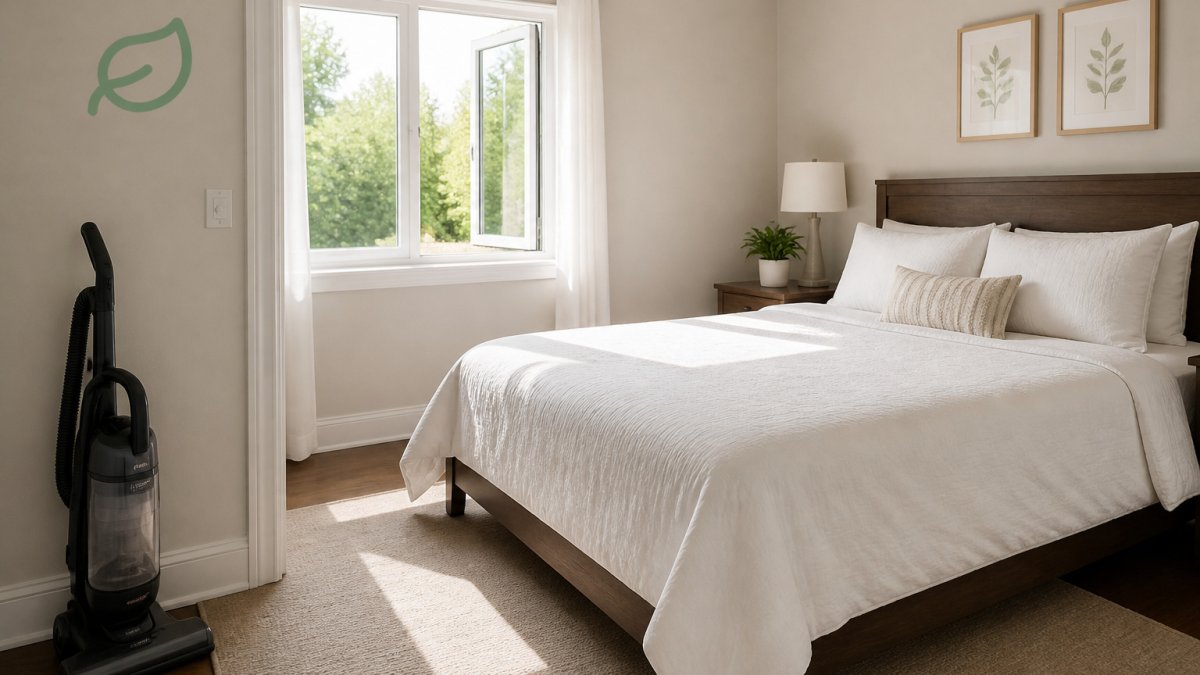
Follow these steps in order:
- Vacuum weekly with a HEPA filter. Dust and allergens collect in carpets and rugs.
- Wash bedding in hot water. Sheets and pillowcases gather dust mites quickly.
- Keep pets out of the bedroom. Dander settles on the bed and stays in the air.
- Remove shoes at the door. Shoes track in dirt, pollen and outdoor grime.
- Choose fragrance-free products. Scented candles and sprays add particles to the air.
A common mistake is cleaning the room with strong chemical sprays and then closing the door. That traps the fumes.
Plants are often recommended to clean indoor air, but they do little to remove particles in a normal bedroom.
Watch out: Vacuuming without a HEPA filter can blow fine dust back into the room. Check your vacuum's filter before you start.
These are the basic steps the article recommends, with how often to do each one.
| Step | What to do | Time or frequency |
|---|---|---|
| Vacuum | Use a HEPA filter on carpets and rugs | Weekly |
| Bedding | Wash sheets and pillowcases in hot water | Regularly, in hot water |
| Pets | Keep pets out of the bedroom | Ongoing |
| Shoes | Remove shoes at the door | Every entry |
| Products | Choose fragrance-free products | Ongoing |
| Ventilation | Air the room out after gentle cleaning | After cleaning |
How Often to Ventilate a Bedroom and When to Open Windows
Ventilation is the cheapest way to lower bedroom pollutants, but opening a window is not automatically an improvement. The decision should depend on what is happening outside. Most bedrooms need some fresh air every day, yet the right duration and timing vary with outdoor conditions.
A practical baseline is a short cross-ventilation burst: open two windows on opposite sides of the room for 10 to 15 minutes. This exchanges a meaningful share of stale air without letting the room's temperature drift far. In a closed bedroom, carbon dioxide from breathing can climb overnight; a morning burst brings it back down.
Before you open anything, check three outdoor conditions:
- Particle pollution (PM2.5): Fine particles from smoke, traffic, and dust. If the air looks hazy or smells smoky, keep windows closed and rely on filtration.
- Pollen: Tree, grass, and weed pollen peaks in the morning for many plants. If you have seasonal allergies, ventilate in the late afternoon or evening instead.
- Ozone: Ground-level ozone tends to peak on hot, sunny afternoons. Ozone is a lung irritant, so open windows in the early morning or after sunset during hot spells.
A simple rule: open windows when outdoor air is cleaner than indoor air, and close them when it is not. Consistent ventilation serves as a foundational step, but maintaining a healthy environment often requires integrating a broader range of proven air quality strategies to address persistent indoor pollutants.
Mechanical ventilation helps when windows must stay closed. A bathroom exhaust fan run for 15 to 20 minutes pulls humid, stale air out of the bedroom suite. A ceiling fan does not bring in fresh air, but it does keep air moving, which helps particles stay suspended long enough for a filter or open window to remove them. Pair airflow with cleaning so you are not simply redistributing dust.
Watch out: Do not leave a window open all day in a hot, dusty climate. That can raise indoor particle levels and force your air conditioner to work harder. Short bursts are more effective than constant leakage.
Cleaning Floors, Bedding and Surfaces to Cut Dust
Dust builds up faster than most people expect. A regular cleaning routine keeps it under control.
Here is a simple bedroom cleaning schedule:
- Daily: Make the bed, pick up clutter and wipe nightstands with a damp cloth
- Weekly: Vacuum floors and rugs, dust hard surfaces and wash bedding
- Monthly: Clean curtains, vents and the space under the bed
- Every six months: Have carpets and upholstery professionally cleaned
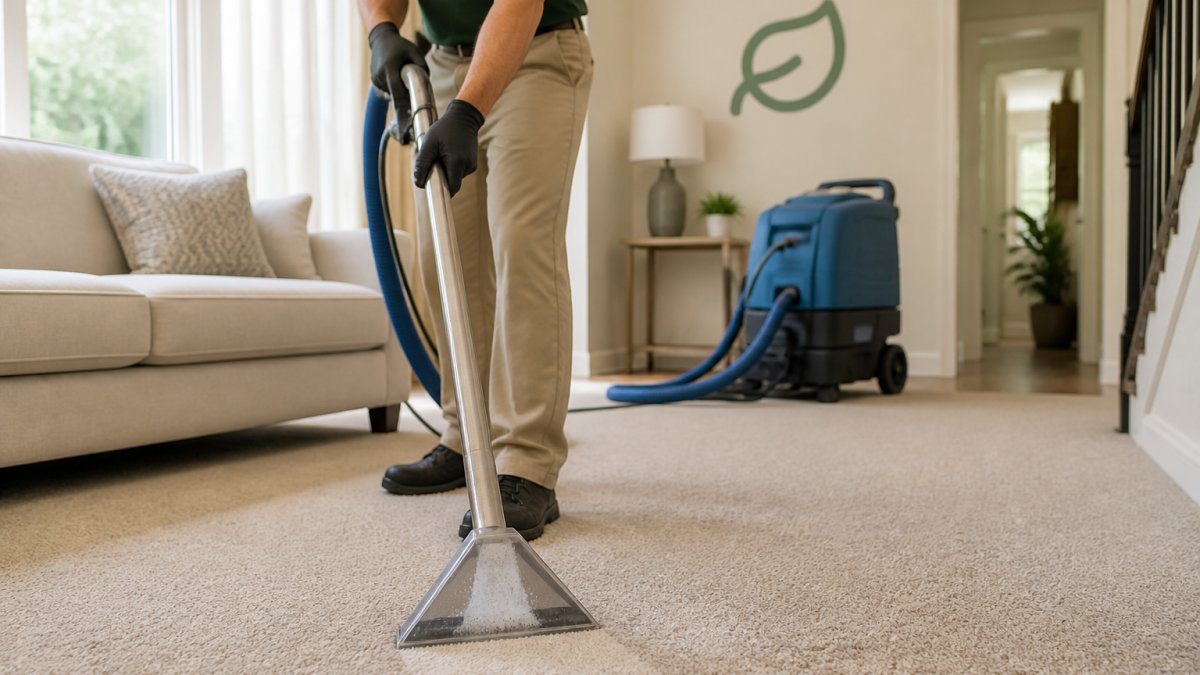
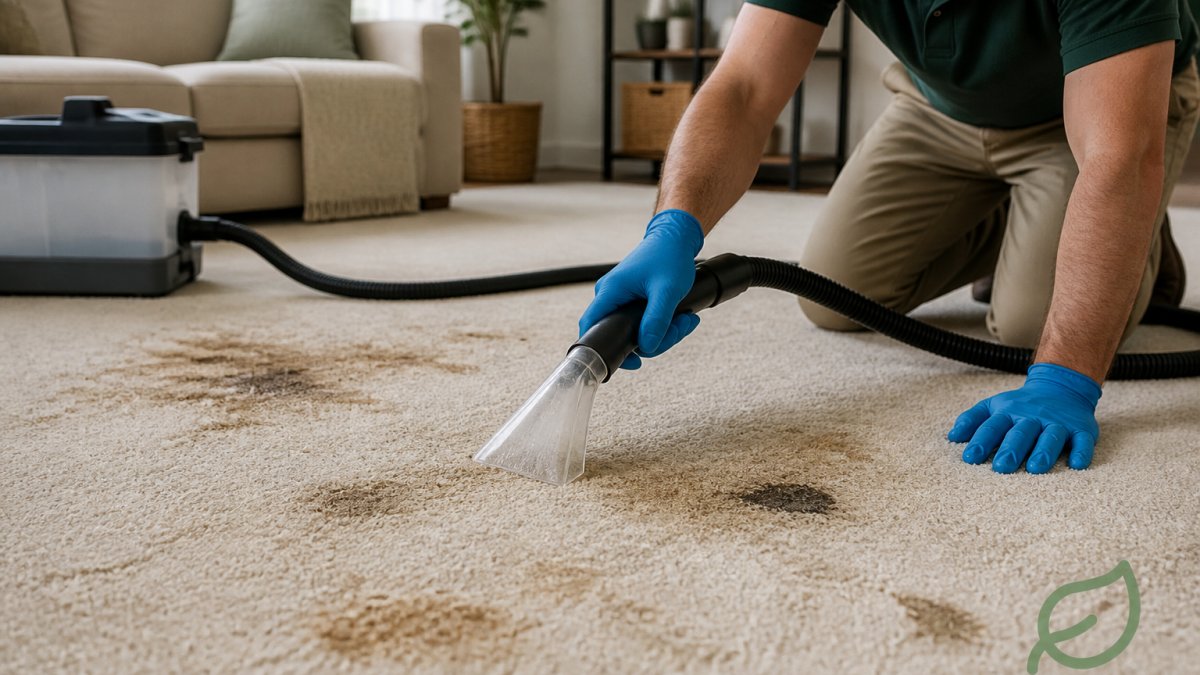
Carpets and upholstered furniture hold dust, pet dander and allergens deep in their fibers. EcoClean uses hot water extraction with eco-friendly products.
Wet dusting works better than dry dusting. Dry dusters push particles back into the air. Use a damp microfiber cloth instead.
Controlling Humidity and Preventing Mold in the Bedroom
Humidity is one of the most overlooked causes of poor bedroom air. Moisture from breathing, showers and damp laundry can raise humidity levels overnight.
Mold grows when humidity stays high. The CDC guidance on mold and health notes that controlling moisture is the main way to prevent indoor mold.
Use these steps to control humidity:
- Keep indoor humidity between about 30 and 50 percent
- Run the bathroom exhaust fan during and after showers
- Dry laundry outside or in a well-ventilated space
- Fix leaks and damp spots quickly
- Look for dark spots on walls, window frames and under carpets
A humidity gauge costs little and shows you when levels climb. Check it at night, when the bedroom is closed up.
Watch out: Do not use a bleach solution to clean small mold patches on porous surfaces like drywall or carpet. Remove the damaged material and call a professional for widespread mold.
Choosing the Best Air Purifier for a Bedroom
An air purifier can reduce dust, pet dander, pollen, and smoke particles in a bedroom when it is sized and used correctly. A common mistake is buying a unit that is too small for the room.
The key specification is clean air delivery rate (CADR), measured in cubic feet per minute (cfm) for smoke, dust, and pollen. CADR tells you how much filtered air the unit delivers, not how large the room is. To compare units fairly, use the air changes per hour (ACH) calculation:
ACH = (CADR × 60) ÷ room volume in cubic feet
For a bedroom, aim for at least 4 to 5 air changes per hour while you sleep. A 10-by-12-foot room with an 8-foot ceiling has 960 cubic feet. To hit 5 ACH, you need a CADR of about 80 cfm. A larger room or a higher target needs proportionally more. Many manufacturers rate CADR at the unit's highest fan speed, so check the noise level at that setting; a unit rated at 50 decibels on high may be too loud for sleep, and the low setting may deliver far less than the rated CADR.
Filter type matters as much as size. Avoid units that advertise ozone generation or "ionization" without a HEPA stage; the EPA guidance on air cleaners advises against devices that produce ozone because ozone can irritate the lungs.
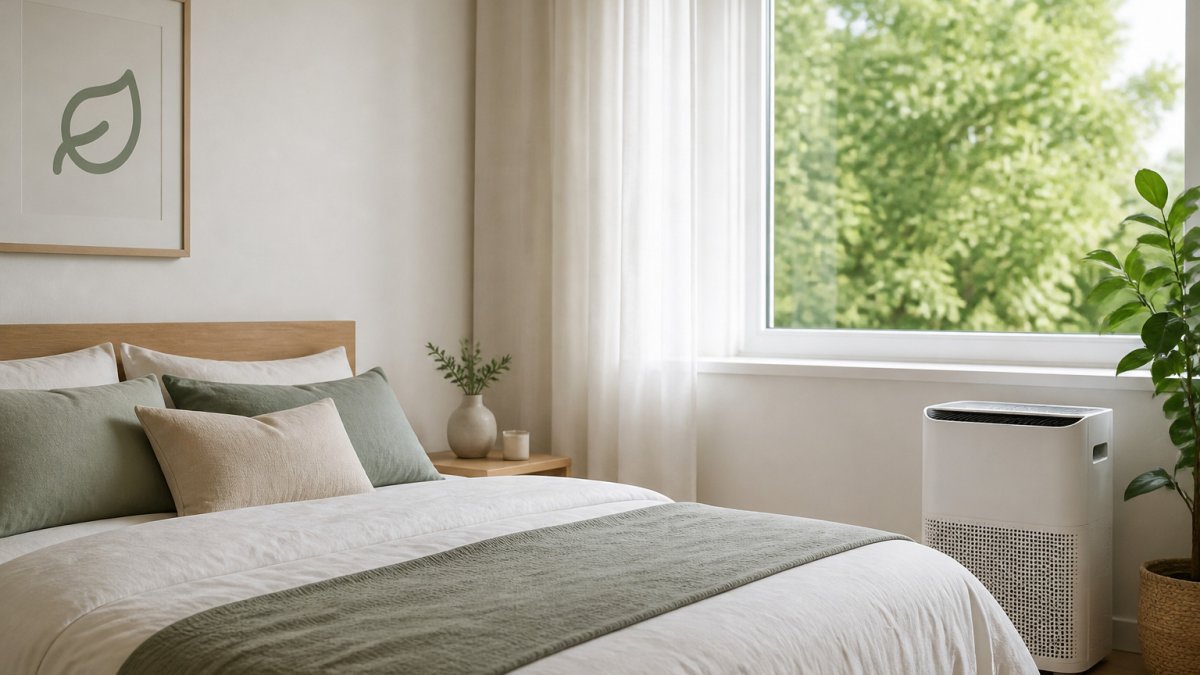
Placement and operation decide whether the purifier helps. Put the unit where air can circulate freely, a few feet from the bed and away from curtains or furniture that block intake.
How to Test Indoor Air Quality at Home
You cannot see most indoor air problems, so testing helps. Simple tools give you a useful picture of what is happening in your bedroom.
Start with these checks:
- Humidity gauge: Shows whether moisture is building up
- Carbon dioxide monitor: Shows whether the room needs more fresh air
- Particle counter: Shows how much fine dust is in the air
- Visual check: Look for mold, water stains and heavy dust buildup
Test at different times of day. Air is often worst at night, when the room is closed and you are breathing in it for hours.
If readings stay high even after you improve ventilation and cleaning, talk to a professional about a fuller inspection.
Your Next Step: Booking a Professional Bedroom and Carpet Clean
If your bedroom still feels stuffy after the steps above, a professional clean can help. EcoClean cleans carpets, upholstery and tile and grout across Las Vegas, North Las Vegas and Henderson, using hot water extraction and eco-friendly products.
Pricing depends on the size of the job, the number of rooms and the surfaces being cleaned, so book a professional bedroom and carpet clean to get a current quote for your home.
You can also book professional carpet cleaning online at a time that fits your schedule. Start with the bedroom, then clean the rest of the home on your next visit.
Frequently Asked Questions
Does cooking affect indoor air quality?
Yes. Cooking, especially frying, broiling and burning food, releases fine particles and gases that can drift into bedrooms, particularly when the bedroom is near the kitchen or shares an open floor plan. Running the range hood at high speed while cooking, using the exhaust fan and keeping the bedroom door closed during meals all help limit how much of that air reaches your sleeping area. Opening a window for a few minutes after cooking also helps clear residual particles and odors before bedtime.
How often should you air out your house?
Most homes benefit from airing out bedrooms for 10 to 15 minutes at least once a day, and more often after activities that add pollutants such as cooking, cleaning with strong products or painting. In mild weather, opening windows on opposite sides of the room creates cross-ventilation that moves air faster. Check outdoor air quality before opening windows, since on days with high pollution or pollen counts, a short window opening is usually better than leaving them open for hours.
Do air purifiers help you sleep better?
An air purifier can help people who are sensitive to dust, pollen or smoke by lowering airborne particles while they sleep, which may reduce nighttime congestion and irritation. Sleep improvements depend on the individual and on whether allergens are the main problem. A purifier works best when it is sized for the room, placed away from the bed and run on a low, quiet setting overnight, and it does not replace cleaning, ventilation or humidity control.
How can you test air quality in your home?
You can start with a consumer indoor air quality monitor that tracks particulate matter, carbon dioxide, humidity and volatile organic compounds, then compare readings over several days. Place the monitor at breathing height, away from windows, vents and cooking areas, and note when readings spike. For mold or specific contaminants, a professional inspection or lab test gives more definitive results than a consumer device. Use the readings to decide whether ventilation, cleaning or humidity control needs attention.
Note to the editor: the planned image marker for the bedroom ventilation section is included above. Confirm the EXTERNAL_LINK placeholders resolve to live sources before publication.