 comparison
Does Grout Sealer Darken Dark Tile or Grout?
Last Updated: November 5, 2026
Quick Summary
A penetrating grout sealer is the best choice for dark tile because it soaks into the grout and usually leaves the color unchanged, while topical and color-enhancing products add a film that reads darker and wetter. Always patch-test a hidden grout line and let it cure fully before sealing the whole floor.
- Skip wet-look and color-enhancing sealers on dark tile; both deepen the tone.
- Porcelain and ceramic tile are near-zero porosity and usually need no sealing.
- Do not seal epoxy, urethane, or non-porous grout; the sealer dries into a cloudy film.
- Clean grout and let it dry at least 24 hours in a humid room before testing.
- Wipe excess sealer while wet and buff dry; a second coat locks in haze.
Table of Contents
- Best Grout Sealer for Dark Tile: Top Picks at a Glance
- Will Grout Sealer Darken Grout or Dark Tile?
- Best Grout Sealer for Dark Tile Shower Floors and Walls
- Aqua-X Grout Sealer: What Dark Tile Owners Should Know
- Black Diamond Grout Sealer: Shower-Focused Protection
- How to Test a Sealer on Dark Grout Before You Commit
- Matching Sealers to Grout Type and Removing Residue
- Book a Deep Clean Before You Seal
- Frequently Asked Questions
Best Grout Sealer for Dark Tile: Top Picks at a Glance
The best grout sealer for dark tile is one that protects without changing the color you paid for. That single requirement eliminates most of the products sold as "wet look" or "enhancing" sealers, which deepen dark grout and dark tile into something closer to black.
Here is the short list we would hand a dark-tile owner before they buy anything:
- UltraCare Penetrating Plus for dark tile where appearance must not change.
- Aqua Mix Sealer's Choice Gold for a water-based penetrating option across grout, porcelain, ceramic, and many natural stones.
- FILA Grout Proof for grout-specific coverage, once you confirm dark-surface compatibility on the label.
Below, we explain why a grout sealer darkens some surfaces and not others, how to test before you commit, and how to match a sealer to your grout type.
Will Grout Sealer Darken Grout or Dark Tile?
A grout sealer can darken grout or dark tile, but the mechanism depends on which surface you are sealing and which chemistry you are putting on it. The short version: penetrating sealers usually leave color alone, topical film-formers usually do not, and the tile and the grout are two different materials that absorb sealer at different rates, so the same product can darken one and not the other in the same shower.
Start by separating the two surfaces, because they behave differently on dark tile:
- Cementitious grout is porous. Sanded grout has more void space than unsanded, so it drinks more sealer. A penetrating sealer lines those pores from the inside and normally leaves the color unchanged; a topical sealer bridges the pores with a film and adds sheen that reads as a darker, wetter color.
- Porcelain and ceramic tile are typically fired to near-zero porosity. Most porcelain is impervious and does not need sealing at all, and a penetrating sealer applied to the tile face mostly sits on top until you wipe it off. If you leave it, that residue is what shows as haze on a dark tile, not a color change in the tile itself.
- Natural stone (slate, granite, travertine, quartzite) is the wild card. Many stones are porous enough to accept a penetrating sealer and will look unchanged; some absorb enough that a solvent-based product with a high solids content can leave a slight tone shift even when labeled "natural look." Always patch-test stone.
Penetrating vs. Topical Sealers on Dark Surfaces
A penetrating sealer soaks into the grout or stone and lines the pores from the inside, leaving the surface looking the same.
For dark tile, penetrating wins almost every time. It preserves the natural appearance, stays breathable so moisture can escape, and cannot peel or flake because there is no film to fail.
The mechanism behind most darkening complaints is straightforward: a topical film changes how light reflects off the surface.
Color-Enhancing vs. Natural-Look Finishes
Color-enhancing sealers are built to deepen the tone of stone and grout. On a faded sandstone patio, that is the point.
If you want the color you have now, buy a natural-look or clear-finish penetrating sealer and confirm on the label that it does not change appearance.
The surface you are sealing and the sealer chemistry together decide whether the color shifts.
| Surface or sealer | Behavior with sealer | Effect on dark color |
|---|---|---|
| Penetrating sealer | Soaks in and lines pores from inside | Usually leaves color unchanged |
| Topical sealer | Forms a film on top | Adds sheen that reads darker and wetter |
| Cementitious grout | Porous; sanded drinks more sealer | Penetrating leaves color; topical darkens |
| Porcelain and ceramic tile | Near-zero porosity; mostly impervious | Residue shows as haze, not color change |
| Natural stone | Wild card; many stones accept sealer | Some high-solids solvent products shift tone slightly |
| Color-enhancing sealer | Built to deepen tone | Darkens further and can look blotchy |
| "Wet look" or "enhances color" label | Describes a film or oil | Treat as color-changing on dark surfaces |
Best Grout Sealer for Dark Tile Shower Floors and Walls
For a dark tile shower, choose a penetrating sealer rated for wet areas and apply it to the grout lines, not the tile face. Shower floors and walls take constant moisture, so water repellency and breathability matter more here than anywhere else in the house.
A few practical rules for showers:
- Seal the grout, and check whether the tile itself needs sealing. Porcelain tile is typically impervious and does not.
- Never seal a shower floor that has standing water or trapped moisture. A breathable sealer over a damp substrate traps the problem underneath.
- Reapply on the manufacturer's schedule for wet areas, which is usually more often than a kitchen floor needs.
The same logic applies to shower walls, where steam and splash hit the lower courses hardest. Pay attention to the bottom two rows of tile and the floor perimeter, the areas that stay wet longest.
Aqua-X Grout Sealer: What Dark Tile Owners Should Know
Ask two questions before buying: is it penetrating or topical, and does the manufacturer state that it leaves appearance unchanged?
If the answer to the second question is unclear, treat it as a color-changing product until you test it. That is not a knock on the brand. Most sealer labels simply do not address dark surfaces directly, because the products were formulated and marketed for light grout, where a slight tone shift is invisible.
Black Diamond Grout Sealer: Shower-Focused Protection
Shower sealing is a different job from floor sealing, because the surface is wet, warm, and cleaned frequently with products that break down films.
Watch out: a shower sealer applied over soap scum, hard water film, or leftover cleaning residue will fail early.
For dark grout in a shower, confirm the product's finish before you buy. If the label promises a "wet look" or "enhanced color," it will darken black grout further and may dry unevenly.
How to Test a Sealer on Dark Grout Before You Commit
Test any sealer on a hidden patch of dark grout and let it cure fully before touching the rest of the floor. This is the step almost everyone skips, and it is the only reliable way to know how a product will look on your specific tile and grout.
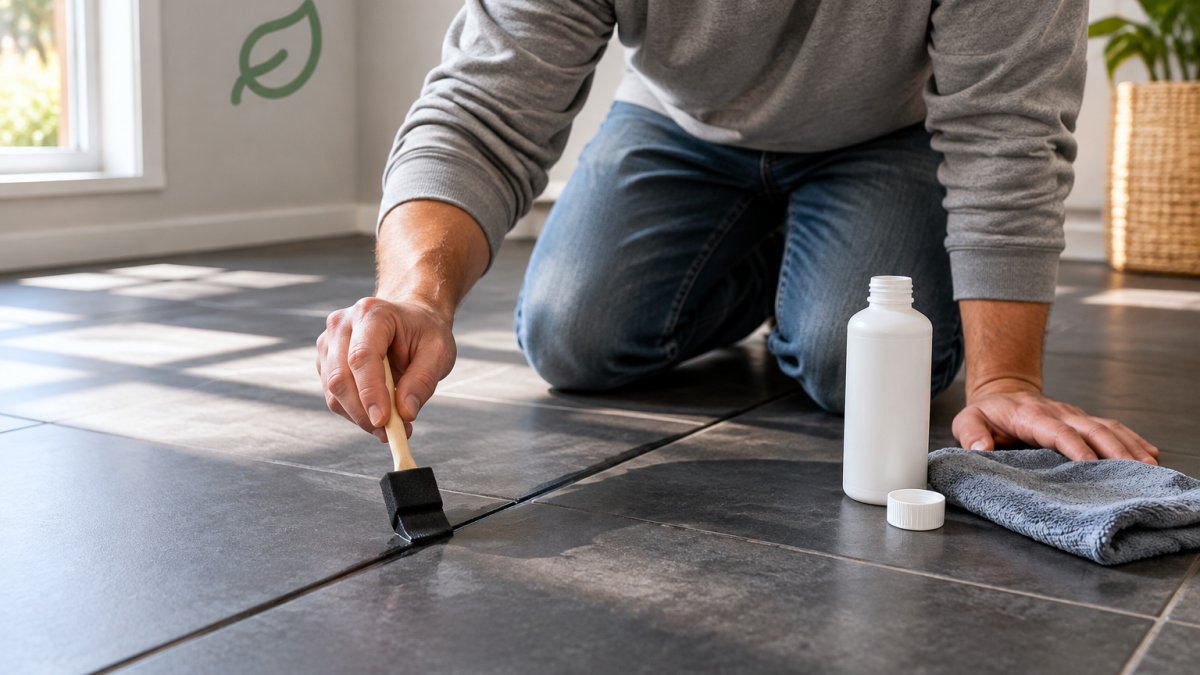
Here is the test we recommend:
- Pick an inconspicuous spot, such as behind a toilet, under an appliance, or in a closet corner.
- Clean the grout and let it dry completely, at least 24 hours in a humid room.
- Apply the sealer to one short grout line exactly as the label directs.
- Wait the full curing time, not just the drying time. They are different numbers.
- Compare the test line to the surrounding grout in daylight and again under artificial light.
- Check for haze or residue after curing. If either appears, the product is wrong for your surface.
If the test line looks the same as its neighbor, you have your answer. If it looks darker, glossier, or patchy, return the product and try a natural-look penetrating sealer instead.
Matching Sealers to Grout Type and Removing Residue
Match the sealer to the grout first, then to the tile. The grout type determines whether a sealer will absorb, sit on the surface, or do nothing at all, and on dark surfaces, a sealer that sits on the surface is the one that turns into visible haze.
Here is how the common grout types behave with a penetrating sealer:
- Sanded cementitious grout is the most porous of the common types because the sand creates void space. It accepts penetrating sealers readily and usually needs the most product per square foot. Expect to reapply sooner than on unsanded grout.
- Unsanded cementitious grout is denser and tighter. It still accepts a penetrating sealer, but it takes less product and can look wet longer during application, so wipe excess promptly.
- Epoxy grout is largely non-porous and usually does not need sealing at all. A sealer applied over epoxy sits on the surface and dries into a cloudy film, the classic haze complaint on dark epoxy floors. Skip the sealer unless the manufacturer explicitly says the epoxy is sealable.
A simple rule for dark tile: if the grout is cementitious, a penetrating sealer is appropriate; if it is epoxy, urethane, or a premixed product the manufacturer calls non-porous, do not seal it.
Removing Sealer Residue and Haze from Dark Tile
Residue is the second failure point on dark surfaces, and it is more visible there than anywhere else.
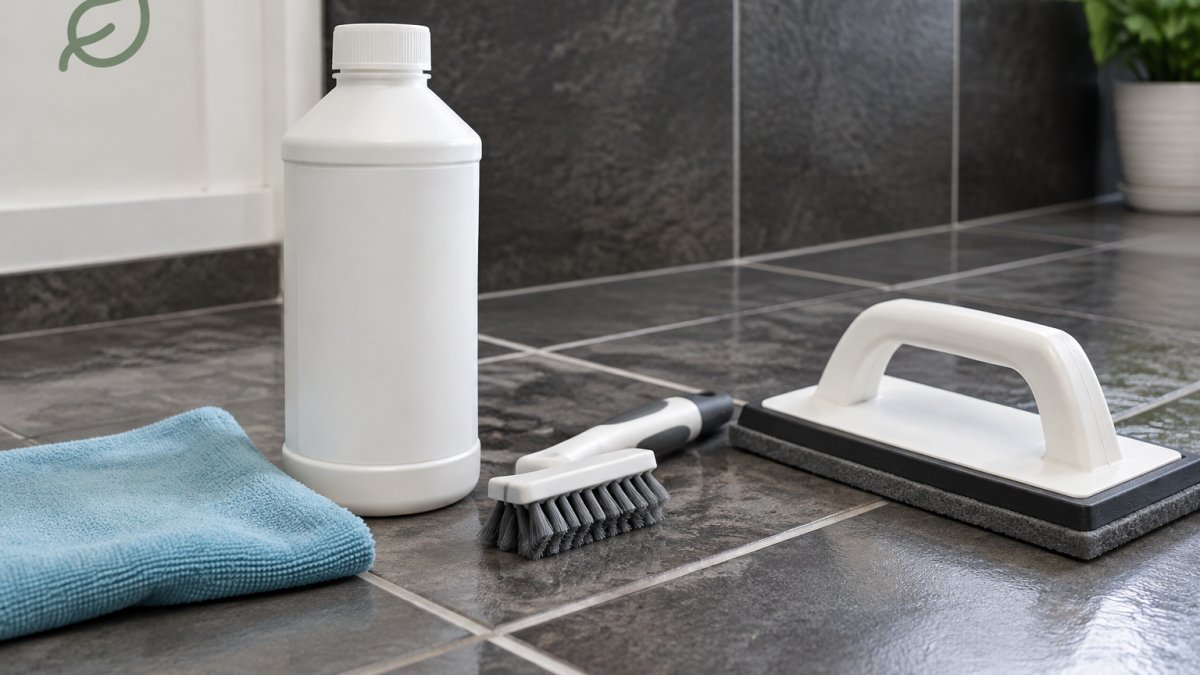
- While wet: wipe off the excess within the manufacturer's window, usually a few minutes, and buff the surface dry with a clean microfiber cloth. Do not let the product pool in grout lines or at the tile edges.
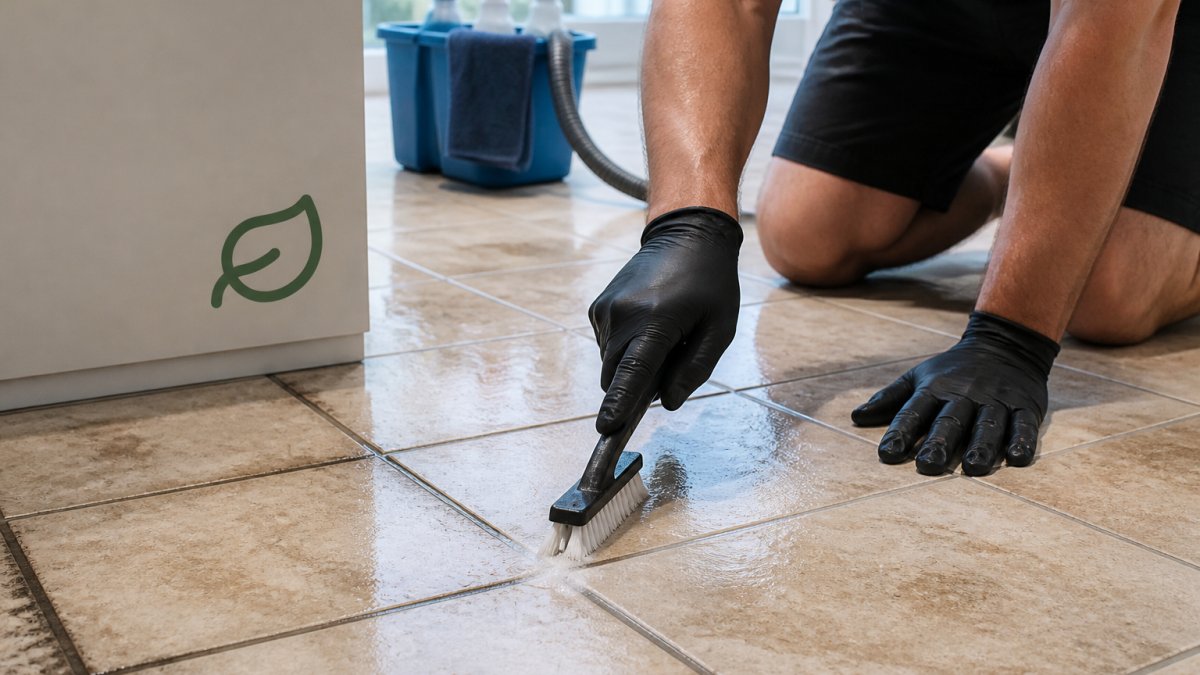
- After curing: a residue remover formulated for the sealer type is the fix, not a second coat. A second coat over haze locks the haze in. Follow the remover's dwell time, agitate with a soft brush, and extract with a wet vacuum or clean water.
- On textured or matte dark tile: haze settles into the texture and is harder to lift. A soft nylon brush and a pH-neutral tile and grout cleaner are usually enough; avoid acidic cleaners on natural stone and on any sealer the manufacturer says is acid-sensitive.
Watch out: applying a second coat to "even out" a patchy first coat is the most common way a dark floor ends up with a permanent-looking film.
For a deeper look at cleaning dark grout before or after sealing, our guide on how to clean black tile grout effectively walks through the methods that will not strip a fresh sealer.
Book a Deep Clean Before You Seal
Soil, grease, and hard water film trapped under a sealer are sealed in place, and no amount of scrubbing afterward will reach them without stripping the sealer off.
If you are weighing whether that cleaning is worth it, our guide on whether deep cleaning tile grout is worth it covers the honest answer, and our breakdown of whether professional tile grout cleaning actually works shows what changes and what does not. When you are ready to have it done, you can find a residential tile cleaning service near you, or review our tile and grout cleaning services and book a visit.
Frequently Asked Questions
Will grout sealer darken the grout?
It depends on the formula. Penetrating sealers soak into the grout and typically leave the color unchanged, while topical sealers and color-enhancing products can deepen the tone. On dark grout, a slight darkening is usually less noticeable than on light grout, but it can still create patchy results if applied unevenly. Always test on a hidden area first, such as under an appliance or in a closet corner, and let it cure for 24 hours before sealing the whole floor.
What is the best grout sealer for dark tile in a shower?
A penetrating, water-based sealer is the safest choice for a dark tile shower. It protects grout from moisture and stains without leaving a film that dulls the tile. Look for a product labeled breathable and safe for porcelain, ceramic, and natural stone if your shower mixes materials. Shower floors need reapplication more often than walls because of constant water exposure, so check the label for interior wet-area guidance and plan to reseal roughly once a year.
Can you use grout sealer on dark grout without changing its color?
Yes, if you choose a clear penetrating sealer rather than a topical coating or enhancer. Penetrating sealers sit inside the grout pores and leave the surface looking the same. Avoid products marketed as color enhancers or wet-look sealers, which are designed to deepen the tone. Apply thin coats, wipe excess off the tile face promptly, and buff away haze before it dries to keep dark grout looking even.
How do you apply grout sealer without leaving a haze on dark tile?
Apply sealer only to the grout lines with a small applicator brush, not across the whole tile face. Wipe any overspray off the tile within a few minutes with a clean, dry cloth before it dries. Work in small sections so you can buff residue quickly, and avoid flooding the joints. If haze does appear after curing, a residue remover designed for tile and grout can lift it, but check it on a hidden spot first on polished or dark surfaces.
Dark grout that has gone patchy, greasy, or gray from years of mopping is the problem a sealer cannot fix, and it is the one we solve before sealing. EcoClean uses hot water extraction and deep cleaning techniques to lift embedded soil from tile and grout in homes and commercial properties, with eco-friendly products that are safe around pets and children. Get started with EcoClean and seal over grout that is actually clean.