 how-to
How to Clean Black Tile Grout Effectively: 2026 Guide
Table of Contents
- Why Black Grout Fades and Looks Dirty
- Tools and Supplies for Cleaning Black Grout
- Step-by-Step: How to Clean Black Tile Grout Effectively
- Routine Maintenance vs. Deep Cleaning
- Best Grout Cleaner for Dark Grout: Natural and Chemical Options
- Grout Sealing Benefits for Dark Pigments
- Restoring Color to Faded Black Grout
- Commercial Tile and Grout Cleaning for Retail Stores
- Frequently Asked Questions
Last Updated: September 16, 2026
Why Black Grout Fades and Looks Dirty
Black grout doesn't fade because the pigment disappears. It fades because the surface gets coated. Learning how to clean black tile grout effectively starts with understanding that distinction, because the fix for a coating problem is completely different from the fix for a pigment problem. According to the Tile Council of North America's installation guidelines, cementitious grout is a porous surface that absorbs and holds whatever sits on it, including hard water minerals, body oils, and cleaning residue.
That porosity is the whole story. Black grout shows every trace of light-colored mineral deposit, so a floor that looks "dirty" may just be coated in calcium and soap film rather than stained.
Efflorescence vs. Dirt: How to Tell the Difference
Efflorescence is a white, powdery mineral deposit that migrates to the surface as moisture evaporates from the grout. Dirt is dark, greasy, and sits on top of the grout line.
The test is simple: wipe a small section with a dry microfiber cloth. White powder on the cloth means efflorescence; a clean cloth with gray grout means soap scum or embedded soil. Efflorescence needs a dry brush-down and moisture control, while dirt needs a pH-neutral cleaner and agitation. Treating one as the other wastes time and can drive minerals deeper into the grout.
Tools and Supplies for Cleaning Black Grout
The right kit for dark grout is smaller than most people expect, but the specific tools matter more than the count. Black grout punishes the wrong brush or cloth in ways light grout does not: every scratch and smear of light residue reads as a gray streak against the dark line.
Brushes. A grout brush with nylon bristles in the 0.010-0.012 inch range is the workhorse: stiff enough to lift packed soil, soft enough not to gouge the cement binder. A firm toothbrush works for tight corners and vertical joints, but is usually too soft for floor grout gone gray. Avoid wire and metal-bristled tools entirely, they scratch the surface and open new pores for soil, making the next cleaning harder.
Cleaners. A pH-neutral formula is the default. Look for a product labeled for cementitious grout, not a general-purpose bathroom spray, because general sprays often carry chelating agents or acids that are fine on tile glaze but aggressive on the grout binder. Oxygen-based (percarbonate) powders are the safest step up for organic staining.
Cloths and sponges. Microfiber cloths for wiping and drying, and grout sponges with rounded corners for rinsing, a sharp-cornered sponge drags soil out of the line and smears it across the tile. Keep two buckets, one for rinse water and one for solution, so you don't reintroduce suspended soil with every pass.
Application tools. A spray bottle gives controlled dwell time along the grout line, and a narrow-head grout brush reaches into the joint without over-wetting the tile. For efflorescence, add a dry soft-bristle brush and a shop vacuum with a brush attachment, dry removal before any water touches the grout is the difference between lifting the mineral deposit and driving it deeper.
Material-specific additions. For natural stone (travertine, marble, slate), add a stone-safe neutral cleaner and a dedicated stone sealer. Stone is more porous and reactive than ceramic or porcelain, and a cleaner safe on glazed tile can etch or dull a stone face. Match the cleaner to the tile first, then to the grout.
What you do not need. Steam mops and high-pressure handheld steamers are marketed for grout, but on cementitious black grout, heat plus pressure can soften the binder and drive pigment loss. Skip them for routine work and save hot-water extraction for professional deep cleans where pressure and dwell are controlled.
Cleaning Agents to Avoid on Dark Pigments
Acidic cleaners and bleaching agents are the two biggest threats to black grout. Acid etches the cement binder and dulls pigment, while bleach strips color unevenly and leaves patchy gray results no amount of scrubbing fixes.
Vinegar sensitivity is real: it works on some surfaces, but on cementitious grout it slowly eats the binder holding the pigment.
Step-by-Step: How to Clean Black Tile Grout Effectively
Cleaning black grout effectively means removing the coating without touching the pigment. Follow these steps in order and give each time to work.
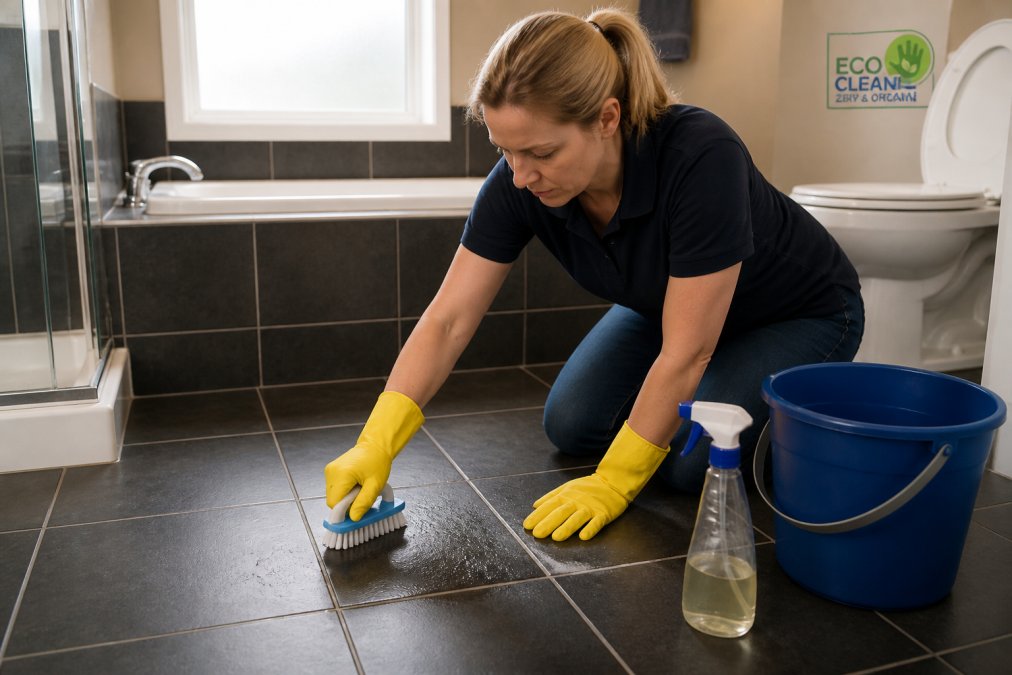
- Dry-brush the grout lines. Run a stiff-bristled brush along the grout to lift loose soil and any efflorescence before wetting anything.
- Apply a pH-neutral cleaner. Spray along the grout lines and let it sit for the full dwell time on the label, usually several minutes.
- Scrub in small sections. Work a 2-foot area at a time with the stiff brush, using short strokes along the grout line, not across the tile.
- Rinse with clean water. Wipe with a damp microfiber cloth, rinsing the cloth often so you're not spreading soil back in.
- Dry the surface completely. A dry grout line shows you what's actually left to address.
Routine Maintenance vs. Deep Cleaning
Routine maintenance keeps black grout from reaching the point of restoration; deep cleaning resets it when maintenance has slipped.
| Task | Frequency | Tools | Time per Session |
|---|---|---|---|
| Spot wipe of grout lines | Weekly | pH-neutral cleaner, microfiber cloth | 5-10 minutes |
| Full brush and rinse | Monthly to quarterly | Stiff-bristled brush, cleaner, bucket | 30-60 minutes |
| Sealer check | Every 6-12 months | Water droplet test | 5 minutes |
Best Grout Cleaner for Dark Grout: Natural and Chemical Options
The best grout cleaner for dark grout is a pH-neutral formula, whether mixed yourself or bought. Neutral pH protects pigment and binder while lifting soap scum and mineral deposits. What most guides skip is that the right cleaner depends on what's actually coating the grout, soap scum, hard-water minerals, efflorescence, or organic staining, and on the surrounding tile.
Match the Cleaner to the Coating
Soap scum and body oils. A pH-neutral surfactant cleaner, applied and left for the full label dwell time, breaks the film without touching the binder. This is the routine case for shower walls and bathroom floors.
Natural Options and Their Limits
A paste of baking soda and a few drops of dish soap works on light buildup: apply, let sit, scrub gently, rinse thoroughly. It's a mild abrasive plus surfactant, so it lifts fresh soap film well and does almost nothing for embedded mineral scale.
Chemical Options and What to Skip
On the chemical side, choose oxygen-based cleaners over chlorine bleach, which strips color unevenly and leaves patchy gray. Acidic cleaners, vinegar, citric acid, most "grout brighteners", etch the cement binder and dull pigment. Abrasive powders scratch the surface and create new pores for soil.
Material-Specific Chemistry
Ceramic and porcelain tile tolerate most neutral and oxygen-based cleaners; natural stone, travertine, marble, limestone, slate, does not. Stone is more porous and reactive, and an alkaline or acidic cleaner safe on glazed tile can etch or dull a stone face. If grout sits between natural stone tiles, use a stone-safe neutral cleaner and stone-specific sealer, and test on an inconspicuous area first.
Grout Sealing Benefits for Dark Pigments
Grout sealing benefits dark grout more than light grout, which surprises people. A sealer blocks the pores so minerals and oils can't settle in, keeping black grout black instead of hazy gray.
Restoring Color to Faded Black Grout
Color restoration is the answer when cleaning and sealing can't bring the pigment back. If grout has been etched or bleached past recovery, no cleaner will fix it, the color is genuinely gone.
Commercial Tile and Grout Cleaning for Retail Stores
Commercial tile and grout cleaning for retail stores follows the same principles at a different scale. High foot traffic compresses the maintenance cycle, so a quarterly deep clean at home becomes monthly or even weekly in a store.
Frequently Asked Questions
How do I get my black grout black again?
If the grout is structurally sound but faded, start with a pH-neutral cleaner and a stiff-bristled brush to remove surface soil. For deeper discoloration, a grout pen or colorant can restore the black pigment. Avoid acidic cleaners, which can strip color further. After cleaning, apply a grout sealer to protect the dark pigment and make future cleaning easier.
What is the best way to clean black grout in the bathroom?
For bathroom black grout, use a pH-neutral cleaner and a stiff-bristled brush to scrub away soap scum and mineral deposits. Rinse with warm water and dry with a microfiber cloth. For tough stains, a paste of baking soda and dish soap can help. Avoid bleach and vinegar, which can fade black pigments over time. Seal the grout annually to keep it looking fresh.
Can you use bleach on black tile grout?
Bleach can lighten or discolor black grout because it is a bleaching agent. It may also damage the grout's binder over time. Instead, use a pH-neutral cleaner or a hydrogen peroxide-based cleaner for tough stains. If you must use bleach, test a small hidden area first and rinse thoroughly. For routine cleaning, stick to gentle, non-abrasive methods.
How often should you deep clean dark-colored grout?
Deep clean dark grout every 2-3 months, depending on foot traffic and moisture. High-traffic areas like kitchens and bathrooms may need monthly deep cleaning. Between deep cleans, routine maintenance with a pH-neutral cleaner and a microfiber cloth will keep grout looking its best. Always seal after deep cleaning to protect the pigment and simplify future upkeep.