 how-to
Non Toxic Pet Stain Removal: A Safe, Step-by-Step Guide
Table of Contents
- Why Non Toxic Pet Stain Removal Matters for Your Home
- What You'll Need Before You Start
- How to Remove Pet Stains Step by Step, by Surface and Mess Type
- How to Remove Old Pet Stains From Carpet
- Choosing an Enzyme Cleaner for Pet Urine
- How to Remove Pet Urine Odor From Carpet
- What to Look for in a Pet-Safe Carpet Cleaner
- Cleaning Mistakes and Incompatible Products to Avoid
- Frequently Asked Questions
Last Updated: October 20, 2026
Why Non Toxic Pet Stain Removal Matters for Your Home
Non toxic pet stain removal is the practice of lifting urine, feces, vomit, and drool from carpets and fabrics using cleaners that break down organic matter without leaving harsh chemical residue behind.
The stakes are higher than most people realize. Pets lick their paws and fur, toddlers crawl on the same carpet, and whatever you spray stays in the room long after the smell fades. Harsh cleaners can leave residue that keeps attracting dirt and irritates sensitive noses.
Below, we break down what "pet-safe" really means, then walk through step-by-step methods for every surface and mess type. The goal is simple: eliminate the stain and the odor source without trading one problem for another.
What Non-Toxic and Pet-Safe Actually Mean
Non-toxic means a product contains no ingredients known to cause harm when used as directed, while pet-safe means the formula is appropriate for areas pets contact. Those two labels are not regulated the same way, so read the ingredient list rather than trusting the front of the bottle.
A practical definition: a cleaner is pet-safe when it breaks down organic soils through natural enzymes or other mild agents, rinses clean, and leaves no harmful ingredients behind. Many businesses find that enzyme-based formulas meet this bar better than general-purpose stain removers.
What You'll Need Before You Start
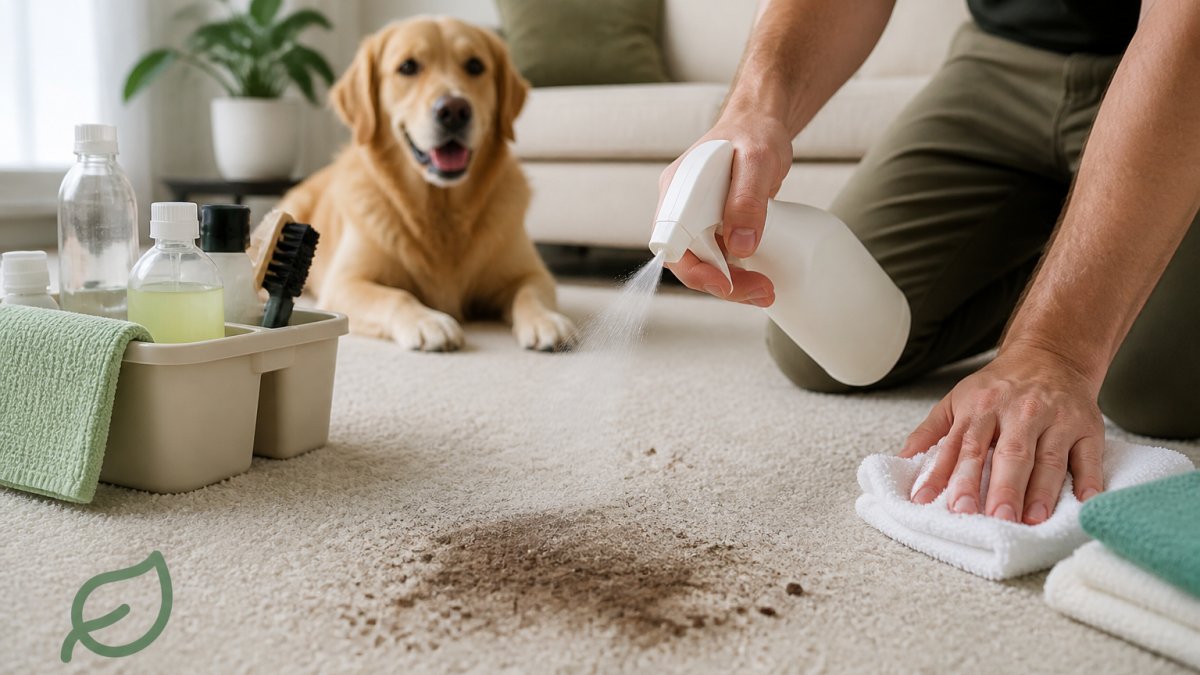
Gather your supplies before you touch the stain, because a fresh mess rewards speed. Here is the short list we recommend keeping on hand:
- Enzyme cleaner for pet urine (the core product for organic stains)
- Clean white cloths or paper towels
- Cool water in a spray bottle
- A soft-bristled brush
- Gloves and a plastic bag for solids
- A wet/dry vacuum if you have one
Two rules matter more than any product. First, always test any cleaner on a hidden patch of carpet or upholstery before treating the visible area. Second, never mix cleaners. Combining ammonia and bleach, or an enzyme product with a disinfectant, can create dangerous fumes or kill the enzymes before they work.
How to Remove Pet Stains Step by Step, by Surface and Mess Type
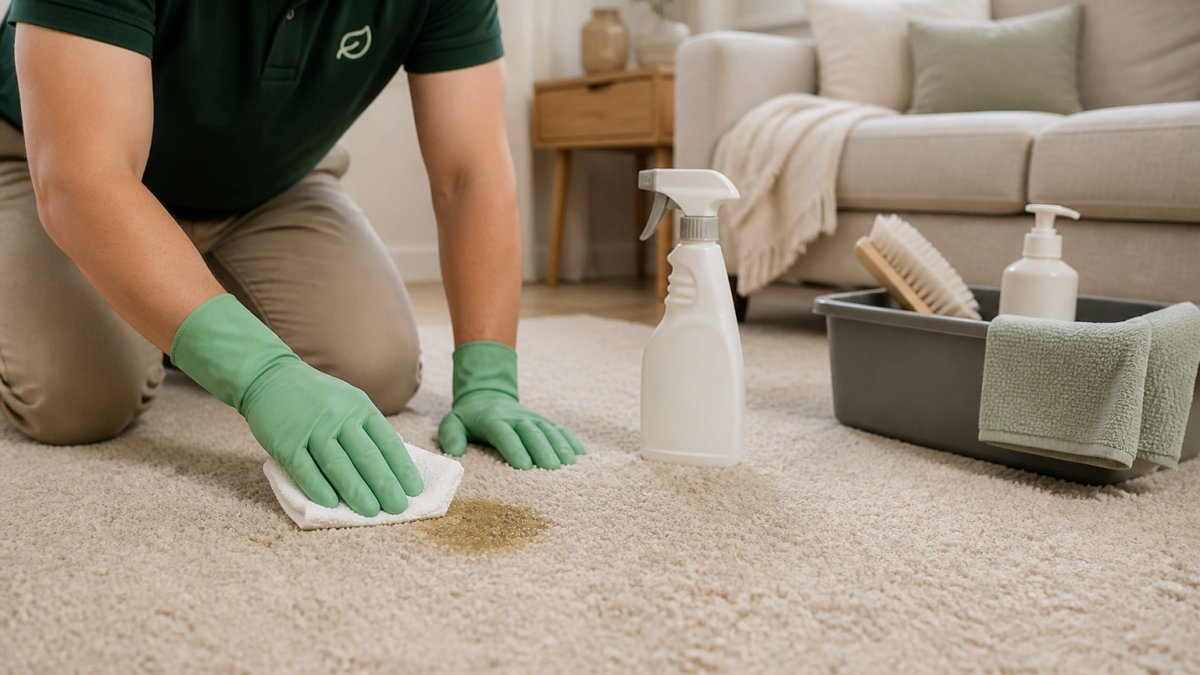
Start by removing solids, then blot liquids, then treat with an enzyme cleaner, then rinse and dry. That four-step sequence works on almost every organic mess. The variables are the surface and how long the stain has been there. Persistent odors often linger in fibers long after the visible discoloration has faded, making the process of removing dog smell from upholstery a necessary final consideration for a truly clean home.
Urine, Feces, Vomit, and Drool: Handling Each Organic Mess
Each mess needs slightly different handling. Urine soaks down into padding, feces and vomit sit on top, and drool leaves a sticky residue that attracts dirt.
- Urine: Blot up as much as possible, then flush the area with cool water and extract it. Apply an enzyme cleaner so it reaches the odor source in the padding.
- Feces and vomit: Remove solids with a bag, then treat the remaining organic soils with enzyme cleaner and blot.
- Drool: Wipe up the sticky residue with cool water first, then apply a light enzyme treatment and rinse.
Washable Fabrics, Carpet, Upholstery, and Hard Surfaces
Washable fabrics such as pet beds and blankets go in the laundry with an enzyme-based laundry product on a cool cycle. Skip the dryer until you confirm the odor is gone, since heat sets stains.
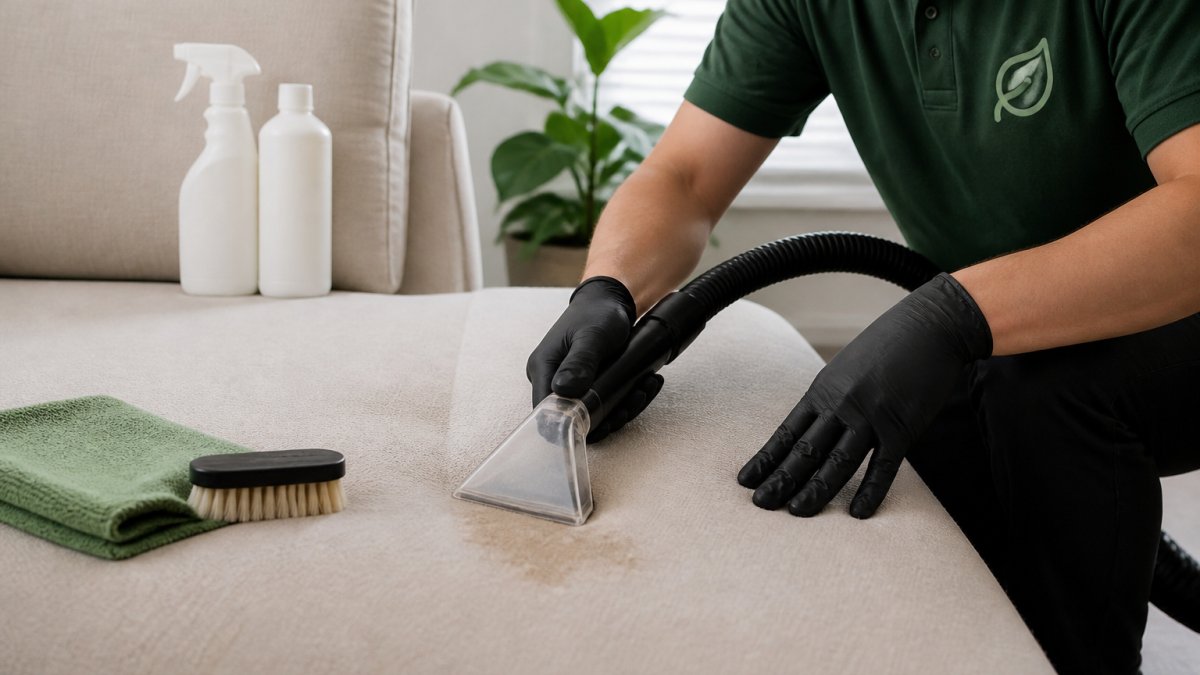
Carpet and upholstery need blotting, not scrubbing. Work the enzyme cleaner in gently, let it dwell, then extract with clean water. Hard surfaces like tile and sealed floors are easier: wipe up, clean with a mild solution, and rinse so no residue remains.
How to Remove Old Pet Stains From Carpet
Old pet stains need patience more than muscle. Dried urine crystallizes in the fibers, so the cleaner has to rehydrate it before the enzymes can break it down.
Here is an approach for set-in stains:
- Re-wet the area with cool water and let it sit for several minutes.
- Apply a generous amount of enzyme cleaner and cover it with a damp towel.
- Let it dwell far longer than a fresh stain, then blot and rinse.
- Repeat if the odor returns as the area dries.
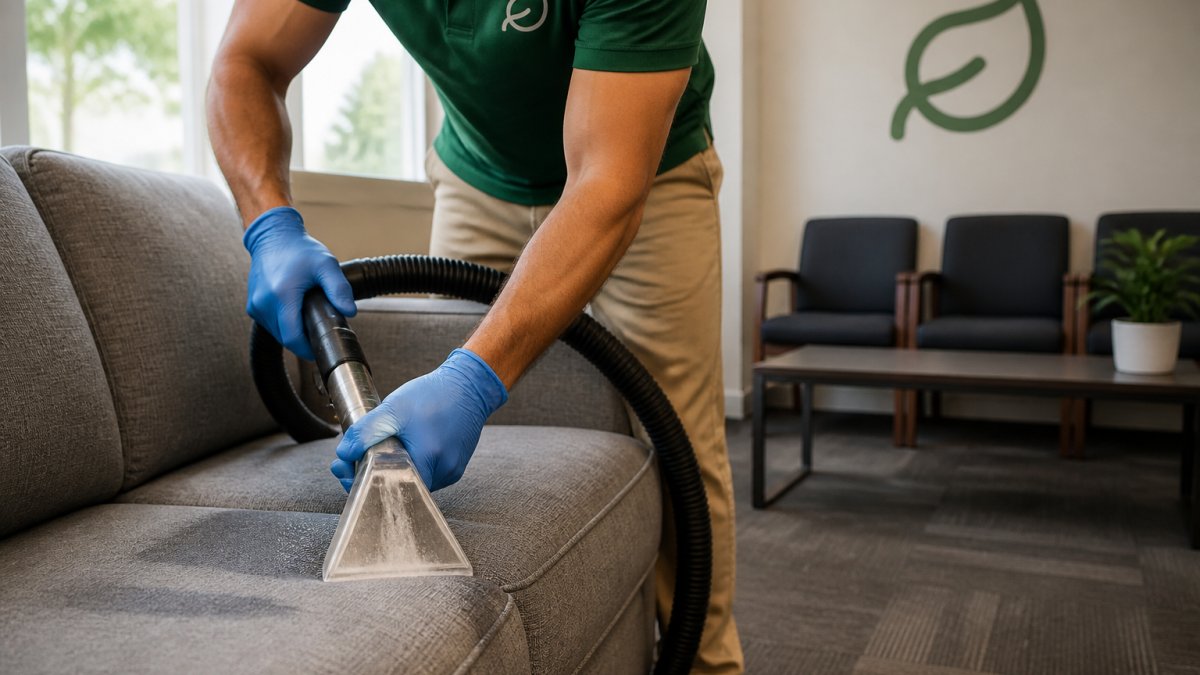
If the stain has soaked into the padding or the subfloor, surface treatment may not reach it. Professional hot water extraction reaches deeper into the carpet pile and padding.
Choosing an Enzyme Cleaner for Pet Urine
The best enzyme cleaner for pet urine contains live enzymes, a neutral pH, and no added fragrance that masks rather than removes odor. Enzymes are proteins that break down the uric acid crystals in urine, which is why the odor does not come back.
Look for these features:
- Live enzymes listed on the label, not just "enzymatic" in the name
- Neutral pH so the formula does not damage carpet dyes
- No ammonia or chlorine bleach
- Clear dwell-time instructions
How to Remove Pet Urine Odor From Carpet
Odor removal is a different job from stain removal. The visible mark can vanish while the odor source stays in the padding, and pets return to the same spot because they can still smell it.
To remove pet urine odor from carpet, saturate the area with enzyme cleaner, let it dwell, and extract it with clean water. Dry the area thoroughly, because trapped moisture encourages bacteria and mildew. If the smell persists after drying, the urine likely reached the padding and needs deeper extraction.
What to Look for in a Pet-Safe Carpet Cleaner
A good pet-safe carpet cleaner breaks down organic soils, rinses clean, and leaves no harmful ingredients. Read the label for what is in it, not just what it claims.
| Feature | Why It Matters | Red Flag |
|---|---|---|
| Live enzymes | Digests uric acid and organic soils | "Enzymatic" with no enzymes listed |
| Neutral pH | Protects carpet dyes and fibers | Strong alkaline or acidic formulas |
| No ammonia or bleach | Safer around pets and children | Ammonium hydroxide, chlorine |
| Rinses clean | Prevents sticky residue | No rinse instructions |
| No masking fragrance | Removes odor instead of covering it | Heavy perfume scent |
Cleaning Mistakes and Incompatible Products to Avoid
Most failed pet stain treatments come down to a handful of mistakes. Avoid these and you will save yourself a repeat visit from the same stain.
- Scrubbing instead of blotting. Scrubbing pushes the mess deeper into the padding.
- Using heat. Hot water or a hot dryer sets the stain and the odor.
- Mixing ammonia and bleach. This combination creates dangerous fumes. Never do it.
- Skipping the rinse. Leftover cleaner becomes sticky residue that attracts new dirt.
- Covering odor with fragrance. Masking the smell does not remove the odor source, and pets will return to the spot.
Pet messes will happen, and the difference between a stain that disappears and one that keeps coming back is depth. Surface blotting and enzyme treatments handle fresh accidents well, but set-in stains and odors often live in the padding where household tools cannot reach. EcoClean uses advanced hot water extraction to flush organic soils out of the carpet pile and padding, and utilizes non-toxic methods that are safe for pets and children. If a stain has beaten your best efforts, consider booking a professional cleaning with EcoClean to help restore your carpet to a fresh, clean state.
Frequently Asked Questions
Are enzyme cleaners safe to use around pets?
Enzyme cleaners are generally safe around pets when used as directed, because they rely on natural enzymes and beneficial bacteria rather than harsh chemicals to break down organic soils. Keep pets off the treated area until it dries completely, which usually takes a few hours. Check the label for pet-safe claims, avoid products with ammonia, bleach, or strong solvents, and store bottles out of reach. If your pet has sensitive skin or allergies, test a small hidden spot first and ventilate the room while cleaning.
How do you remove old pet urine stains from carpet?
Old pet urine stains need rehydration before they can lift. Mix a solution of cool water and a small amount of mild, pet-safe detergent, then apply it to the dried stain and let it sit for several minutes. Blot, do not scrub, with a clean cloth. Follow with an enzyme cleaner for pet urine and allow it to dwell so the enzymes can break down the uric acid crystals. Cover the area with a towel and let it air dry. Repeat if the stain or odor persists, and consider professional hot water extraction for set-in damage.
How can you get pet urine odor out of carpet?
Odor comes from uric acid crystals that bind to carpet fibers, so surface cleaning alone will not fix it. Saturate the area with an enzyme cleaner for pet urine and let it dwell for the full time on the label, often 10 to 15 minutes or more. Blot and rinse with cool water, then dry thoroughly with towels and airflow. Baking soda can absorb residual moisture and odor. For deep or repeated accidents, a professional pet-safe carpet cleaner with hot water extraction reaches the backing and pad where odor sources hide.
What is the safest way to remove pet stains from carpet?
Start by blotting fresh messes with a clean cloth, working from the outside in. Flush the area with cool water and blot again. Use an enzyme-based, non-toxic pet stain removal product and follow the label directions. Avoid ammonia, bleach, and chlorine products, which can harm pets and set stains. Keep pets and children off the area until it is fully dry, ventilate the room, and test any cleaner on a hidden spot first. For old or large stains, call a professional who uses pet-safe methods.