 how-to
Professional Upholstery Cleaning for Businesses: 2026 Guide
Table of Contents
- Why Professional Upholstery Cleaning Matters for Business Premises
- Commercial Furniture Cleaning: What Gets Cleaned and How Materials Differ
- Cleaning Methods: Hot Water Extraction, Low-Moisture, and Steam Cleaning
- Stain Removal, Odor Removal, and Deep Cleaning for High-Traffic Seating
- Commercial Upholstery Cleaning Frequency: Setting a Realistic Schedule
- Upholstery Cleaning Drying Time: What to Expect and How to Speed It Up
- How to Prepare for Commercial Upholstery Cleaning
- Frequently Asked Questions
Last Updated: October 18, 2026
Why Professional Upholstery Cleaning Matters for Business Premises
Professional upholstery cleaning for businesses is scheduled, fabric-safe deep cleaning of the seating and soft furnishings in commercial spaces, performed by trained technicians using methods matched to each material.
The practical case is simple. Upholstered furniture absorbs soil in ways hard surfaces do not.
That distinction is why a chair can look acceptable and still smell stale, or feel slightly tacky on a warm day.
What Dirty Upholstery Costs a Business
The costs are rarely dramatic. They are cumulative, which is why they get ignored.
- Replacement pulled forward. Soil and grit abrade fibers from the inside, so fabric wears through faster than it should.
- A presentable environment lost. Clients notice worn arms and darkened seat cushions before they notice anything else in the room.
- Health complaints. Dust mites and trapped allergens accumulate in padding, and staff who sit in the same chair all day feel it first.
- Odor that reads as neglect. A faint smell in a waiting area is difficult to trace and easy to blame on the business.
Many property managers find that a recurring cleaning plan costs far less over a year than replacing seating early. That is the argument, and it holds up.
Commercial Furniture Cleaning: What Gets Cleaned and How Materials Differ
Commercial furniture cleaning covers every upholstered surface in a business: reception sofas, office task chairs, conference seating, waiting room benches, booth seating, and soft furnishings in client-facing areas. The method chosen depends entirely on what the fabric is.
Fabric identification comes first, every time. A cleaner who skips it is guessing.
| Material | Soil Behavior | Typical Method | Watch Out For |
|---|---|---|---|
| Polyester | Holds surface soil, releases it well | Hot water extraction | Heat sensitivity on low-grade blends |
| Microfiber | Traps fine dust deep in the weave | Low-moisture, then extraction | Over-wetting leaves water marks |
| Cotton | Absorbs liquids fast, stains set quickly | Extraction with controlled moisture | Shrinkage on loose covers |
| Silk | Delicate, water-sensitive | Dry solvent, spot only | Any water contact can ring |
| Cashmere | Soft, pills with agitation | Gentle dry methods | Friction damages the nap |
| Leather | Soil sits on the surface | pH-balanced leather cleaner | Harsh cleaners strip the finish |
Fabric Identification and Colorfastness Testing
Colorfastness testing is a small, unglamorous step that prevents expensive mistakes.
A common mistake is testing on the seat cushion instead of the back or underside. Dye migration shows up where nobody looks first, and by then the damage is done on the visible panel.
The test is non-negotiable on delicate fabrics and any fabric with a printed pattern. On plain polyester it takes a minute and confirms what is already expected.
Cleaning Methods: Hot Water Extraction, Low-Moisture, and Steam Cleaning
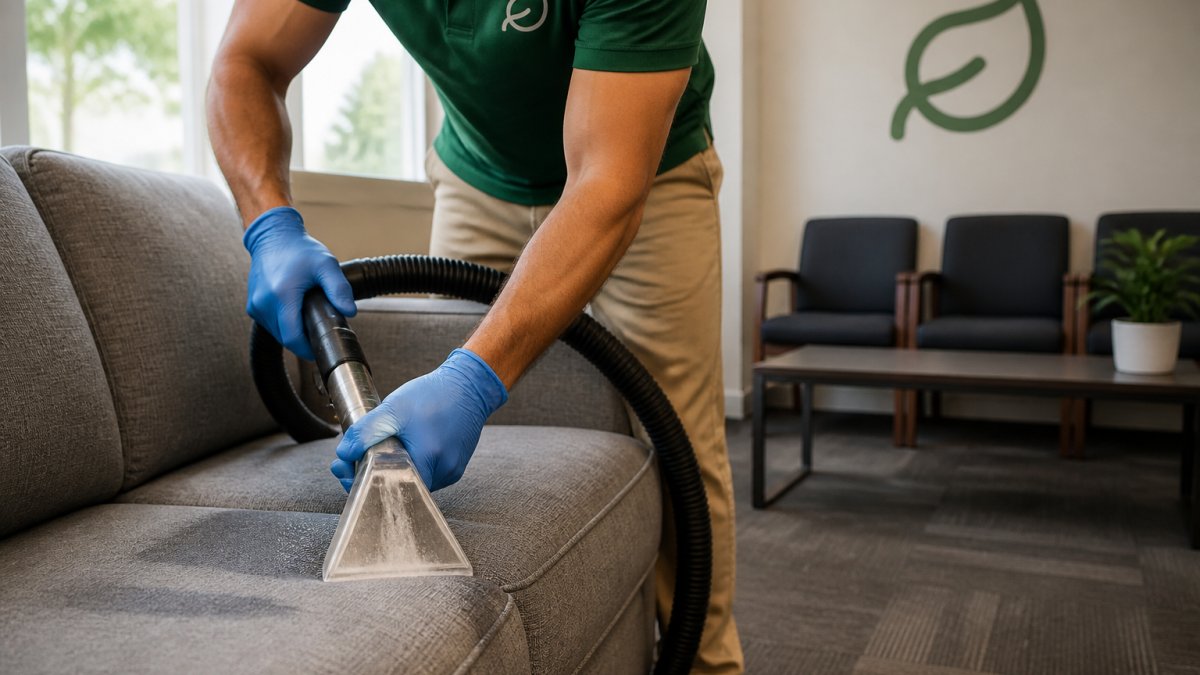
Hot water extraction is the deepest of the three methods and the one we recommend for most commercial seating.
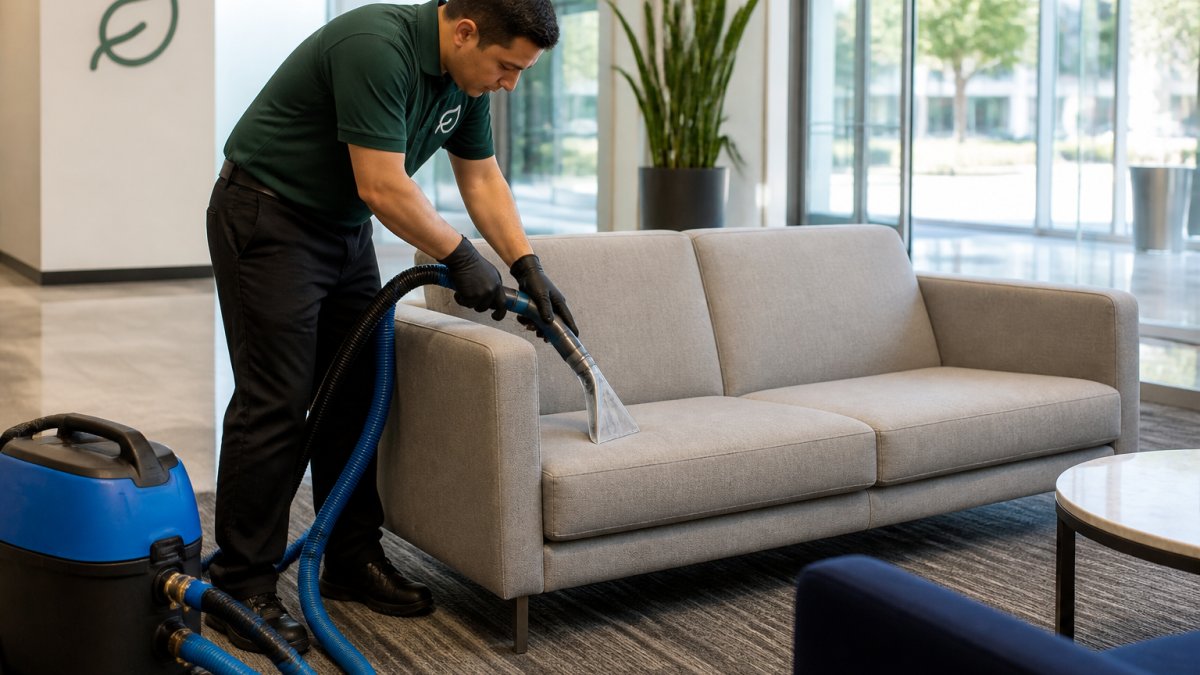
Low-moisture cleaning suits microfiber, delicate blends, and any piece that cannot tolerate a long drying window. Cleaning solution is worked into the surface with minimal water and lifted away.
Steam cleaning uses heat and vapor rather than volume. It handles light soil, refreshes pile, and reaches into crevices on tufted furniture where a wand struggles.
Stain Removal, Odor Removal, and Deep Cleaning for High-Traffic Seating
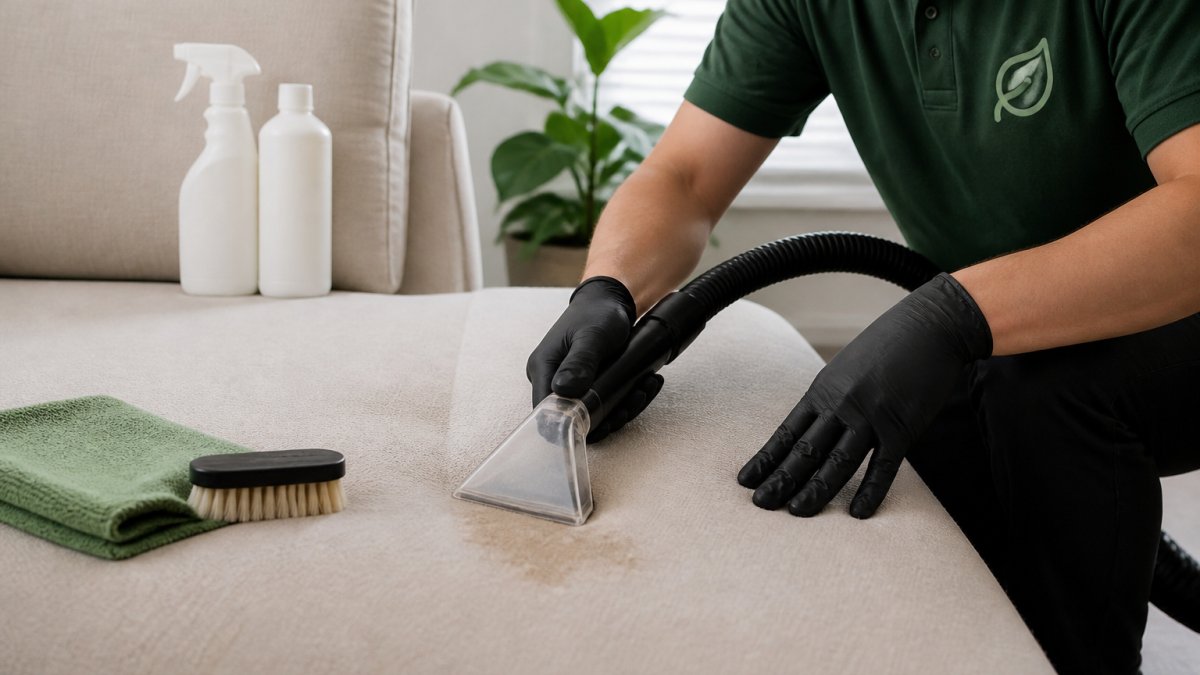
Stain removal starts with knowing what spilled. Water-based stains respond to water-based treatment. Oil and grease need a solvent.
Odor removal is a separate job from cleaning. The smell lives in the padding, so surface treatment alone will not hold. Deep cleaning flushes the source out, and odor treatment follows.
High-traffic seating needs both, more often than the rest of the room.
A common mistake is spot-treating a stain and calling it done. The spot fades, the surrounding panel stays darker, and the piece looks worse than before.
Commercial Upholstery Cleaning Frequency: Setting a Realistic Schedule
Commercial upholstery cleaning frequency depends on traffic, not the calendar. A reception area used by fifty visitors a day needs a different rhythm than a private office suite. But frequency is only half the decision. The other half is how the work gets scheduled so it does not interrupt the business.
Matching Frequency to Traffic and Use
- High-traffic seating (lobbies, waiting rooms, restaurants, clinic waiting areas): every three to four months
- Standard office furniture (task chairs, conference seating): every six to twelve months
- Executive and low-use areas: annually, plus spot treatment as needed
- Immediate attention: any spill, pet accident, body-fluid event, or visible stain
Recurring cleaning beats reactive cleaning on both cost and appearance. A scheduled visit catches soil before it reaches the padding, which keeps the deep clean shorter and the drying time down. It also turns an unpredictable expense into a line item you can budget for.
After-Hours and Phased Cleaning
Most commercial work happens outside operating hours so seating is usable when staff arrive. That is the default, not a premium add-on. Ask any provider how they handle it before you book.
- After-hours service. Evening or early-morning slots let a crew clean a full floor while the building is empty. Confirm who holds keys or access codes, whether the provider carries insurance for after-hours entry, and how the space is secured when the crew leaves.
- Phased cleaning. For large spaces, split the furniture into zones and clean one zone per visit. A hotel can rotate banquet chairs by ballroom; an office can do one floor at a time. Phasing keeps most seating available and shortens each drying window.
- Weekend and holiday windows. Restaurants and retail often have a single slow day. Scheduling the deep clean there avoids closing a section during service.
Minimizing Disruption in Different Workplaces
- Offices. Clean task chairs and conference seating after hours, and leave a note on each piece so staff know it was treated and when it is dry.
- Hotels. Coordinate with housekeeping so cleaned furniture is not returned to a room before it is dry. Rotate rooms or floors rather than closing a whole wing.
- Restaurants. Booth and banquette cleaning is best done after close, with attention to the gap between the seat and the wall where crumbs and grease collect.
- Clinics and waiting rooms. Schedule around patient hours and confirm that any cleaning chemistry is compatible with the facility's infection-control routine.
Building a Recurring Schedule
A workable schedule names the pieces, the method, and the interval in one document. Most providers will put this in writing if you ask. Review it once a year against actual traffic, a lobby that added a coffee bar or a new receptionist desk may need a shorter interval than the original plan assumed.
Upholstery Cleaning Drying Time: What to Expect and How to Speed It Up
Upholstery cleaning drying time typically runs four to eight hours for hot water extraction, and one to two hours for low-moisture methods. Leather and dry-cleaned fabrics are ready almost immediately.
Airflow decides the outcome. Open windows, run fans, and keep the HVAC circulating. Raising the room temperature helps, provided the fabric tolerates it.
What most guides miss is that drying time is a function of how much water went in.
How to Prepare for Commercial Upholstery Cleaning
Preparing for commercial upholstery cleaning takes about fifteen minutes of staff time and prevents most scheduling problems. It also protects the people who use the space. A business has obligations a household does not: occupants need notice, wet floors need marking, and cleaning chemicals need to be handled and stored sensibly.
The Pre-Cleaning Walkthrough
The walkthrough matters more than the checklist. A technician who sees the furniture before starting can test fabric, spot problem areas, and set expectations on what will and will not come out. Walk the space with the crew lead and point out anything fragile, recently repaired, or under warranty.
- Remove loose items from seats, arms, and under cushions
- Vacuum or clear debris from the surrounding floor
- Point out any existing tears, fading, or loose stitching
- Identify the highest-traffic pieces for extra attention
- Confirm access, parking, and after-hours entry
- Note any fabric care codes or manufacturer guidance
- Keep staff and visitors clear of the area during treatment
- Plan airflow: fans, windows, and HVAC settings
Workplace Safety and Occupant Notification
- Notify occupants in advance. Post signs or send a notice naming the date, the areas affected, and when the furniture will be usable again. In shared buildings, tell property management as well as staff.
- Ventilation. Hot water extraction and solvent spot treatments release moisture and vapor. Run the HVAC, open windows where possible, and keep the area ventilated until surfaces are dry.
- Chemical handling. Ask for the safety data sheets for any product used, and confirm the crew stores and transports chemicals according to the label. If your facility has a chemical inventory or right-to-know policy, add the cleaning products to it.
- Slip hazards. Wet carpet and damp upholstery create slip risk. Ask the crew to place wet-floor signs and to keep hoses and cords out of walkways.
- Electrical safety. Confirm that cords and equipment do not cross traffic paths and that outlets are not overloaded.
- Sensitive occupants. If staff or visitors have asthma, allergies, or chemical sensitivity, flag it before the visit so the provider can choose low-odor products and schedule the work when those people are absent.
Protecting Furniture and Setting Expectations
Move small items yourself rather than asking the crew to handle personal belongings. Note any piece that is under a manufacturer warranty, some warranties require specific care, and a cleaning record helps if a claim ever comes up.
We build the inspection and the safety briefing into every commercial booking, along with a written plan for which method goes on which piece. Our team works across business premises with hot water extraction and low-moisture methods, using non-toxic products, and we schedule around your operating hours.
Frequently Asked Questions
How often should commercial upholstery be professionally cleaned?
Most offices and waiting rooms do well with professional upholstery cleaning every 6 to 12 months, but high-traffic seating in lobbies, reception areas, and restaurants may need it every 3 to 6 months. Fabric type, foot traffic, and whether food or pets are present all shift the schedule. A pre-inspection during the first visit gives you a baseline, and recurring cleaning plans can be adjusted after that based on how quickly soil builds up.
How long does upholstery cleaning drying time usually run?
Upholstery cleaning drying time typically ranges from 4 to 8 hours with hot water extraction, and 1 to 3 hours with low-moisture methods. Humidity, fabric thickness, and airflow all affect the outcome. Running fans or the HVAC system and keeping windows open where possible speeds things up. Scheduling cleaning at the end of the business day lets furniture dry overnight before staff and clients return.
Can professional cleaners remove stains and odors from office furniture?
Most food, beverage, ink, and body oil stains lift with targeted spot treatment and the right cleaning solution for the fabric. Pet accidents and smoke odors respond well to deep cleaning plus odor removal agents that neutralize the source rather than masking it. Older set-in stains or dye-based damage may lighten but not vanish completely. A pre-inspection lets the technician test colorfastness and set realistic expectations before work begins.
What should a business do to prepare for commercial upholstery cleaning?
Clear personal items, papers, and electronics off chairs and sofas, and move small furniture away from walls so technicians can reach every surface. Note any known stains, spills, or fragile pieces for the crew. Confirm parking and equipment access, and let staff know which areas will be off-limits during drying. For how to prepare for commercial upholstery cleaning on a recurring basis, add a short checklist to your facilities calendar so nothing gets missed.