 blog
blog
Best Chem-Dry Alternatives for Businesses: 2026 Guide
Table of Contents
- Why Businesses Are Searching for Chem-Dry Alternatives
- Hot Water Extraction vs Carbonated Cleaning
- What to Compare Across Chem-Dry Alternatives
- Commercial Carpet Cleaning Frequency Guidelines
- How to Choose a Commercial Carpet Cleaning Service
- What Chem-Dry Alternatives Cost Businesses
- Frequently Asked Questions
Last Updated: September 25, 2026
Why Businesses Are Searching for Chem-Dry Alternatives
Businesses searching for the best Chem-Dry alternatives for businesses typically want the same thing: effective stain removal without long drying times, harsh residues, or unpredictable scheduling. Carbonated cleaning built its reputation on fast-drying carpet care, but commercial property managers increasingly compare it against hot water extraction and other methods before committing to a vendor.
At EcoClean, we work with property managers and business owners across Las Vegas, North Las Vegas, and Henderson, and the questions we hear are consistent: will the carpet actually be dry before staff arrive, will the process void a warranty, and will the vendor show up when scheduled.
Below, we break down how the leading methods compare, what to check before signing with any vendor, and how to build a cleaning schedule that protects both your carpet and your budget.
Hot Water Extraction vs Carbonated Cleaning
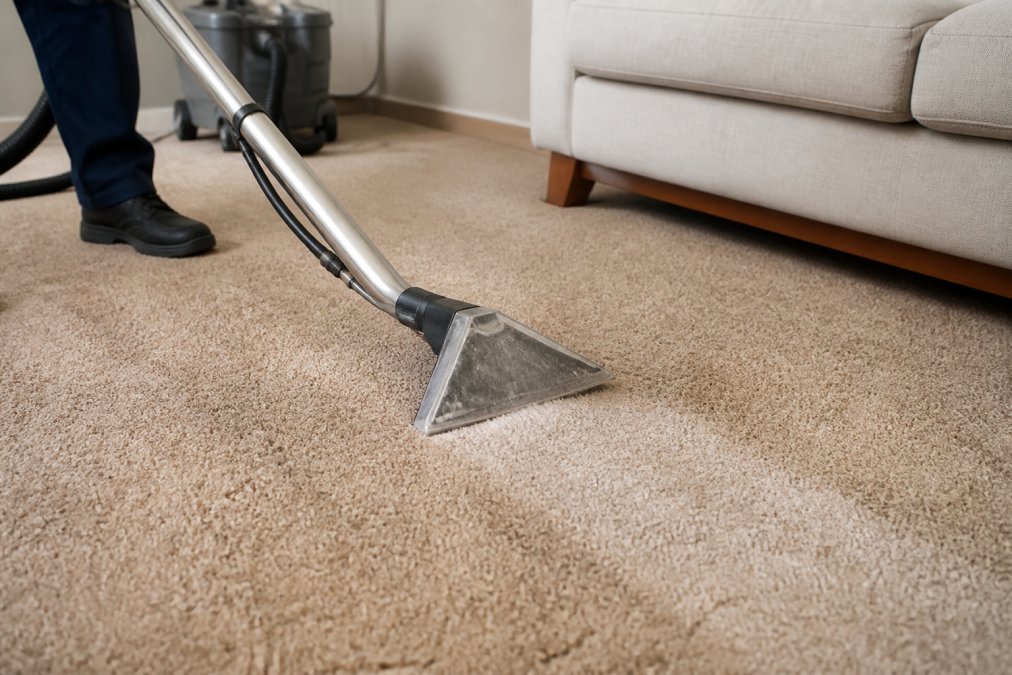
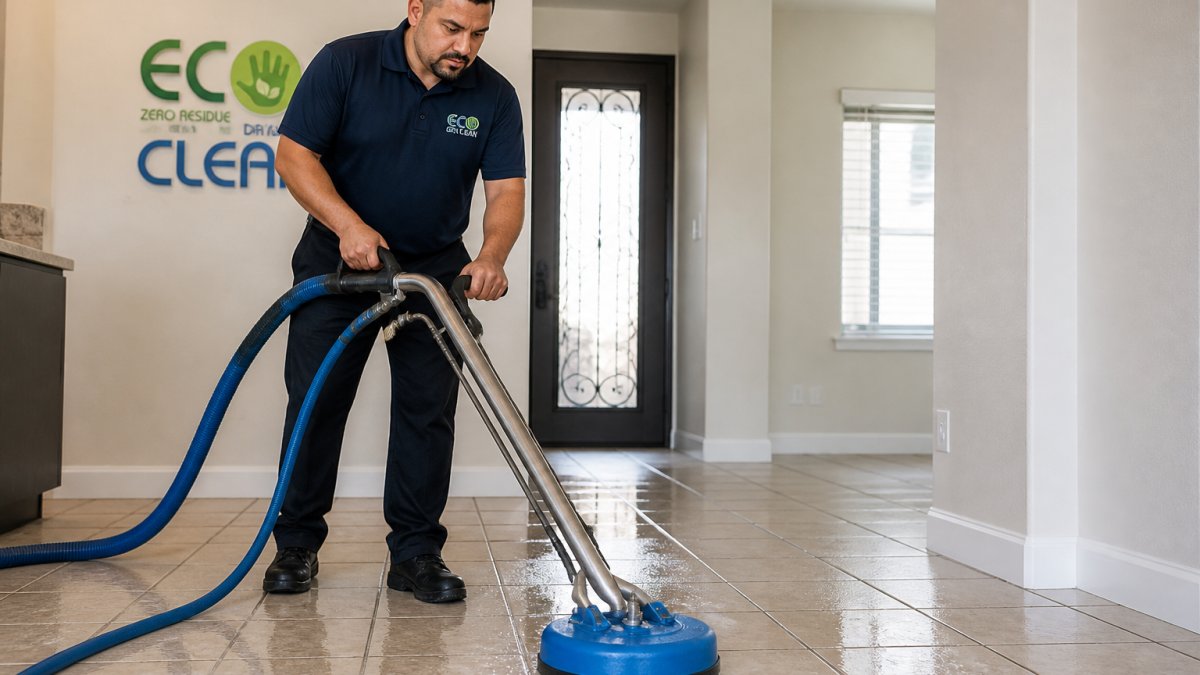
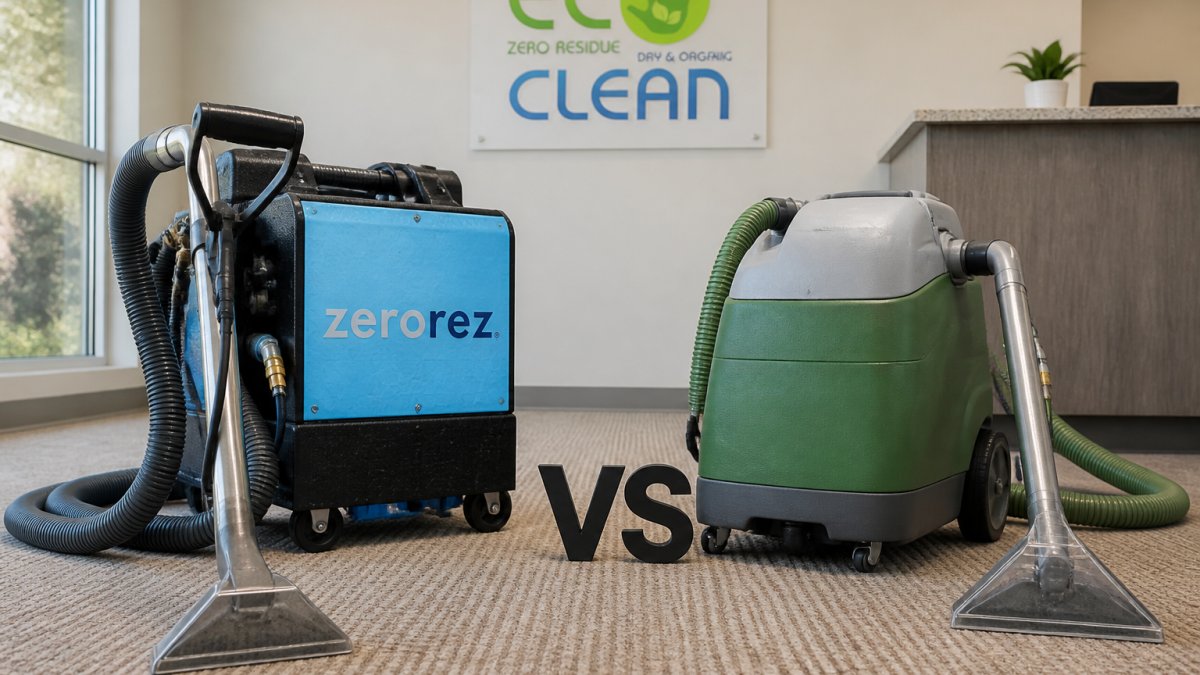
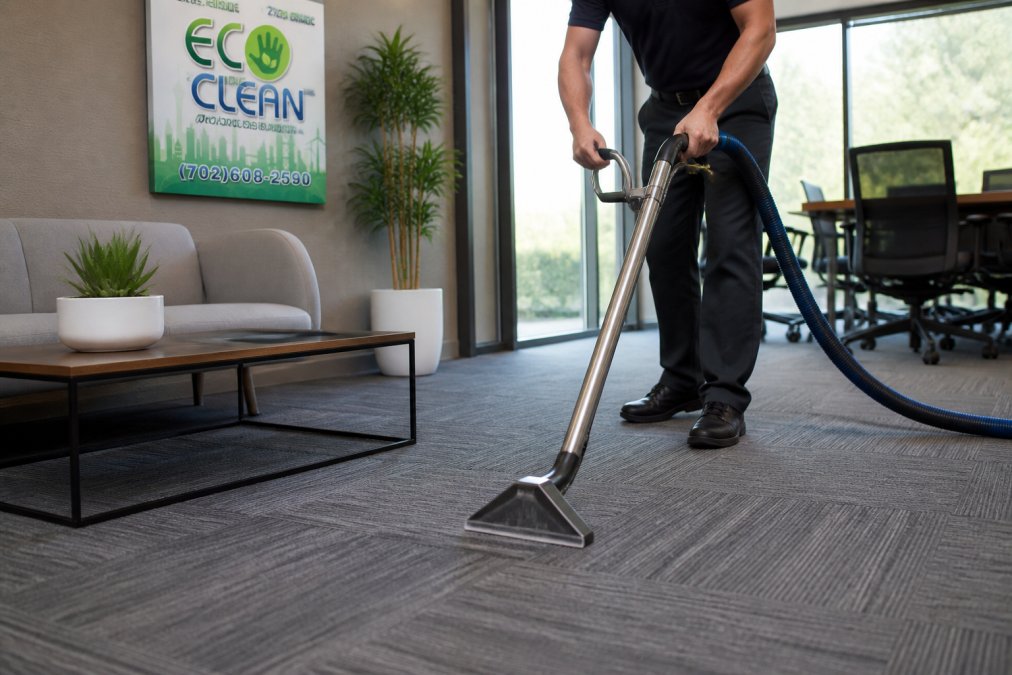
The core difference between hot water extraction and carbonated cleaning comes down to how each method lifts soil from carpet fibers. Carbonated cleaning, the process Chem-Dry is known for, applies a carbonated solution that releases bubbles to lift dirt to the surface, then extracts it with a wand. Hot water extraction, often called steam cleaning, injects heated water and a cleaning agent deep into the carpet, then pulls it back out along with dissolved soil.
Which works better depends on the carpet and the soil. For routine maintenance in low-traffic offices, carbonation can be sufficient and offers faster drying. For high-traffic areas, embedded grime, and pet or food stains, hot water extraction generally reaches deeper into the backing.
A common mistake is assuming one method fits every space. The Carpet and Rug Institute's cleaning standards outline how extraction-based methods should be performed to meet industry expectations.
What to Compare Across Chem-Dry Alternatives
When comparing Chem-Dry alternatives, focus on four factors: drying time, solution safety, equipment quality, and service reliability. Pricing matters.
Drying Time and Moisture Control
Drying time is the factor commercial clients notice first. Carbonated cleaning is marketed on fast drying, often within a few hours. Hot water extraction typically dries within four to eight hours.
Moisture control matters beyond convenience. A vendor who measures moisture before leaving, rather than guessing, is worth prioritizing.
Eco-Friendly and Non-Toxic Solutions
Eco-friendly and non-toxic solutions have moved from a nice-to-have to a requirement for many businesses. Offices with children, pets, or employees with allergies need cleaning agents that are pH-balanced, residue-free, and free of harsh solvents.
Ask vendors which solutions they use and whether they provide safety documentation. Green cleaning certification programs, such as EPA Safer Choice, can help you verify that a product meets recognized safety criteria.
| Factor | Carbonated Cleaning | Hot Water Extraction |
|---|---|---|
| Drying time | Often 2-4 hours | Typically 4-8 hours |
| Soil removal depth | Surface to mid-fiber | Deep into backing |
| Best for | Routine, low-traffic upkeep | High-traffic, embedded grime |
| Residue risk | Low with proper rinse | Low with pH-balanced agents |
| Equipment | Often portable | Frequently truck-mounted |
Commercial Carpet Cleaning Frequency Guidelines
Commercial carpet cleaning frequency should be set by foot traffic, not by a fixed annual rule. A lobby with hundreds of daily visitors needs a different schedule than a private office suite. As a general guideline, many facilities teams use traffic level to set intervals.
- Light traffic (private offices, executive suites): deep clean every 12 months, spot-treat as needed
- Medium traffic (general office floors, corridors): deep clean every 6 to 9 months
- High traffic (lobbies, entrances, retail floors): deep clean every 3 to 4 months
- Very high traffic (restaurants, clinics, schools): deep clean every 2 to 3 months
High-traffic areas also benefit from interim spot cleaning and entry matting, which captures soil before it spreads. Skipping interim care usually means paying for a heavier restoration later.
How to Choose a Commercial Carpet Cleaning Service
Choosing a commercial carpet cleaning service comes down to verifying three things: credentials, coverage, and reliability. The vetting checklist below is the part most buyers skip, and the part that creates the most exposure when something goes wrong.
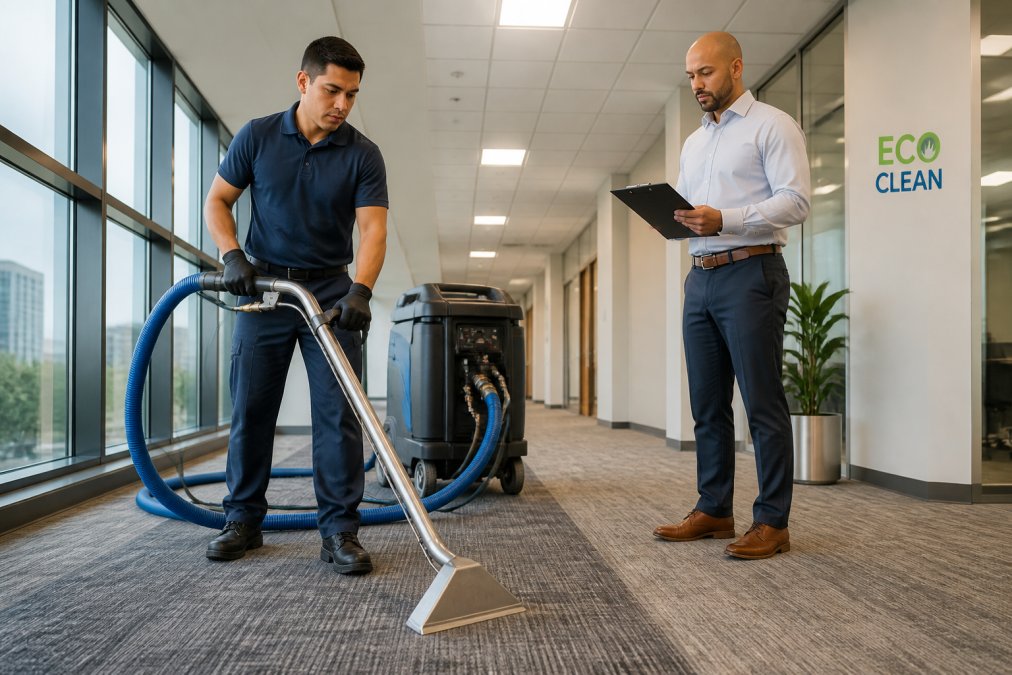
Start by confirming the vendor's service area and capacity. A company that serves your entire portfolio, whether that's a single office or multiple buildings, reduces the coordination burden on your team. Ask about scheduling windows, since commercial work often happens outside business hours to avoid disrupting operations. Confirm whether the crew is W-2 employees or subcontractors.
Insurance, Licensing, and Vendor Vetting
Insurance and licensing are where many businesses get caught off guard. Before any vendor sets foot on your property, request a certificate of insurance (COI) and confirm it is current. At minimum, a commercial carpet cleaning vendor should carry:
- General liability insurance, covers third-party bodily injury and property damage.
- Workers' compensation coverage, required in nearly every state once a business has employees. If a technician is injured on your site and the vendor has no workers' comp, your business can absorb the claim.
- Commercial auto liability, covers the truck-mounted unit and any vehicle driven onto your property.
- Pollution or environmental liability, relevant when cleaning agents, wastewater, or runoff could damage building systems or landscaping.
Ask to be listed as an additional insured on the vendor's general liability policy for the duration of the contract. This is a standard request and a quick way to separate professional commercial operators from residential-only outfits. Also confirm the vendor can produce a W-9 for your accounts payable file and carries a business license valid for your jurisdiction.
On the technical side, look for technicians certified through the Institute of Inspection, Cleaning and Restoration Certification (IICRC). The IICRC publishes the S100 standard for carpet cleaning and the S500 standard for water damage restoration, the reference documents your insurance carrier and carpet manufacturer will point to if a claim or warranty dispute arises. A vendor who can name their certification and standard is signaling that the work will be documented to an industry benchmark.
Vetting should also cover:
- Written scope of work and pricing before the visit
- References from comparable commercial clients, ideally in your building class
- Clear policy on damage, re-cleaning, and response time if results fall short
- A named point of contact, not a call center
This matters because an uninsured vendor working on your property creates liability exposure for your business.
What Chem-Dry Alternatives Cost Businesses
Pricing for commercial carpet cleaning depends on square footage, carpet condition, traffic level, and how often you schedule service. Because of those variables, most vendors quote per job rather than publishing flat rates, and any figure you see online should be treated as a starting point, not a guarantee.
That said, the industry does have recognizable ranges. As a general benchmark, commercial hot water extraction typically prices for routine maintenance cleaning. Carbonated or low-moisture methods often land in a similar band. Encapsulation cleaning, a low-moisture method that crystallizes soil for later vacuuming, is sometimes priced per square foot.
Several factors push a quote up or down:
- Square footage, larger jobs usually get a lower per-square-foot rate because setup and travel are amortized.
- Soil level and traffic, a lobby that has not been cleaned in two years costs more than one on a quarterly schedule.
- Carpet type, loop pile, cut pile, and glued-down commercial tile behave differently and take different amounts of time.
- Access and after-hours work, night and weekend scheduling often carries a premium, but it avoids lost productivity during business hours.
- Add-ons, stain protection, deodorizing, and spot treatment are usually quoted separately.
Frequently Asked Questions
What are the primary differences between hot water extraction and carbonated cleaning?
Hot water extraction injects heated water and cleaning solution into carpet fibers, then vacuums out the suspended soil. Carbonated cleaning relies on effervescent bubbles to lift dirt toward the surface before extraction. Hot water extraction typically reaches deeper into the backing and removes more embedded grime, while carbonated methods often dry faster. For high-traffic commercial spaces, hot water extraction is the more thorough option and is the method most carpet manufacturers reference for warranty compliance.
How do I choose the right commercial carpet cleaning service for my office?
Start with proof of insurance and licensing, then ask about equipment type, drying time, and whether the provider uses truck-mounted or portable units. Request references from similar commercial sites and confirm they follow a written maintenance schedule. Ask for a walkthrough before the first job so they can flag high-traffic zones, stain-protection needs, and any carpet warranty requirements. A vendor that answers these questions clearly is usually the safer pick.
How often should commercial carpets be professionally cleaned?
Most commercial carpet manufacturers and industry guidelines recommend professional hot water extraction every 6 to 12 months, with high-traffic areas such as lobbies and entryways cleaned more often, sometimes quarterly. Facilities with heavy foot traffic, food service, or pets on site may need a 3 to 6 month cycle. Following these commercial carpet cleaning frequency guidelines also helps preserve carpet warranty coverage, since many manufacturers require documented professional cleaning.
Is steam cleaning better than carbonated cleaning for high-traffic commercial areas?
For high-traffic commercial areas, hot water extraction, often called steam cleaning, generally performs better because it flushes out deep-down grime, allergens, and residue that surface-level methods leave behind. Carbonated cleaning can be useful for quick maintenance between deeper cleanings and dries faster, but it may not reach the same soil depth. Many facility managers combine both: carbonated or low-moisture cleaning for touch-ups and hot water extraction for scheduled deep cleaning.