 ultimate-guide
Is Hot Water Extraction Safe for Upholstery? A 2026 Guide
Table of Contents
- How Hot Water Extraction Works and Why It's Safe for Most Upholstery
- How to Identify Upholstery Fabric Codes Before Cleaning
- Which Upholstery Fibers Can Handle Hot Water Extraction
- Upholstery Drying Time After Cleaning: What to Expect
- Steam Cleaning vs. Hot Water Extraction: Key Differences
- Professional Upholstery Cleaning Cost and What Affects It
- Conclusion
- Frequently Asked Questions
Last Updated: September 14, 2026
How Hot Water Extraction Works and Why It's Safe for Most Upholstery
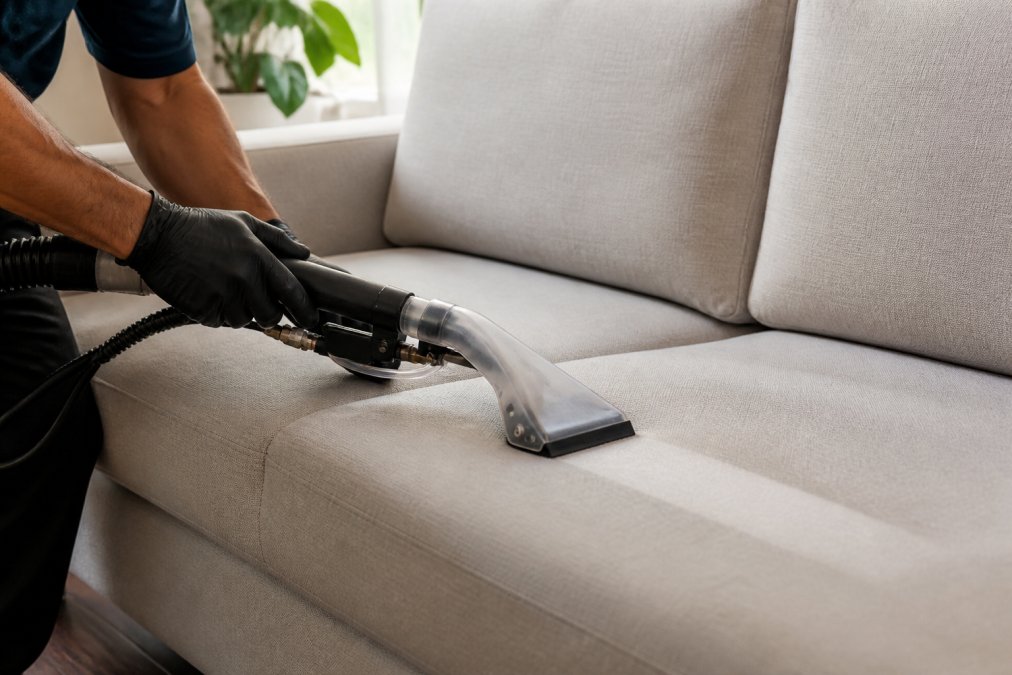
Hot water extraction is a deep cleaning method that injects heated water and a cleaning solution into upholstery fibers, then immediately pulls the moisture back out with strong vacuum suction. For the vast majority of modern upholstery, this process is safe, effective, and recommended by fiber manufacturers themselves.
So is hot water extraction safe for upholstery? Yes, for most fabrics. The method is safe because the cleaning solution is flushed through the fibers and extracted rather than left to soak, which limits residue and moisture exposure.
This guide from EcoClean covers what the process actually does to your furniture, how to read the fabric codes on your sofa, and when a professional should handle the job instead of a rental machine.
The Role of Water Temperature and Pressure
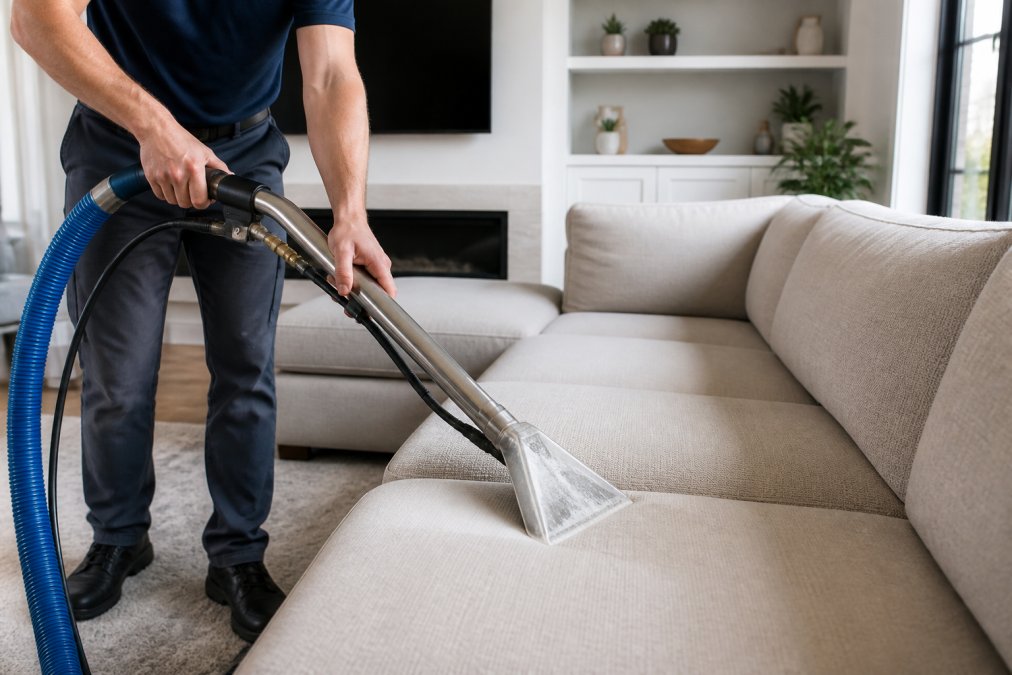
Water temperature and pressure do most of the heavy lifting. Heat breaks down oils and loosens soil from the fibers, while controlled pressure drives the cleaning solution into the fabric without distorting it.
Temperature that runs too high risks shrinkage or color bleeding on sensitive textiles. Pressure that runs too high can push water past the backing and into the cushion foam, which extends drying time and invites mildew. Professional machinery regulates both, and the Carpet and Rug Institute's cleaning standards outline why controlled heat and pressure matter more than raw power.
How to Identify Upholstery Fabric Codes Before Cleaning
Before any cleaner touches your sofa, find the fabric code tag. It is usually sewn under a seat cushion, along the deck, or behind the skirt, and it tells you exactly which cleaning method the manufacturer permits.
These codes exist because upholstery fibers, textile cleaning methods, and moisture tolerance vary enormously. Ignoring the code is the single most common cause of ruined furniture.
The W, S, WS, and X Codes Explained
The four standard codes are short, and each one dictates a different approach:
- W: Water-based cleaning is approved. Hot water extraction is generally safe here.
- S: Solvent-based cleaning only. Water can cause shrinkage, browning, or water rings.
- WS: Either water-based or solvent-based cleaning is acceptable.
- X: Vacuum only. No liquid cleaning of any kind.
A common mistake is assuming a "dry clean only" tag means the fabric is fragile. Often it just means the manufacturer never tested it with water. When the code is missing or unreadable, test a hidden area first or call a professional.
Which Upholstery Fibers Can Handle Hot Water Extraction
Most synthetic fabrics handle hot water extraction without issue, while natural fibers need more caution. The fiber content matters as much as the code on the tag, because the safety of the process comes down to how each fiber behaves when it absorbs water and heat.
Why Fibers React Differently to Water and Heat
Every upholstery fiber responds to moisture and temperature based on its chemistry, not just its label. Understanding the mechanism explains why the same machine that rescues a polyester sectional can ruin a rayon cushion.
- Synthetics (polyester, nylon, olefin): These are thermoplastic, they are extruded as continuous filaments and hold their shape when wet. They absorb almost no water into the fiber itself (moisture sits between filaments), so they resist shrinkage and hold dye well. This is why colorfastness is usually strong and dye migration is rare.
- Cellulosic naturals (cotton, linen, rayon/viscose): These fibers absorb water into the fiber wall, which swells the fiber. Swelling changes the weave geometry. If the fabric was stretched during manufacturing, that swelling can release the tension and cause shrinkage that will not reverse. Rayon and viscose are regenerated cellulose, they lose a significant share of their tensile strength when wet, which is why they distort permanently under a wand (pubmed.ncbi.nlm.nih.gov).
- Protein naturals (wool, silk): These fibers have a scaly outer layer. Heat, moisture, and agitation cause the scales to interlock, the mechanism behind felting in wool. Silk loses luster and can water-spot because the fiber surface is delicate. Both need neutral pH because alkaline cleaners strip the natural oils that keep the fiber supple.
Natural Fibers vs. Synthetic Fabrics
Synthetic fabrics like polyester, nylon, and olefin are the safest candidates. They resist moisture, hold color well, and tolerate heat without shrinking.
Natural fibers are where experience matters:
- Cotton handles water well but can shrink if the weave is loose or the fabric was not pre-shrunk.
- Linen is prone to shrinkage and should be cleaned with low moisture and minimal agitation.
- Wool needs a neutral pH detergent and careful temperature control to avoid felting.
- Rayon and viscose are the riskiest. They lose strength when wet and can distort permanently.
- Silk should generally be left to a specialist.
A neutral pH detergent protects textile integrity across all of these. Alkaline cleaners strip natural oils from wool and silk, and residue left behind attracts soil faster, which is why stains seem to return within weeks after a poor cleaning job. The residue also reacts with the fiber over time and can cause browning, a chemical discoloration, not a stain, which is why rinsing and extraction matter as much as the cleaning solution itself.
| Fiber | Water Tolerance | Hot Water Extraction | Main Risk |
|---|---|---|---|
| Polyester | High | Safe | None significant |
| Nylon | High | Safe | None significant |
| Olefin | High | Safe | None significant |
| Cotton | Moderate | Usually safe | Shrinkage |
| Linen | Low | Use caution | Shrinkage |
| Wool | Moderate | With neutral pH | Felting |
| Rayon/Viscose | Low | Avoid | Distortion |
| Silk | Low | Avoid | Color loss |
A Quick Colorfastness and Construction Check
Before you commit to extraction, run a two-minute inspection that most guides skip:
- Find a hidden area, under a cushion, behind the skirt, or on the back deck.
- Dab, don't scrub, apply a small amount of your cleaning solution with a white towel and press for 30 seconds.
- Check the towel, any color transfer means the dye is not stable and extraction will likely bleed it.
- Check the fabric, if the pile crushes, the weave distorts, or the surface feels slimy, the fiber is reacting badly.
- Let it dry, some damage (browning, water rings) only appears after the area dries, so wait a full hour before deciding.
This check is the single most reliable way to predict whether hot water extraction is safe for your specific piece, because it tests the actual fabric in front of you rather than a generic fiber category.
Upholstery Drying Time After Cleaning: What to Expect
Upholstery typically dries within 4 to 8 hours after professional hot water extraction, though humidity and airflow change that window considerably. The number that matters most is not the dry time itself but how much moisture the extraction left behind, and that is where most DIY jobs and low-cost services fail.
What Actually Determines Dry Time
Three variables control how fast upholstery dries, and only one of them is under the cleaner's control:
- Residual moisture after extraction: A machine with strong vacuum suction pulls far more water out of the cushion and backing than a weak one. This is the real difference between a 4-hour dry time and a 24-hour one. A wand that leaves the fabric feeling damp to the touch has already failed the extraction step.
- Air movement: Still air traps moisture in the cushion. Ceiling fans, box fans, and open windows move saturated air away from the surface and let drier air replace it.
- Ambient humidity: In a dry climate, upholstery often feels dry to the touch within a few hours. In humid conditions, the air itself is already near saturation, so evaporation slows dramatically and a full day is realistic.
A useful rule of thumb: if the cushion still feels cool or damp to the back of your hand after 8 hours, the extraction was incomplete or the room is not ventilating.
How to Speed Drying and Prevent Mildew
Speed up drying with these steps:
- Run ceiling fans and open windows to keep air moving across the fabric.
- Use a dehumidifier if indoor humidity is high, this is the single most effective step in humid conditions.
- Blot any dampness with a clean, dry towel to wick surface moisture.
- Pull cushions out of their covers if the covers are removable, so air reaches the foam core.
- Avoid sitting on the furniture until it's fully dry, body weight compresses the foam and traps moisture inside.
Leftover dampness is what causes odors, mildew, and browning. Mildew needs only about 24 to 48 hours of sustained moisture to begin colonizing foam and backing, which is why the extraction step matters more than any drying trick (the EPA).
Post-Cleaning Maintenance: Protecting the Clean
Most guides stop at "let it dry." What happens in the two weeks after extraction determines how long the clean lasts and whether the fabric stays safe.
- Wait 24 hours before normal use. Even if the surface feels dry, the foam core holds moisture longer than the surface.
- Vacuum weekly once dry. Dry soil is abrasive and works into the weave; removing it regularly slows the rate at which the fabric needs deep cleaning again.
- Blot spills, never rub. Rubbing drives liquid into the backing and spreads the stain.
- Reapply fabric protector only after full dry. Applying protector to damp fabric traps moisture and can cause browning.
- Keep the piece out of direct sun. UV fades dye and weakens fibers, and freshly cleaned fabric is more vulnerable.
- Address pet accidents immediately. Urine salts wick upward as they dry and can reappear as rings weeks later if not neutralized.
Steam Cleaning vs. Hot Water Extraction: Key Differences
Steam cleaning and hot water extraction are not the same process, though the terms get used interchangeably. Steam cleaning uses vapor and very little water, while hot water extraction flushes and rinses the fibers with a liquid solution.
That distinction matters for fabric damage risk. Steam cleaning relies on heat and minimal moisture, so it's gentler on fabrics that can't handle saturation, but it doesn't rinse soil out of the fibers the way extraction does. Hot water extraction removes more embedded soil, allergens, and residue because the solution is flushed through and vacuumed away.
For bacterial elimination and deep stain removal, extraction is the stronger method. For delicate textiles that can't get wet, steam or dry cleaning is the safer route. Neither replaces the other; they solve different problems.
Professional Upholstery Cleaning Cost and What Affects It
Professional upholstery cleaning cost varies based on the number of pieces, fabric type, and the level of soil or staining involved. Most providers quote per piece or per room rather than a flat rate.
Factors that move the price:
- Number of pieces: A single armchair costs less than a full sectional.
- Fabric type: Delicate natural fibers require more care and time.
- Soil level: Pet stains, heavy soiling, and odor treatment add work.
- Add-ons: Pet enzyme treatment, stain protection, and deodorizing are usually separate.
- Access and setup: Tight spaces and stairs slow the job down.
Because pricing depends on your specific furniture and condition, EcoClean recommends requesting a quote rather than relying on a generic estimate. EcoClean offers convenient online booking and serves homes and businesses across Las Vegas, North Las Vegas, and Henderson, using hot water extraction and deep cleaning methods for carpets, upholstery, and tile and grout.
Conclusion
The real question isn't whether hot water extraction works, it's whether your specific upholstery can handle it. Check the fabric code, know your fiber type, and let moisture extraction and drying time guide the rest.
EcoClean handles that assessment for you. Our team uses hot water extraction and deep cleaning methods for effective stain removal, deep cleaning for carpets and upholstery, and restoration of tile and grout surfaces across Las Vegas, North Las Vegas, and Henderson. Book online with EcoClean and get furniture that looks and feels genuinely clean.
Frequently Asked Questions
Does hot water extraction damage delicate upholstery fabrics?
It can damage certain fabrics like silk, rayon, or vintage cotton that lack colorfastness or have a W or X cleaning code. However, for most synthetic fabrics and treated natural fibers, hot water extraction is safe when done by a trained technician. Always check the fabric code first. If the code is S or X, hot water extraction should be avoided. A professional can test a hidden area before cleaning the entire piece.
Is hot water extraction better than steam cleaning for upholstery?
They serve different purposes. Steam cleaning uses low moisture and high heat to sanitize and lift stains, making it safer for delicate fabrics. Hot water extraction uses pressurized water and suction to flush out deep soil, allergens, and residues, making it more thorough for most synthetic upholstery. For heavily soiled pieces, hot water extraction typically delivers better results. For delicate or dry-clean-only fabrics, steam cleaning is the safer option.
How long does upholstery take to dry after hot water extraction?
Most upholstery dries within 4 to 8 hours when proper extraction and air circulation are used. Factors like fabric thickness, humidity, and room ventilation affect drying time. Running a fan or dehumidifier can speed things up. Avoid sitting on damp cushions, as moisture can cause browning or mildew.
How often should you professionally clean your upholstery?
Most upholstery benefits from professional cleaning every 12 to 18 months. Homes with pets, children, or allergy sufferers may need cleaning every 6 to 12 months. Regular vacuuming and immediate stain treatment between professional cleanings extend the life of your furniture. If you notice odors, visible soil, or increased allergy symptoms, it's time to schedule a cleaning regardless of the calendar.