 ultimate-guide
Is Professional Carpet Cleaning Worth It?
Table of Contents
- Is Professional Carpet Cleaning Worth It? The Real Math
- DIY Carpet Cleaning vs Professional: What Actually Happens to Your Carpet
- Carpet Cleaning Cost Factors: What Drives the Final Quote
- How Often to Get Carpets Professionally Cleaned
- Pet Stains, Allergens, and Odor: What DIY Misses
- Warranty, ROI, and Environmental Angles Most Guides Skip
- When Professional Carpet Cleaning Isn't Worth It
- Frequently Asked Questions
Last Updated: October 4, 2026
Is Professional Carpet Cleaning Worth It? The Real Math
Whether professional carpet cleaning is worth it comes down to three things: how much soil your carpet holds, what replacement would cost, and whether your warranty requires it. For most households with pets or children, the answer is yes.
Here is the honest version most guides skip: a rented machine and a truck-mounted unit are not the same tool at different prices. They remove different amounts of soil, and that gap compounds over years.
Below, we break down what each method does to your carpet, which cost factors drive a quote up or down, and when paying a professional is a waste of money.
DIY Carpet Cleaning vs Professional: What Actually Happens to Your Carpet
DIY cleaning removes surface soil and some topical stains. Professional cleaning removes the soil embedded at the base of the fibers, where the damage actually happens. That's why a carpet can look clean after a rental-machine pass and still wear out years early.
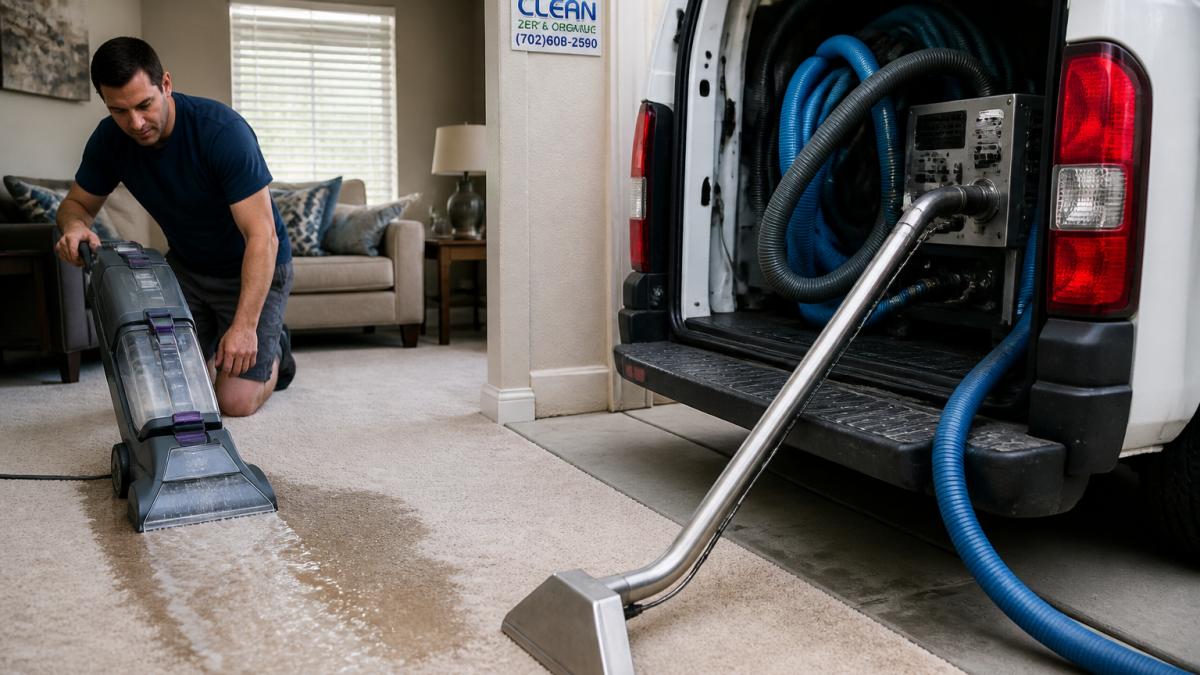
The gap isn't marketing. It's mechanical, and it comes down to four measurable differences: water temperature, pump pressure, vacuum lift, and drying time.
The Limits of Rental Machines
A typical rental extractor is built around a small pump and a shop-vac-style motor. In practice:
- Water temperature: Most consumer units heat water to roughly 120-150°F at the nozzle, and many rely on the hot tap, which cools through the hose. Oily soils need sustained heat to dissolve.
- Pump pressure: Consumer pumps run 30-60 PSI, enough to wet the surface, not to reach the base of a dense pile.
- Vacuum lift: Rental units pull a fraction of the air watts a truck-mounted system produces, so more water and soil stay behind.
- Drying time: With less water extracted, carpet stays damp 12-24 hours or more, the window where odor, mildew, and wicking stains develop.
The residue problem is the one homeowners notice most. Detergents that aren't fully rinsed leave a sticky film that attracts new soil, which is why a DIY-cleaned carpet looks dingy again within weeks and why a stain appears to 'come back.' It was never fully removed, just diluted and redistributed.
What Hot Water Extraction Does Differently
Hot water extraction, often called steam cleaning, injects heated water and solution deep into the pile, then extracts it under high vacuum. Truck-mounted systems generate far more suction and heat than portables, pulling more soil and leaving fibers drier.
Practical differences that matter when deciding whether to pay for it:
- Heat and pressure together: Truck-mounted units sustain nozzle temperatures and pump pressures well above a portable's, so solution reaches the base of the pile where grit accumulates.
- Extraction and rinse: The same pass that lifts soil rinses detergent out, preventing the rapid re-soiling cycle.
- Drying time: Stronger extraction leaves most carpets dry in hours rather than overnight, limiting odor and microbial growth.
- Even coverage: A technician adjusts passes for traffic lanes, edges, and stairs, areas homeowners rarely treat consistently.
Done correctly, this lifts embedded grit before it abrades the fibers from below. That abrasion is the real cost of skipping professional cleaning: the carpet doesn't just look worse, it wears out faster, and replacement is the expensive outcome.
When DIY Still Makes Sense
None of this means a rental machine is useless. For a single fresh spill, spot treatment and blotting handle the job. DIY also works as interim maintenance between professional visits, vacuuming frequently, treating spots promptly, keeping entry mats in place. The mistake is treating a rental pass as a substitute for deep extraction on a whole-room scale.
Carpet Cleaning Cost Factors: What Drives the Final Quote
Pricing depends on several variables, and any company quoting a flat number over the phone is guessing. Cost tracks the size of the job, the carpet's condition, and the pre-treatment required. Ask for an on-site or photo-based assessment before you commit.
Room-Based Pricing vs Square Footage
Some companies charge per room, others per square foot. Room-based pricing is simpler to compare but penalizes open floor plans, where one "room" might be 400 square feet. Square-foot pricing is more precise but harder to estimate upfront. Ask which method a company uses and whether stairs, closets, and hallways count as rooms.
Hidden Fees to Ask About Before Booking
- Stairs and landings, often priced per step
- Heavy pre-treatment for pet stains or traffic lanes
- Furniture moving and replacement
- Post-treatment protectant applications
- Travel or minimum-service charges
How Often to Get Carpets Professionally Cleaned
Most homes need professional cleaning every 12 to 18 months. Households with pets, young children, or allergy sufferers should aim for every 6 to 12 months. High-traffic areas like entryways and living rooms accumulate soil faster than bedrooms, so some homeowners schedule those zones more often.
Frequency ties directly to your carpet's lifespan. Soil left in the pile acts like sandpaper against the fibers with every footstep. Removing it on a maintenance schedule is cheaper than replacing carpet early.
| Household Situation | Recommended Frequency | Why |
|---|---|---|
| No pets, adults only | Every 12-18 months | Standard soil accumulation |
| Pets or young children | Every 6-12 months | Stains, dander, accidents |
| Allergy sufferers | Every 6 months | Allergen and dander reduction |
| Rental or commercial space | Every 3-6 months | High foot traffic, appearance |
Pet Stains, Allergens, and Odor: What DIY Misses
Pet accidents are the clearest case where DIY falls short. Urine soaks through the carpet into the pad and sometimes the subfloor.
The same logic applies to allergens. Pet dander, dust mites, and mold spores settle deep in the pile. A American Lung Association guidance on indoor air quality notes that controlling indoor allergens often requires removing the sources, not just vacuuming surfaces.
For households with mold or mildew concerns after a leak, the stakes are higher. Damp carpet that isn't dried quickly can support microbial growth, a restoration problem, not a cleaning one.
Warranty, ROI, and Environmental Angles Most Guides Skip
Most articles answer 'is it worth it' with a pros-and-cons list. The stronger case is financial and contractual, from three places competitors rarely connect: your carpet warranty, your property's resale or deposit value, and the cleaning method used.
Your Carpet Warranty May Require Professional Cleaning
Carpet warranties are the angle almost nobody mentions, and it costs homeowners money. Most major manufacturers structure wear, stain, and texture-retention warranties around required maintenance, typically specifying professional hot water extraction every 12 to 18 months by a qualified technician. Some also require receipts or documentation.
What that means in practice:
- Skipping professional cleaning can void a claim. If you file for premature wear, matting, or a stain that won't lift, the manufacturer can deny it on the grounds that required maintenance wasn't performed.
- DIY methods may not satisfy the requirement. Many warranty terms specifically call for hot water extraction, not spot cleaning or a rental machine, and some exclude 'do-it-yourself' cleaning outright.
- Documentation matters. Keep invoices showing the date, method, and provider. A warranty claim years later often hinges on that paper trail.
Before you assume DIY is enough, read the warranty that came with your carpet. The terms are usually printed on the installation paperwork or available from the manufacturer, and they define what 'maintained' actually means.
The ROI Case: Resale Value and Rental Deposits
The second overlooked angle is property value. Carpet is one of the first things buyers and tenants notice, and its condition shapes how they read the rest of the home. How that plays out:
- Resale: Replacing carpet before a sale is a significant line item that rarely returns more than it costs. Maintaining the existing carpet, clean, odor-free, no visible traffic lanes, avoids that expense and supports the asking price.
- Rental deposits: Landlords commonly withhold deposits for carpet damage preventable with scheduled cleaning. Documented professional cleanings give both sides a clear record and reduce disputes.
- Commercial spaces: For property managers, appearance drives client perception. Scheduled deep cleaning protects the finish clients judge on arrival and costs less than replacing carpet mid-lease.
The math is straightforward: one cleaning costs a fraction of a replacement, and the replacement is what you're actually avoiding.
Environmental Impact: Method Matters More Than the Label
There's also an environmental piece, more nuanced than 'eco-friendly equals good.' The relevant comparison is between methods and what they leave behind:
- Traditional steam cleaning uses heated water and detergent, then extracts it. Done well, it rinses residue out; done poorly, it leaves detergent in the pile that attracts soil and shortens the interval between cleanings.
- Low-moisture and encapsulation methods use far less water and a polymer that crystallizes around soil for later vacuuming. They dry faster, but may not reach the base of a deep pile the way extraction does.
- Solution choice matters independently of method. Traditional solutions can leave residue and introduce volatile organic compounds into indoor air, a real concern in homes with children, pets, or allergy sufferers. Non-toxic, low-residue solutions reduce that exposure.
If chemical-free or low-moisture cleaning is a priority, ask what solutions a company uses, how they rinse them out, and whether the method suits your carpet type. The right answer depends on your pile, your soil level, and your household, not on a single 'green' label.
Putting the Three Together
Warranty protection, property value, and method choice reinforce each other. A documented professional cleaning keeps your warranty intact, protects resale or deposit value, and, with the right method and solutions, reduces what's left behind in your indoor air. That combination is the strongest answer to whether professional cleaning is worth it.
When Professional Carpet Cleaning Isn't Worth It
There are real cases where paying a professional doesn't make sense.
The same applies to a single small, fresh spill. Spot cleaning at home handles a new coffee spill fine. Where DIY fails is on set-in stains, pet contamination, and whole-room soil.
For everything in between, the math usually favors professional cleaning. A EPA guide to indoor air quality and carpet points out that carpets can trap pollutants, and regular cleaning helps keep those levels down.
If you're in Las Vegas, North Las Vegas, or Henderson and want a straight answer on your specific carpet, EcoClean offers convenient online booking.
Carpet that's maintained lasts years longer than carpet that's neglected, and one cleaning costs a fraction of a replacement.
Frequently Asked Questions
Are professional carpet cleaners better than renting a machine?
Rental machines typically inject water and cleaning solution but extract far less of it, which can leave residue buildup and longer drying time. Professional carpet cleaning uses truck-mounted extraction with higher suction and controlled water temperature, pulling more soil and moisture out of carpet fibers. That difference shows up in how the carpet looks and how quickly it dries, which matters for mold and mildew prevention.
How often should you have carpets professionally cleaned?
Most carpet manufacturers recommend professional hot water extraction every 12 to 18 months for typical households. Homes with pets, children, or high-traffic areas often need it every 6 to 12 months. Following that maintenance schedule helps protect your carpet warranty, since many manufacturers require documented professional cleaning as a condition of coverage.
Does professional cleaning remove pet odors and deep-set stains?
Yes, when the technician uses pre-treatment and sub-surface extraction. Pet urine soaks into the backing and pad, so surface spot cleaning rarely reaches it. Professional equipment flushes the affected area and extracts the contamination, followed by odor neutralization. This addresses the source rather than masking the smell, which is why stains and odors are less likely to return.
Is it worth cleaning 15-year-old carpet?
It depends on the carpet's condition. If the fibers are matted or worn through, cleaning won't restore them. If the carpet is structurally sound but dull from soil accumulation, professional cleaning can still improve appearance and indoor air quality. Ask for a service quote and an honest assessment before committing, especially if replacement is already on your radar.