 listicle
Cost of Professional Upholstery Cleaning 2026: Real Prices
Table of Contents
- National Average Cost of Professional Upholstery Cleaning in 2026
- Upholstery Cleaning Price Per Piece: Sofas, Loveseats, and Sectionals
- Does Hot Water Extraction Damage Delicate Upholstery?
- Professional Couch Cleaning Duration: How Long Does It Take?
- Hidden Fees and Upselling Tactics to Watch For
- DIY vs. Professional Upholstery Cleaning: Which Saves More?
- How to Maintain Upholstery Between Professional Cleanings
- Frequently Asked Questions
Last Updated: September 30, 2026
National Average Cost of Professional Upholstery Cleaning in 2026
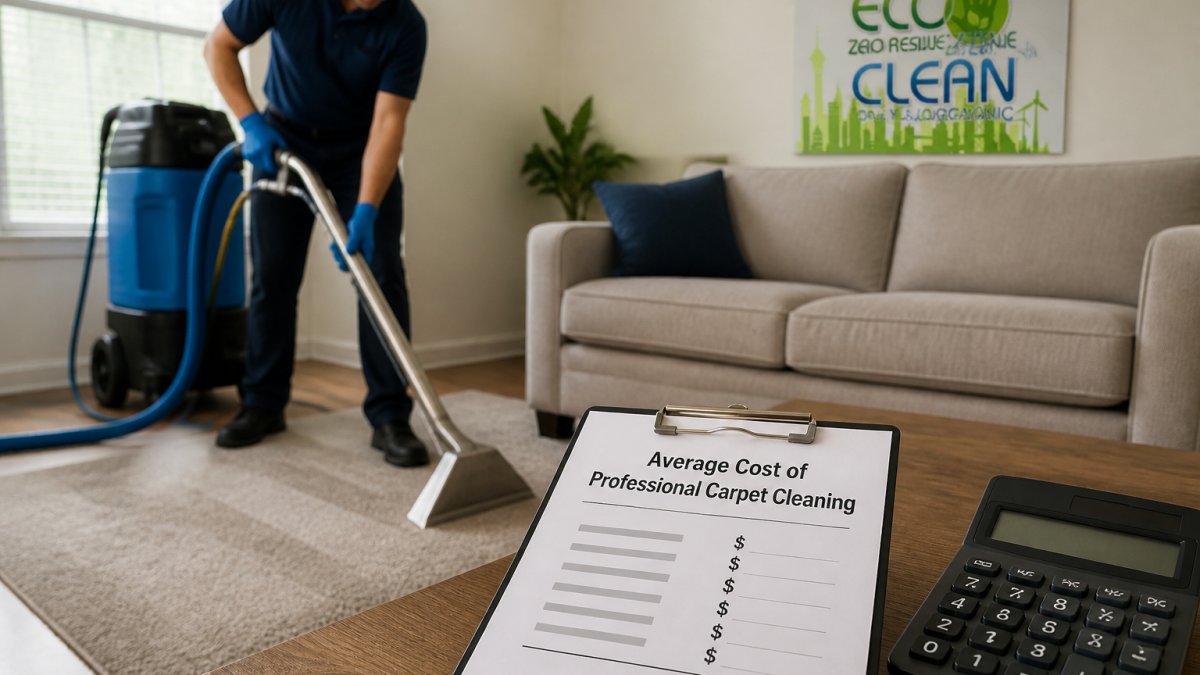
The cost of professional upholstery cleaning 2026 depends on furniture type, fabric, soiling level, and where you live, and most reputable providers quote per piece rather than per hour. That means the number you see advertised is rarely the number you pay. This guide breaks down how quotes are actually built, so you can spot a fair price and a padded one.
- Piece count and size (sofa, loveseat, sectional, armchair)
- Fabric composition (synthetic blends clean differently than natural fibers)
- Soiling level (routine maintenance versus pet odor treatment or heavy stain removal)
- Travel and service call fees in your area
Why 2026 Prices Are Higher Than Last Year
Three pressures are pushing upholstery cleaning costs up in 2026, and none of them are going away soon. Fuel and vehicle costs raise the price of every service call. Insurance and certification requirements for technicians add overhead. And demand for low-moisture and eco-friendly methods, which take longer per piece, has grown faster than most crews can absorb.
Upholstery Cleaning Price Per Piece: Sofas, Loveseats, and Sectionals
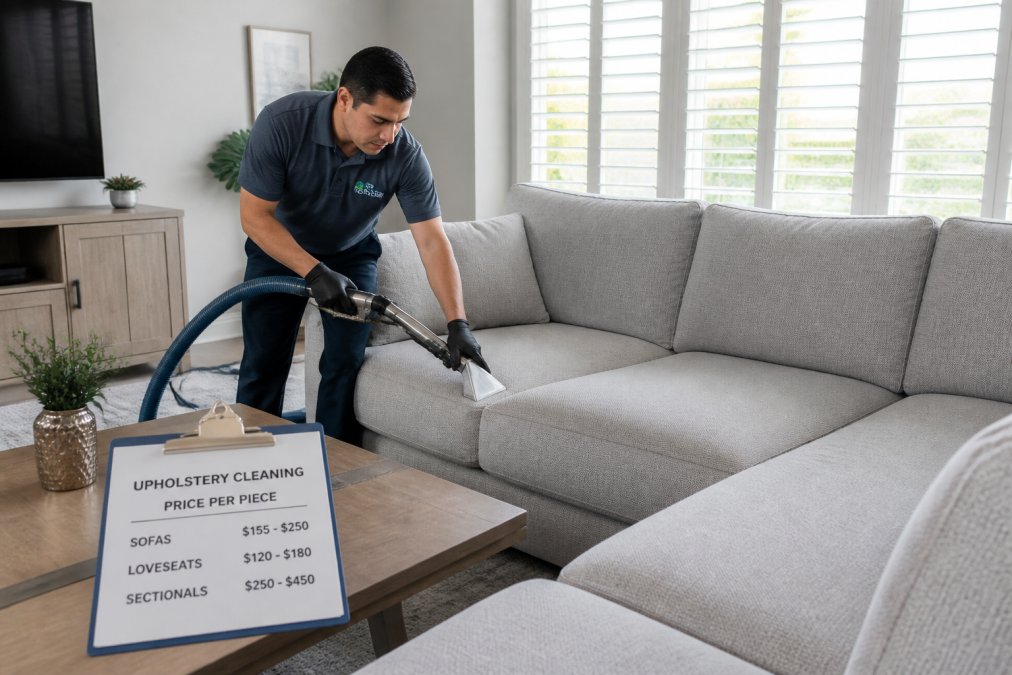
The upholstery cleaning price per piece is the number you should actually compare across providers. Reputable companies price by the item, not by the room, because a sectional with seven cushions takes far longer than a two-seat loveseat.
| Furniture Piece | Typical Price Range | Time on Site | Notes |
|---|---|---|---|
| Dining chair (each) | $15-$35 | 5-10 min | Volume discounts common on sets of 4+ |
| Armchair | $50-$90 | 15-25 min | Often bundled with a sofa |
| Loveseat | $70-$120 | 20-30 min | Two cushions, quick dry |
| Standard sofa (3-seat) | $100-$180 | 30-45 min | The benchmark quote |
| Sectional (5-7 seats) | $175-$350 | 60-90 min | Priced by configuration, not width |
| Sleeper sofa / sofa bed | $150-$250 | 45-70 min | Interior mattress cavity adds labor |
How Sectional Configuration Affects Your Quote
An L-shaped sectional with a chaise is not one piece of furniture to a cleaner. It is a series of panels, each with its own cushion, seam, and drying profile. That's why two sectionals of similar width can differ in price by a wide margin. Complexity in construction often dictates the long-term maintenance requirements, which remains a critical consideration when investing in quality furniture to ensure that your living space remains both functional and aesthetically sound.
Why the Same Sofa Gets Three Different Quotes
When you collect three estimates for the same couch, the gap usually comes from four variables, not from one company being dishonest:
- Method chosen. Low-moisture encapsulation is faster and cheaper per piece; full hot water extraction takes longer and costs more but reaches the cushion core.
- Soiling assessment. A provider who expects pet odor or heavy staining will pad the quote to protect against a longer job.
- Travel distance. Service call fees of $25 to $75 are common and vary by zip code, which is why a neighbor two towns over may pay a different rate for identical work.
- Bundle pricing. Companies discount per-piece rates when you book multiple items in one visit, so a sofa quoted alone can cost more than the same sofa quoted alongside two chairs.
Does Hot Water Extraction Damage Delicate Upholstery?
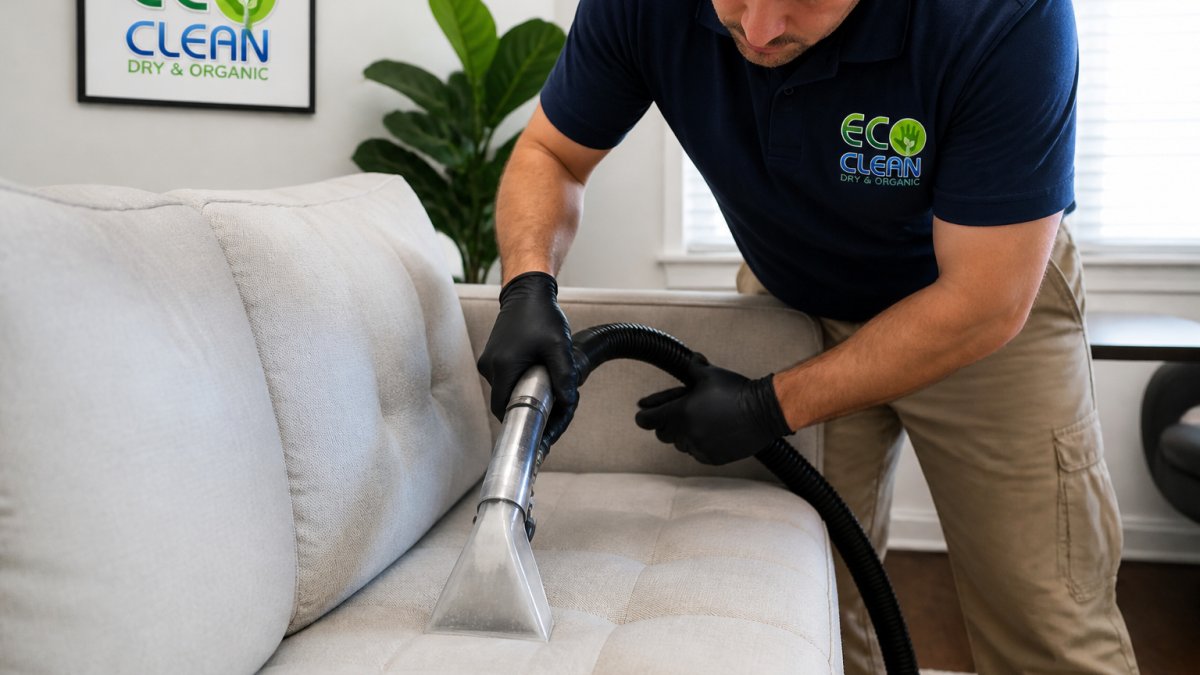
No, hot water extraction does not damage delicate upholstery when the technician matches the method to the fabric. The damage stories you hear almost always trace back to a cleaner applying steam or high-moisture extraction to a fiber that should have been treated with a low-moisture method.
IICRC cleaning standards and certification guidance
Fabric Types That Require Low-Moisture Cleaning
Some fibers simply should not be saturated. Rayon, viscose, and certain silk blends can shrink, watermark, or lose their finish when they stay wet too long. For those, a low-moisture or dry cleaning approach is the correct call.
Professional Couch Cleaning Duration: How Long Does It Take?
Professional couch cleaning duration runs 30 to 45 minutes for a standard sofa, and 60 to 90 minutes for a sectional, plus drying time afterward. Setup, pre-treatment, extraction, and drying management all count toward the total.
Hidden Fees and Upselling Tactics to Watch For
The biggest gap between the quoted price and the final invoice comes from add-ons you didn't ask for. Here's what to check before you book:
- Service call fees added after the estimate
- Fabric protection pitched as mandatory rather than optional
- Pet odor treatment quoted as a flat fee instead of by severity
- Stain removal charged per spot rather than included
- "Conditioner" or "deodorizer" add-ons with vague descriptions
DIY vs. Professional Upholstery Cleaning: Which Saves More?
DIY saves money on the invoice and often costs more over time. A rented machine and a bottle of cleaner look cheap next to a professional cleaning estimate, until you factor in the risks: over-wetting, wicking stains, and fabric damage that a pro would have avoided.
The Real Cost of a DIY Attempt
A rental extractor from a grocery or hardware store typically runs $30 to $50 per day, plus cleaning solution at $10 to $20, plus your time. That puts a single-sofa DIY job in the $50 to $80 range, genuinely cheaper than a professional visit on paper.
- Over-wetting the cushion core. Household extractors pull less water than commercial units, so foam stays damp for days. That's how mildew and odor start inside a cushion that looked clean on the surface.
- Wicking. A stain that appears gone can migrate back to the surface as the fabric dries, leaving a ring worse than the original spot.
- Fiber damage. Rayon, viscose, and some silk blends can shrink or watermark permanently when saturated. No second visit reverses it.
- Residue buildup. Too much detergent leaves a sticky film that attracts dirt faster, shortening the time until the next cleaning.
| Situation | DIY | Professional |
|---|---|---|
| Light surface soil on synthetic fabric | Good fit | Unnecessary |
| Pet accidents and odor | Risky, odor lives in the pad, not the cover | Recommended |
| Delicate fabrics (rayon, viscose, silk blends) | Avoid | Required |
| Deep-set stains | Often fails | Recommended |
| Routine maintenance between visits | Fine | Periodic deep clean |
| Sofa bed or attached-cushion construction | Difficult to dry fully | Recommended |
What You're Actually Paying For
A professional quote covers more than labor. It includes fabric identification before any liquid touches the couch, the correct method for that fiber, commercial extraction that pulls water out of the cushion core, and drying management to prevent wicking. Those steps are what separate a cleaning that lasts from one that reappears in a week.
How to Maintain Upholstery Between Professional Cleanings
Upholstery maintenance between visits is mostly about speed and prevention. The longer a spill sits, the deeper it sets, and the more it costs to remove later.
A few habits that stretch the time between cleanings:
- Vacuum upholstery every week or two to lift grit before it grinds into fibers
- Blot spills immediately with a clean cloth; never rub
- Rotate and flip cushions so wear stays even
- Keep pets off furniture right after a cleaning while fabric is still damp
- Address spot cleaning early rather than waiting for a full deep clean
Frequently Asked Questions
What is the average cost of professional upholstery cleaning in 2026?
The cost of professional upholstery cleaning in 2026 depends on fabric, size, and condition. These figures cover standard cleaning but not specialty treatments like pet odor removal or fabric protection. For an exact quote tailored to your furniture, contact a local provider like EcoClean.
How much does it cost to clean a sectional sofa vs. a standard couch?
Sectional sofas cost more because they have more fabric surface and often require disassembly. The price difference reflects additional labor and cleaning solution. Configuration matters: L-shaped sectionals with chaise lounges cost more than simple two-piece designs. Always ask for a per-piece breakdown to avoid surprises.
Does hot water extraction damage delicate upholstery?
Hot water extraction does not damage delicate upholstery when the method is matched to the fabric. The key is proper identification of fabric composition before cleaning. If you are unsure about your fabric type, request a pre-inspection.
How long does professional couch cleaning take?
Professional couch cleaning duration includes pre-treatment, agitation, extraction, and setup. Drying time depends on humidity and airflow. Low-moisture methods dry faster. Schedule cleaning when you can keep windows open or fans running to speed drying.
Are there extra fees for stain removal or pet odor treatment?
Yes, most providers charge extra for stain removal and pet odor treatment. Standard cleaning covers light soil, but stubborn stains like wine, ink, or pet accidents may require specialized solvents and additional labor. Pet odor treatment often involves enzyme cleaners and sub-surface extraction. Ask for a written estimate that lists these add-ons before booking to avoid upselling.
Upholstery cleaning quotes vary wildly, and the lowest number is rarely the best value once add-ons and fees land on the invoice. At EcoClean, we build itemized estimates around your actual furniture and fabric, use hot water extraction matched to each material, and offer eco-friendly, chemical-free solutions that are safe for kids and pets. Our online booking makes it easy to schedule a visit that fits your day. Get started with EcoClean and see a written quote before you commit.